
The people's voice of reason


The people's voice of reason
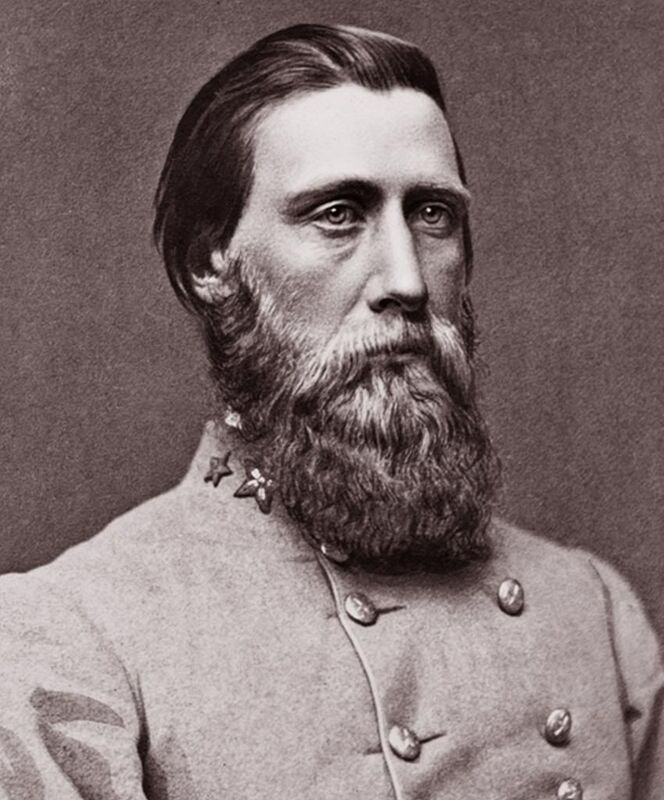
Confederate General John Bell Hood
On November 30, 1864, the quiet town of Franklin, Tennessee, became the site of one of the most ferocious and tragic battles of the American Civil War. In a span of just five hours, the Confederate Army of Tennessee, under the command of General John Bell Hood, launched a massive frontal assault against fortified Union positions led by Major General John McAllister Schofield. The result was a devastating Confederate defeat-one that cost Hood nearly a third of his army and six of his generals, and marked a turning point in the Western Theater of the war.
The Road to Franklin
The Battle of Franklin was part of Hood's ambitious Franklin-Nashville Campaign, a last-ditch Confederate effort to reclaim Tennessee and divert Union forces from General William T. Sherman's march through Georgia. After the fall of Atlanta in September 1864, Hood sought to strike northward, hoping to draw Union troops away from Sherman and perhaps even threaten the Ohio River Valley.
By late November, Hood's army was in pursuit of Schofield's Union forces, who were retreating north from Columbia, Tennessee, toward Nashville. Schofield's goal was to link up with Union reinforcements under General George H. Thomas. On November 29, Schofield's army narrowly escaped entrapment at Spring Hill, slipping past Hood's forces under cover of darkness. Furious at the missed opportunity, Hood resolved to strike a decisive blow at Franklin before Schofield could reach Nashville.
The Union Line at Franklin
Schofield's men arrived in Franklin early on November 30 and quickly set about fortifying a strong defensive position just south of town. They constructed a crescent-shaped line anchored on the Harpeth River, with breastworks, trenches, and artillery placements. Though Schofield initially planned to cross the river and continue north, delays in repairing a key bridge forced him to hold his ground.
By mid-afternoon, Hood's army of approximately 27,000 men arrived on the southern outskirts of Franklin. Despite the strength of the Union defenses and the fading daylight, Hood ordered a full-scale frontal assault-an audacious and controversial decision that would have catastrophic consequences.
The Assault Begins
At 4:00 p.m., 20,000 Confederate soldiers surged forward in what would become one of the largest and bloodiest charges of the war. The attack bore eerie similarities to Pickett's Charge at Gettysburg, but on a larger scale and with even more devastating results. Confederate troops advanced across open fields under withering fire from Union artillery and riflemen entrenched behind robust earthworks.
The initial wave managed to breach a portion of the Union line at the Carter House, leading to brutal hand-to-hand combat in the fading light. For a brief moment, it appeared the Confederates might break through. But Union reinforcements quickly sealed the gap, and the defenders held firm.
A Slaughter Unfolds
As darkness fell, the battlefield became a scene of chaos and carnage. Confederate soldiers were mowed down in droves, their bodies piling up in front of the Union works. The assault continued into the night, but the outcome was never in doubt. By 9:00 p.m., the Confederate attack had collapsed.
The cost was staggering. Hood's army suffered approximately 6,200 casualties-killed, wounded, or missing-nearly one-third of his force. Among the dead were six Confederate generals: Patrick Cleburne, John Adams, Hiram Granbury, Otho Strahl, States Rights Gist, and John C. Carter. Another seven generals were wounded or captured. The loss of so many high-ranking officers in a single engagement was unprecedented and dealt a crippling blow to the Army of Tennessee's leadership and morale.
Union casualties numbered around 2,300, a heavy toll but far less than the Confederate losses.
Hood's Gamble and Its Consequences
Historians have long debated Hood's decision to launch a frontal assault at Franklin. Some argue that his rage over Schofield's escape at Spring Hill clouded his judgment. Others suggest he believed a swift, overwhelming attack could shatter the Union line before reinforcements arrived. Whatever his reasoning, the result was a tactical disaster.
The Battle of Franklin effectively destroyed the offensive capability of the Army of Tennessee. Though Hood would continue his campaign and engage Union forces again at the Battle of Nashville in mid-December, his army was too depleted to pose a serious threat. The defeat at Franklin marked the beginning of the end for Confederate hopes in the Western Theater.
Legacy and Memory
Today, the Battle of Franklin is remembered as one of the most tragic and heroic episodes of the Civil War. The Carter House and Carnton Plantation, both of which played key roles during the battle, have been preserved as historic sites. Carnton, which served as a field hospital, still bears the bloodstains of wounded soldiers on its floors.
The battle's legacy is one of valor and futility-a testament to the bravery of soldiers on both sides, and a sobering reminder of the human cost of war. For the Confederacy, Franklin was a grievous blow from which it would never recover. For the Union, it was a hard-won victory that helped pave the way for final triumph in the West.
As the sun set on November 30, 1864, the fields of Franklin were littered with the fallen. In the words of one Union officer, "It was not war-it was murder."









Reader Comments(0)