
The people's voice of reason


The people's voice of reason
Sorted by date Results 21 - 45 of 431
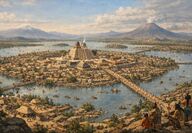
June 30, 1520 - Tenochtitlan A Turning Point in the Conquest of Mexico On the night of June 30, 1520, the Spanish conquest of the Aztec Empire reached its most desperate and defining moment. Known to history as La Noche Triste-"The Sad Night"-this was the night Hernán Cortés and his forces were violently expelled from Tenochtitlan, the capital of the Aztec world. What unfolded was not just a military disaster for the Spaniards, but a cultural and political turning point that reshaped the t...

How Americans heated and powered their homes across 250 years The average American adjusts a thermostat or flips a light switch dozens of times a day without a second thought. Two hundred and fifty years ago, staying warm meant chopping, hauling, and feeding firewood into an open hearth all day. Even then, a glass of water across the room might freeze solid overnight. As the nation marks its 250th birthday, the story of how Americans heated and lit their homes tracks with nearly every major chap...
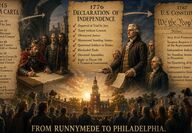
By the time Thomas Jefferson dipped his quill in ink in the summer of 1776, he was drawing from a wealth of ideas more than five centuries old. Eight hundred and eleven years ago this month, English barons forced a reluctant King John to place his seal on a document they called the Magna Carta. At the time, it read more like a peace treaty between feuding factions than a declaration of universal principles. The barons wanted their specific grievances addressed. Among their desires were a...

The cast of 'Gunsmoke' poses around a wagon in a promotional portrait for the Western television series. From left to right are actors James Arness, Milburn Stone, Amanda Blake, Ken Curtis, and Burt Reynholds is on the second row. Hulton Archive // Getty Images The 25 best Western TV shows of all time If there's a genre of television that is associated with being iconically American, the Western would be the top contender. Visions of saloon doors swinging open as a spur-spangled stranger stands...

A model wearing wide-legged trousers, a striped tube top and a turban-style hat at the Biba boutique in London, UK, 6th September 1973. D. Morrison/Express/Hulton Archive // Getty Images Women's fashion trends from the past 100 years Fashion is so much more than a "cute outfit"—it's a major reflection of the times and a big part of American history. Since the inception of the fashion industry, womenswear trends have always been driven by culture, events, popular music, and celebrity i...
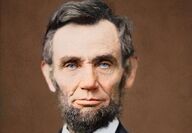
Today is a federal holiday - Juneteenth. All the banks, government offices, some businesses, and most schools are closed today to celebrate the freedom of the slaves in Texas. Most of the fighting in the War Between the States was in Virginia, Tennessee, Georgia, Mississippi, Louisiana, Alabama and the other southern states. Texas was less of a battlefield so the slaves there were unaware of the Emancipation Proclamation issued by President Abraham Lincoln in 1862 freeing the slaves. After the...

After I finished my book, Union At All Costs: From Confederation to Consolidation, I was asked who I more fully understood and respected. My answer was Jefferson Finis Davis. First of all, to say Davis was a reluctant president is an understatement. Indeed, even in the mid-1800s individuals who based their beliefs on the original intent of the Federal Republic had diminished. In a modern context, Ron Paul has been the closest thing to the “original republicans” in that he understands the vol...

Modern domestic sheep (Ovis aries) evolved from the Asiatic mouflon (Ovis gmelini orientalis), a wild sheep species native to mountainous regions of the Near East, including the Caucasus, Anatolia, and Zagros Mountains biologyinsights.com+1. These animals were smaller (25–55 kg) with reddish-brown coats, dark back stripes, and light saddle patches, and had large curved horns in males biologyinsights.com. Origins and Domestication Domestication began 11,000–9,000 BCE in the Fertile Crescen...
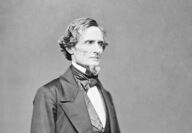
Monday is a state holiday in Alabama as the state honors the legacy of the President of the Confederate States of America. State offices, county court houses, and most schools will be closed for the official state. Federal offices, post offices, and most banks will be open. Davis was inaugurated in Montgomery – the first capital of the Confederacy. The first White House of the Confederacy, where President Davis and his family lived is maintained across the street from the historic 1859 C...
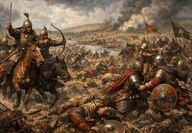
On May 31, 1223, the armies of Kievan Rus' and their steppe allies collided with two of the most formidable commanders in Mongol history-Jebe and Subutai-on the banks of the Kalka River. The resulting clash ended in a devastating defeat for the coalition of Russian princes, with an estimated 20,000 men killed. Though often overshadowed by the later Mongol invasion of 1237–1240, the Battle of the Kalka River stands as a pivotal moment: a warning shot that revealed the Mongol Empire's rising p...
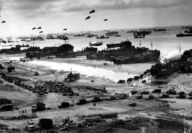
Today marks the 82nd anniversary of D-Day, the historic June 6, 1944, invasion of Normandy that altered the trajectory of World War II and permanently reshaped the modern world. Code-named Operation Overlord, this massive undertaking remains the largest and most complex amphibious assault in military history. It stands as an enduring testament to the power of international collaboration, the defense of democratic freedom, and the immense personal sacrifices of the "Greatest Generation". On this...
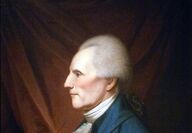
On June 7, 1776, the course of American history shifted when Richard Henry Lee of Virginia rose before the Second Continental Congress in Philadelphia and introduced a bold proposal: that the thirteen colonies "are, and of right ought to be, free and independent States." This motion-later known as the Lee Resolution-became the formal spark that set the colonies on the path to the Declaration of Independence and the birth of the United States. A Nation on the Brink By the summer of 1776, the...
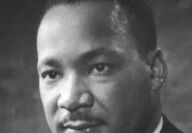
In 1963, Dr. Martin Luther King Jr. penned his "Letter from Birmingham Jail" from a solitary cell in Alabama, following his arrest for leading nonviolent protests. Officially published later that spring, the masterpiece emerged as a foundational text for the American civil rights movement. On May 19 the letter was published - becoming one of the most read political statements in the 20th Century. The Birth of a Manifesto On April 16, 1963, Dr. King was jailed in Birmingham, Alabama, after...
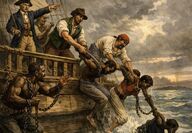
May 22, 1783 - London, England - On this day in history, a British court heard arguments in a case so shocking that it helped ignite the movement to end the transatlantic slave trade. The proceeding, known as the Zong trial, centered on the deliberate killing of more than 130 enslaved Africans thrown overboard from a British slave ship - not as a crime, but as an insurance dispute. The case exposed the brutal economics of the slave trade and forced the British public to confront the reality...
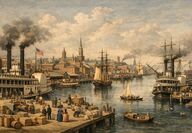
Mobile, Ala. - On May 25, 1865, just weeks after the Civil War ended, a massive explosion ripped through an ordnance depot on Mobile's riverfront, killing an estimated 300 people and leaving the city in shock. More than 160 years later, it remains one of the deadliest accidental explosions in American history. A City Still Reeling From War At the time of the disaster, Mobile was under Union occupation, and the city was crowded with soldiers, freedmen, laborers, and civilians trying to rebuild th...
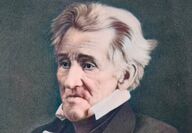
On May 28, 1830, President Andrew Jackson signed the Indian Removal Act, a landmark-and deeply tragic-piece of federal legislation that reshaped the American South and forever altered the lives of Native American nations. The law authorized the U.S. government to negotiate the forced relocation of Indigenous peoples living east of the Mississippi River, clearing the way for white settlement across millions of acres of ancestral homelands. Though framed by its supporters as a policy of...

Andrzej Kubik // Shutterstock Hottest Mays in Alabama since 1895 In 2022, the continental United States experienced its third hottest July since 1895, according to data from the National Oceanic and Atmospheric Administration, while 20 states saw one of their 10 hottest days in the same month. The year prior, July marked the hottest month on record worldwide. Climate change is driving rising temperatures and more record heat. The Earth’s temperature has climbed each decade since 1880 by about ....

yul38885 // Shutterstock Coldest Mays in Alabama since 1895 Stacker compiled a ranking of the coldest Mays in Alabama since 1895 using data from the National Centers for Environmental Information. Rankings are based on the lowest average temperature in each month. For each of the coldest months listed below, we've included the average state temperature, state-wide highs and lows for the month, and the total precipitation. #10. May 1960 - Average temperature: 67.8°F - Monthly high temperature:...
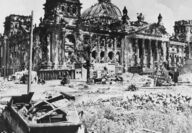
On May 8, 1945, the guns finally fell silent across the European continent. After nearly six years of destruction, Nazi Germany formally surrendered to the Allied powers, bringing an end to World War II in Europe. The day became known as Victory in Europe Day, or V‑E Day, a moment that marked both triumph and profound relief for millions who had endured the deadliest conflict in human history. A War That Reshaped the World World War II began in September 1939 when Germany invaded Poland, t...

On the afternoon of May 11, 1812, the British government was shaken by an act of violence unprecedented in its history. Spencer Perceval, the sitting Prime Minister, was shot and killed in the lobby of the House of Commons-becoming the only British Prime Minister ever assassinated. A Nation Under Strain Perceval's premiership came at a moment of intense national pressure. Britain was: Locked in the Napoleonic Wars, fighting France across Europe Facing economic turmoil from the Orders in...
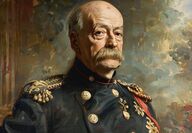
May 10, 1871 - On May 10, 1871, European history pivoted sharply with the signing of the Treaty of Frankfurt, the formal peace agreement that ended the Franco‑Prussian War and cemented the rise of a unified German nation-state. What began as a regional conflict between Prussia and France concluded with a geopolitical realignment that reshaped the balance of power for generations. A War That Redefined Nations The Franco‑Prussian War (1870–1871) erupted from long‑simmering tensions between...

A new DNA profile of Ted Bundy could help solve these Utah cold cases Utah has a new tool that could help solve several decades-old cold cases that investigators have long suspected were linked to infamous serial killer Ted Bundy. For each of those cases, DNA evidence largely collected in the 1970s has sat idle for decades. Much of it was degraded or mixed with DNA from multiple people, making it difficult to use, Amy Newman, the director of the Utah Bureau of Forensic Services, told The Salt...
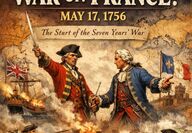
The Opening Shot of a Global Conflict That Redefined North America On May 17, 1756, Great Britain formally declared war on France, transforming a series of frontier skirmishes into what many historians call the first true world war. Known globally as the Seven Years' War, and in North America as the French and Indian War, this conflict redrew borders, toppled empires, and set the stage for the American Revolution. Rivalry on a Collision Course By the mid‑18th century, Britain and France were l...

On May 3, 1979, British political history changed forever. Following a decisive Conservative victory in the general election, Margaret Thatcher was invited by Queen Elizabeth II to form a government-making her the first woman to serve as Prime Minister of the United Kingdom. Her rise marked a turning point not only for Britain but for global politics, as she became one of the most influential and controversial leaders of the late 20th century. Thatcher's election ended years of economic...
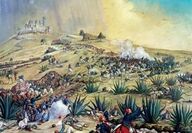
**** This was originally published in 2022, but since today is Cinco de Mayo we republished it in the current issue of the Gazette***** May was an interesting month for our neighbors to the South. This year, Mexico commemorates the 200th anniversary of the coronation of Emperor Agustín I, and the 160th anniversary of the Battle of Puebla. These seemingly obscure events are vital to a complete understanding of the Mexican experience. As a colony of Spain, the internal government of Colonial...