
The people's voice of reason


The people's voice of reason
The Second Boer War
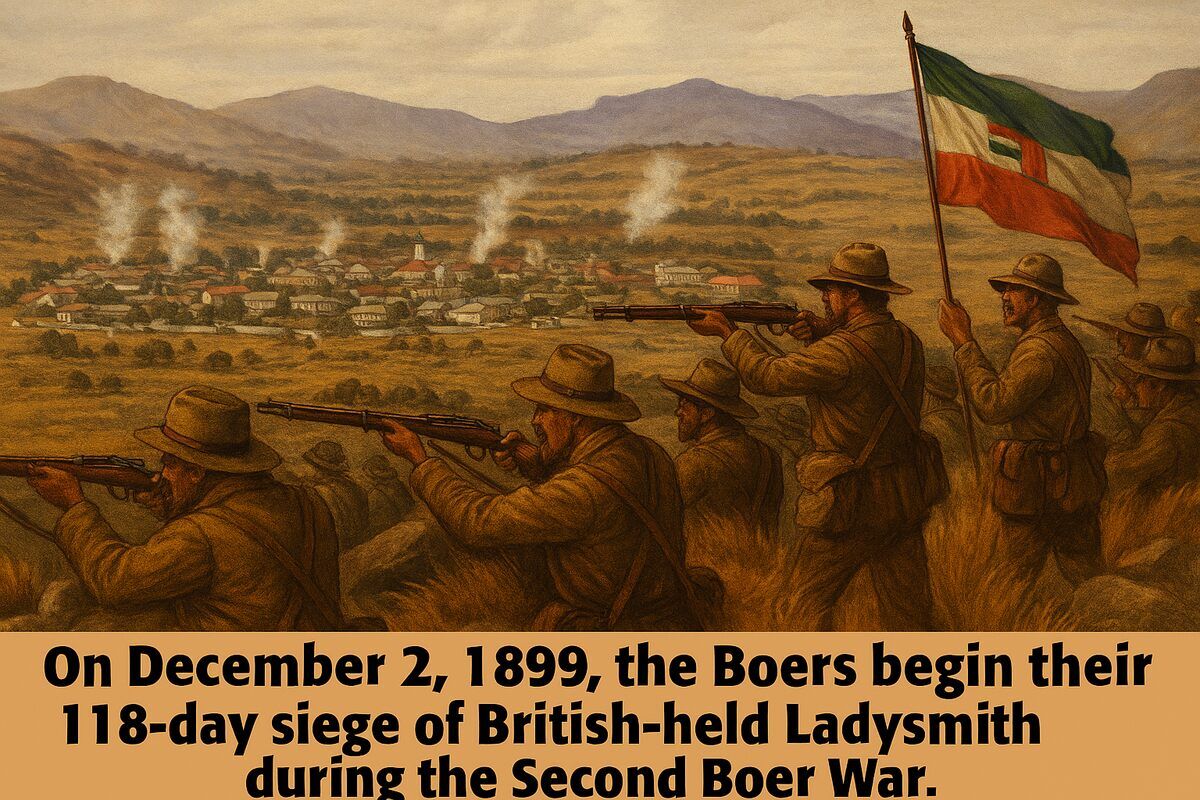
On December 2, 1899, the dusty hills of Natal, South Africa, echoed with the thunder of Boer artillery as the 118-day Siege of Ladysmith began-a pivotal moment in the Second Boer War that would test the endurance of British troops and reshape imperial strategy.
The Backdrop: Empire, Gold, and Resistance
The Second Boer War (1899–1902) was not just a colonial skirmish-it was a clash of empires and ideals. The British Empire, seeking to consolidate control over South Africa's gold-rich territories, faced fierce resistance from the Boer republics: the South African Republic (Transvaal) and the Orange Free State. These were independent, Dutch-descended farming communities determined to preserve their autonomy.
By late 1899, the Boers had launched a series of offensives into British-held Natal. One of their key targets: the strategic railway town of Ladysmith.
The Siege Begins: December 2, 1899
Ladysmith, nestled in the foothills of the Drakensberg Mountains, became a fortress under siege. On December 2, Boer forces under General Piet Joubert encircled the town, cutting off supplies and communication. Inside, over 13,000 British troops and 7,500 civilians were trapped, commanded by General Sir George White.
The Boers, skilled marksmen and masters of guerrilla tactics, dug in for a long campaign. Their artillery-nicknamed "Long Tom"-rained shells on the town daily. The British, unprepared for a prolonged siege, faced dwindling food, disease, and morale.
Survival and Stubbornness
Life inside Ladysmith grew grim. Rations were reduced to horse meat and "Chevril" soup (a gelatinous broth made from boiled bones). Typhoid and dysentery spread. Yet, the defenders held on, bolstered by acts of resilience and ingenuity-like the construction of makeshift forts and the use of carrier pigeons to send messages.
One of the most iconic moments came when British war correspondent Winston Churchill, recently captured and escaped from Boer custody, reported on the siege, helping to shape public opinion back in Britain.
Relief and Legacy
After months of grueling stalemate, British reinforcements under General Redvers Buller broke through Boer lines. On February 28, 1900-118 days after the siege began-Ladysmith was relieved. The Union Jack flew high once more, but at a steep cost: over 3,000 British casualties and a shaken imperial confidence.
The siege marked a turning point. Though the British would eventually win the war, the Boers' early successes exposed the vulnerabilities of empire and foreshadowed the brutal guerrilla warfare that would follow.
Why It Matters Today
For Alabama readers, the Siege of Ladysmith offers echoes of our own Civil War sieges-like Vicksburg or Atlanta-where terrain, endurance, and civilian suffering shaped the outcome. It reminds us that history is often written not just by generals, but by communities under fire.
And in a world still grappling with questions of occupation, resistance, and resilience, Ladysmith's story remains a powerful lesson in the costs of empire and the courage of those caught in its path




Reader Comments(0)