
The people's voice of reason


The people's voice of reason

In an uncertain economy, workers are losing more than just purchasing power, but also their peace of mind. Early reports are showing how financial stress in the workplace is harming employee productivity. This issue is something all employers should be concerned with, as employee health must be of paramount importance.
Wysa looked at the data on financial stress and how it affects employees in the workplace and beyond. By reviewing accredited sources from PwC, the Society for Human Resource Management, the American Staffing Association and more, this information can help foster a healthier workplace.
Financial stress isn’t as simple as being worried about bills. It is a chronic stress that comes from a prolonged lack of financial security. This type of stress can have a variety of causes, but debt, stagnant wages, or unexpected major expenses are common examples. As with other types of stress, this can lead to issues with decision-making, feelings of anxiety or irritability, strained relationships, and much more.
Financial insecurity doesn’t discriminate. Anyone across varying income levels and generations can face this problem. In fact, a 2024 Wellness Barometer report of over 1,400 workers studied found that 85% of respondents were stressed about their finances. The issue only goes deeper:
No matter their experience or salary, it’s clear that Americans are feeling as if their financial footing is slipping.
Inflation is one of the silent drivers behind the increased prevalence of financial stress in the United States. Data from the Bureau of Labor Statistics indicates how the increase in the consumer price index, representing the average change over time for prices paid by consumers, has eclipsed wage growth since early 2021.
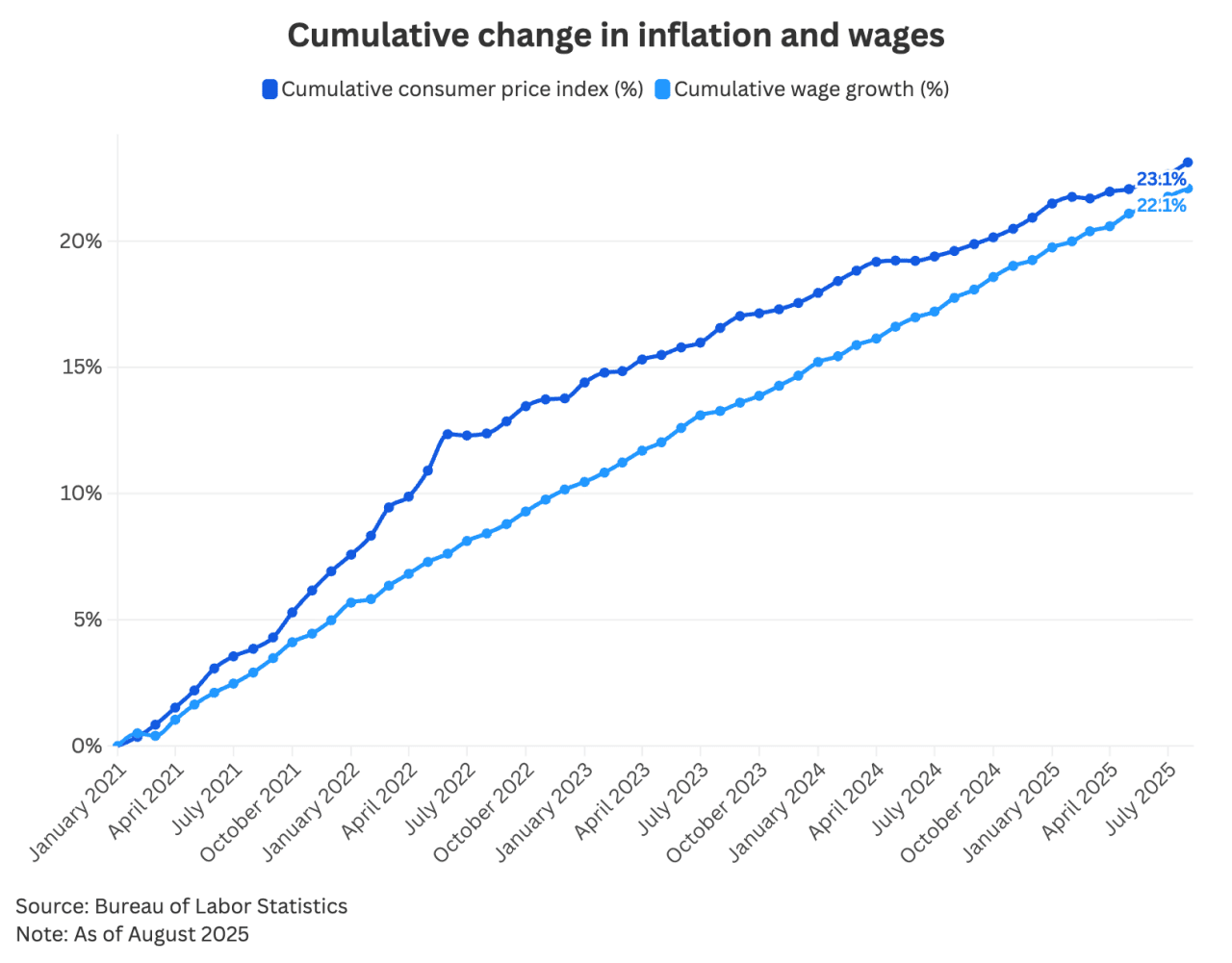
The data may be silent, but its effects are not. Early 2024 data from a poll of just over 2,000 individuals by the American Staffing Association found that 53% felt wages weren’t keeping up with inflation. Even nominal increases aren’t enough to combat the erosion of purchasing power for everyday items such as food, rent, or health care.
It’s clear that inflation eclipses wages, but how it translates to a productivity crisis may be unclear. The aforementioned PwC data references how employees claim financial stress directly affects their job performance, and Calm outlines that financial stress can lead to:
Any or all of the above can impact employee performance on a day-to-day basis. Whether it’s unexplained headaches, digestive issues, elevated blood pressure, or some other symptom, an employee not feeling their best can impact work output.
For employees, the best way to combat financial stress is to strive for stability in your day-to-day finances. Below are some useful recommendations to accomplish this:
Maximize existing benefits
First, it’s possible you’re overlooking financial benefits already available to you through work. Review your existing 401(k) contributions, if applicable, and ensure you take advantage of any employer matches. Try to use a Health Savings Account (HSA) or Flexible Spending Account (FSA) to further reduce your medical costs where applicable.
Financial education and resources
More and more employers are starting to offer Employee Assistance Programs that could include free financial counseling. Beyond this, take advantage of any internal financial literacy tools or workshops that your company may host. By developing an understanding of debt management, savings, and investments, you can build long-term confidence in your finances.
Practical steps
Even taking small steps like automating the amount getting deposited into your savings account monthly, tracking expenses on a daily basis, building up an emergency fund, and keeping a modest lifestyle can help. Small, yet consistent, actions can compound over time into real savings.
On the flip side of the coin, employers have a clear responsibility to act. The 2025 SHRM Employee Benefits Survey, polling over 4,000 HR professionals, found that retirement planning and savings and health-related benefits topped the list of ‘wants’ from employees. Strong programs to consider implementing in your organization include:
Striving to provide a better workplace for your employees will inevitably reduce turnover while also showing your employees that their financial well-being is one of your top priorities.
The formal advice offered by PwC in their 2023 Financial Wellness Survey is that employers should implement services that address the money issues employees are currently facing. As the report outlines, employees will be unable to focus on long-term goals or become financially resilient, which can impact their day-to-day work production. In the long run, and with enough employees affected, this can have major economic impacts on a business.
Data from mid-2025 gathered by Investopedia indicates that one of the biggest concerns experts have regarding the economy is stagflation. Used to describe the increased inflation and unemployment seen in the 1970s and 1980s, it doesn’t paint an optimistic picture. This is why both workers and employees need to prepare for instability by maximizing benefits and seeking financial education.
Financial stress has become a defining issue for the average employee. If this matter is left unaddressed, it can threaten the mental health and well-being of your employees. The right mix of personal action and employer support can address the worst parts of the issue, but it will require effort from everyone involved. However, when employees finally feel secure about their finances and health, they can focus more on doing their best work.
This story was produced by Wysa and reviewed and distributed by Stacker.







Reader Comments(0)