
The people's voice of reason


The people's voice of reason

Optimal growing conditions are a crucial component of what enables modern agriculture to continue delivering efficiently. As commercial growing needs evolve, having an alternative to open-field farming that allows you to control the microclimate and growth of crops or cannabis without seasonal or climate-related concerns is essential.
Well-optimized grow houses can contribute to year-round crop production and help develop faster growth cycles for healthier plants. For these reasons, learning to create and maintain a suitable environment for plants that offer high yields is important.
Here is Meritus Gas Partners‘ guide on how to maintain optimal conditions in your grow house, which elaborates on the science behind creating ideal grow house conditions and how to control the environment to ensure maximum yield.
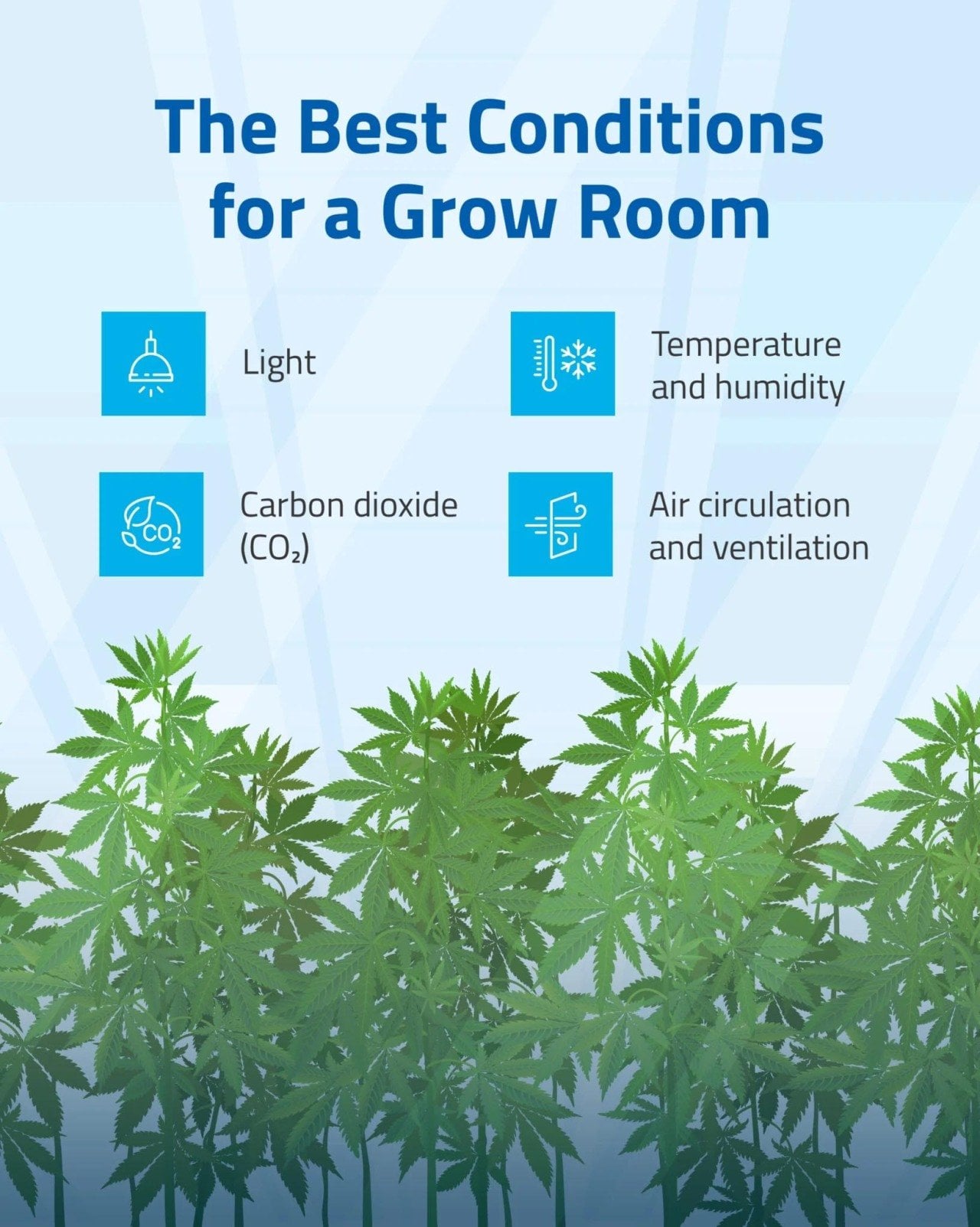
Understanding the best conditions for a grow room requires some basic knowledge about controlling the room’s environment. The ideal conditions for a specific grow room will depend on growth stages and the type of plant being grown. However, the key environmental factors to achieve the best conditions will always revolve around the following aspects:
Optimal growing conditions are an important balancing act to get right. It can provide plants with an environment that encourages growth by replicating the conditions that help them thrive in their natural habitat. For grow houses, achieving this means exploring ways to replicate each important environmental factor indoors to cultivate those ideal growth conditions.
Below are the critical factors that go into maintaining optimal conditions and how they can be achieved in a well-crafted grow house environment.
Optimal growing conditions indoors require lights that can imitate sunlight. These are used for photosynthesis — a process that green plants use to convert light, water and carbon dioxide into chemical energy, releasing dissolved oxygen in the process. To achieve photosynthesis, your plants will need to grow under a specific light spectrum, which mainly consists of blue and red light.
While different plants and phases will need a varying degree of intensity and length of time, the growing stages and type of light required for an optimal grow house environment are below:
To reap the benefits of optimal indoor growing conditions, it’s important to have the equipment to achieve these outcomes. Investing in quality grow lights is an effective option to create those ideal growing conditions. Look for an efficient, low-heat output that can provide your plants with the full spectrum of light.
Popular grow light options include:
You can cultivate optimal growth conditions by using the right light source and embracing innovations to keep you on track. Using automated timers and controls to monitor and adjust light cycles during each growth stage can maintain the ideal light environment for your plants.
Light choice, placement and distance are crucial in creating an ideal light environment for cannabis plants to thrive and produce a high yield. Avoid making these common mistakes in grow house lighting to save wasted costs and work hours:
Planning how to control temperature and humidity in a grow house is a balancing act. You can have the most expensive grow house setup in the world, but it won’t deliver without a dialed-in combination of optimum temperature and humidity levels.
A grow house will only be as good as its environmental conditions. The overall temperature and humidity of your grow house have a direct impact on plant function in the following ways:
While ideal conditions will also depend on the growth stage of your plants, it’s essential not to overlook the interconnectedness of both temperature and humidity in an optimal growing environment.
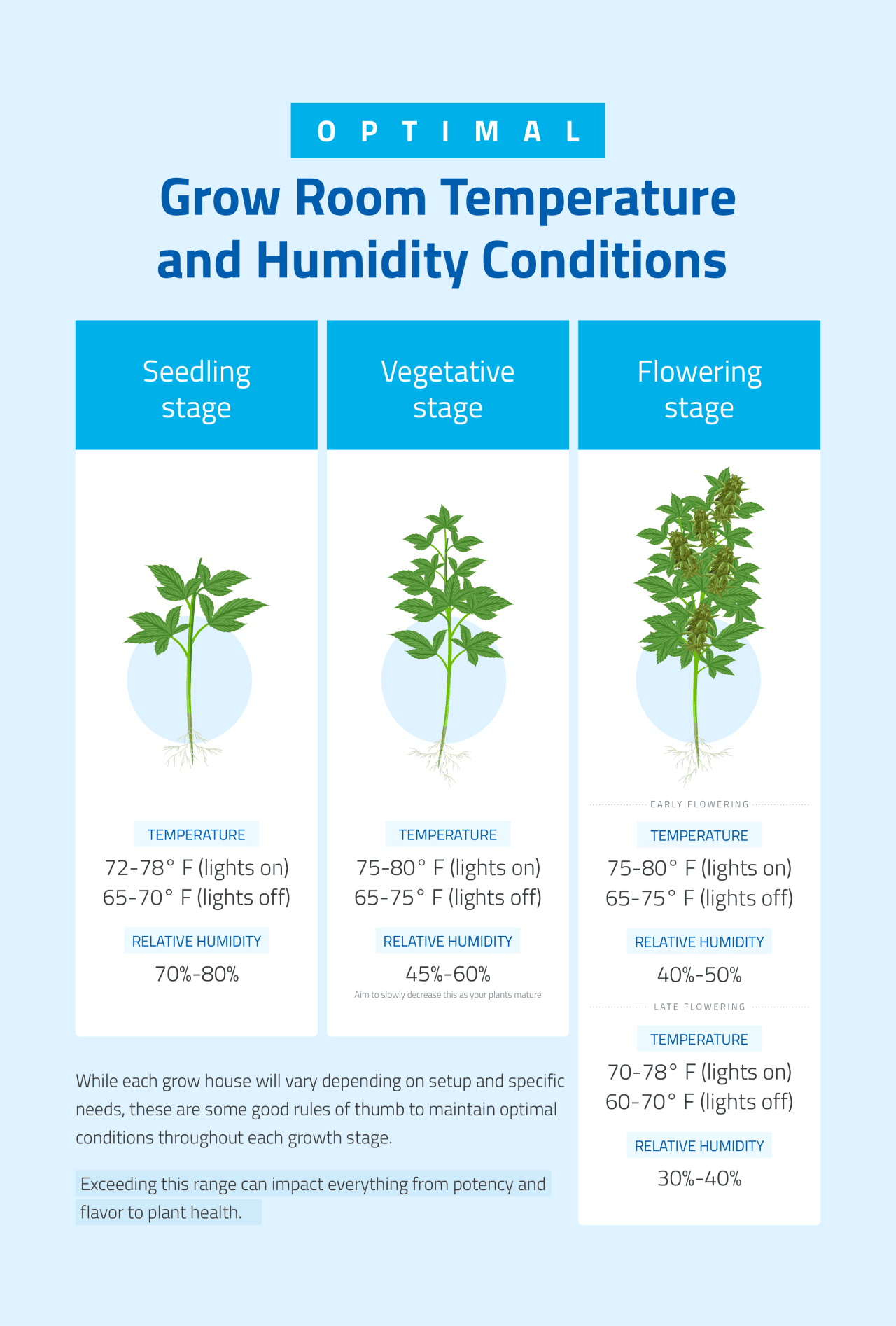
The ideal temperature range for cannabis is between 77° and 86° Fahrenheit. Exceeding this range can impact everything from potency and flavor to plant health. While each grow house will vary depending on setup and specific needs, below are some good rules of thumb to maintain optimal conditions throughout each growth stage:
The biggest mistake a grower can make is to ignore the conveniences and appliances at their disposal. Understanding how to control temperature and humidity in a grow house is about working smarter, not harder. Temperature and humidity levels can be set and controlled through appliances that reduce the chance of your environmental conditions being compromised.
These appliances include:
The second biggest mistake to avoid is ignoring the benefits of vapor pressure deficit (VPD) measures. Many growers avoid this subject as it can seem overly difficult to understand. However, it’s essentially a way to track how much moisture the air wants to take from your plants. Too little moisture means a weaker transpiration and reduced nutrient intake. Too much moisture means a higher water demand for your plants.
Optimal VPD levels contribute to a good balance of transpiration and CO2 intake, which helps increase photosynthesis. A typical range for optimum growth efficiency will be around 0.45 to 1.25 kilopascals (kPa). If you’re unable to track VPD, being strict about temperature and humidity levels will ensure that you stay within these measurements.
Carbon dioxide plays a key role in photosynthesis. Being able to raise CO2 levels in a well-maintained cannabis grow room can help create faster, healthier buds. While carbon dioxide is an important part of the entire growing process, implementing a CO2 enrichment strategy during the vegetative stage and early flowering stage is where you’ll see the most benefits.
A CO2 level between 600 and 1,000 parts per million (ppm) during the vegetation stage will support a faster rate of photosynthesis, while a general CO2 level between 1,000 and 1,300 ppm should be your goal during the flowering growth phase.
Carbon dioxide primarily benefits grow house environments through photosynthesis. However, studies also show that elevated CO2 concentrations contribute to reducing stomatal conductance and enhancing water use efficiency in plants.
But what are the best conditions for a grow room that needs CO2 beyond the naturally occurring levels? To maximize the benefits of accelerated growth and potentially higher yields, supplemental CO2 should be used in conjunction with high-quality, powerful grow lights and temperature monitoring to create a higher-intensity — but still optimal — growing environment.
This involves finding a trustworthy and consistent source of high-purity gas. Common solutions for this need beyond CO2 enrichment include:
Professional grow houses tend to use CO2 for plant growth, but they will also have strict detection equipment that monitors carbon monoxide (CO), propane, ammonia (NH3) and methane (CH4). One of the most critical mistakes to avoid is exceeding safe CO2 levels. Not only does it damage your plants, but it can also be very unsafe for workers.
Ensure that you have both fixed and wireless systems in place to detect issues and closely monitor safety levels.
Strong air circulation and ventilation do more than properly distribute CO2. They also help maintain consistent temperature and humidity levels. Additionally, they contribute to a healthier grow home ecosystem that strengthens plant stems and prevents pests from damaging your plants.
For robust air circulation and ventilation, growers will need a combination of oscillating fans and carbon filters:
Regularly exchanging the air in your grow house is a vital part of replenishing CO2 while removing any excess heat and humidity.
Airflow makes a difference in your environmental conditions. Indoor growing plants, especially cannabis, can be crowded and overlapped. Having a wide selection of fans to remove any unwanted areas of excess humidity (called microclimates) is important. However, this may still lead to uneven conditions based on plant spacing and the size of your grow house.
To reduce this issue, it’s a good idea to calculate the cubic feet per minute (CFM) of your grow house. Just multiply the room’s length, width and height to determine its volume, and then multiply your volume by the air exchange rate you’re looking for. This gives you the base CFM requirement.
Finally, add percentages to increase your base CFM — 25% for each carbon filter you have, 30% for each 90-degree duct bend, 15% for each 45-degree bend, 1% for each foot of ducting and 10% for every light. After you’ve added those percentage increases, you have your final fan rating.
Achieving the best possible control of your grow house environment is about understanding what’s available to make the process work best for your specific needs. Some common air circulation and ventilation mistakes to avoid include:
A combination of the essential equipment for optimal grow house conditions and a clear idea of your goals can make all the difference. Having the tools and knowledge to cultivate a more controlled environment can deliver a higher yield, a healthier growth experience and a more enjoyable, less stressful growing process.
Temperature, light, humidity, CO2 and airflow that work together as one cohesive unit is the true mark of good grow house. When done consistently, great environmental conditions will be a natural outcome of any crop.
This story was produced by Meritus Gas Partners and reviewed and distributed by Stacker.








Reader Comments(0)