
The people's voice of reason


The people's voice of reason
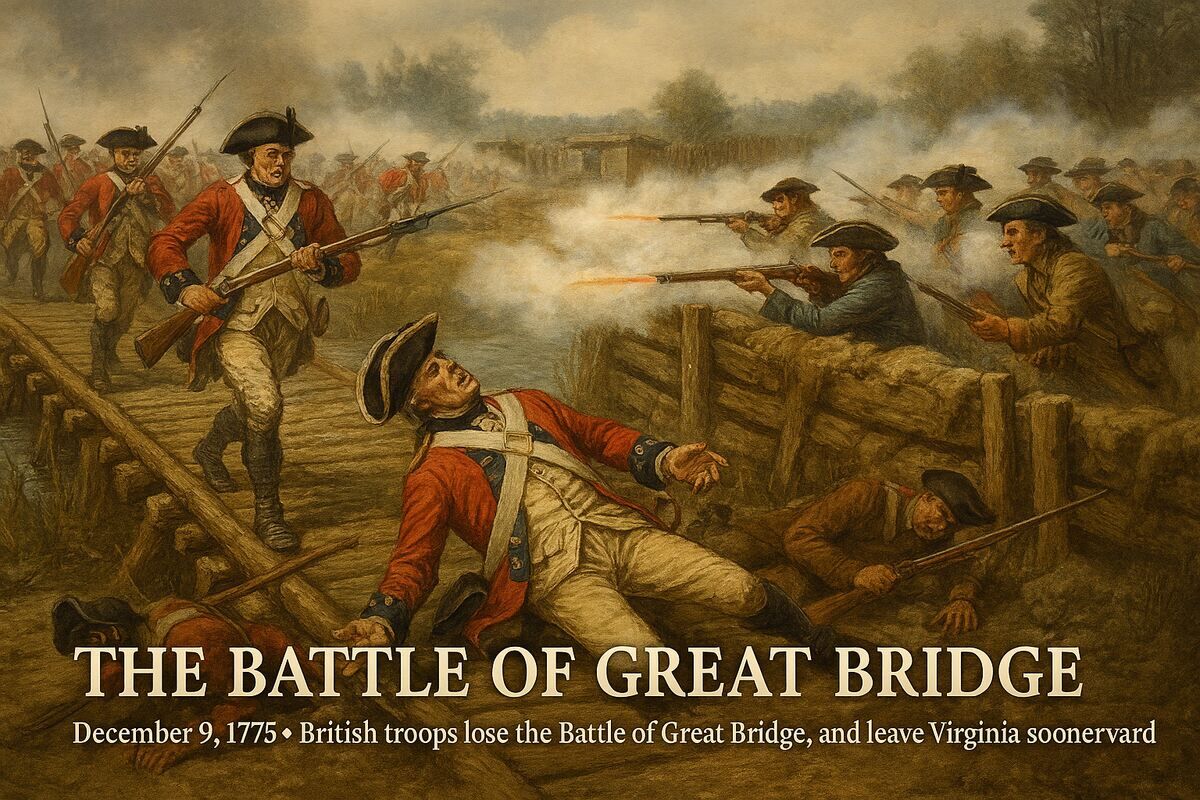
The Battle of Great Bridge led to English occupation forces being withdrawn from Virginia
By mid-1775, tensions in Virginia mirrored those in Massachusetts. Royal Governor John Murray, Earl of Dunmore, attempted to suppress rebellion by seizing gunpowder stores and raising forces loyal to the Crown. Among his recruits were Loyalist militias and the controversial Ethiopian Regiment, composed of enslaved people promised freedom for military service.
The strategic focus soon shifted to Norfolk, a Loyalist stronghold. The only reliable land approach to Norfolk was across the Great Bridge, a narrow causeway surrounded by swamp. Recognizing its importance, Dunmore fortified the north side with Fort Murray, while Patriot forces under Colonel William Woodford entrenched themselves on the south side.
The Battle
On the morning of December 9, 1775, Dunmore ordered an assault to break the Patriot position. British grenadiers and light infantry of the 14th Regiment of Foot, led by Captain Charles Fordyce, advanced across the causeway. Despite their disciplined platoon firing, they were met with devastating volleys from entrenched Virginians. Fordyce himself was struck by multiple wounds and fell, symbolizing the futility of the attack.
The battle lasted less than an hour. British casualties numbered over 100 killed or wounded, while the Patriots suffered only one wounded. The disparity underscored the effectiveness of the colonial defenses and the growing confidence of the militia.
Aftermath
The defeat at Great Bridge shattered British control in Virginia. That night, Loyalist forces abandoned Fort Murray, spiking their cannons before retreating. Within weeks, Dunmore and his supporters evacuated Norfolk, taking refuge aboard Royal Navy vessels. By January 1776, Norfolk itself was destroyed-first shelled by Dunmore's fleet, then burned by Patriot forces to prevent its use as a British base.
Significance
- Strategic Victory: The battle secured Virginia for the Patriot cause, eliminating British authority in the colony.
- Morale Boost: Colonel Woodford described it as "a second Bunker's Hill affair," highlighting its symbolic importance.
- Turning Point: It demonstrated that militia forces could decisively defeat professional British troops, strengthening revolutionary resolve across the colonies.
Conclusion
The Battle of Great Bridge on December 9, 1775 was a pivotal early clash of the American Revolutionary War. Its outcome forced the British to abandon Virginia, emboldened Patriot forces, and set the stage for the colony's full commitment to independence.



Reader Comments(0)