
The people's voice of reason


The people's voice of reason
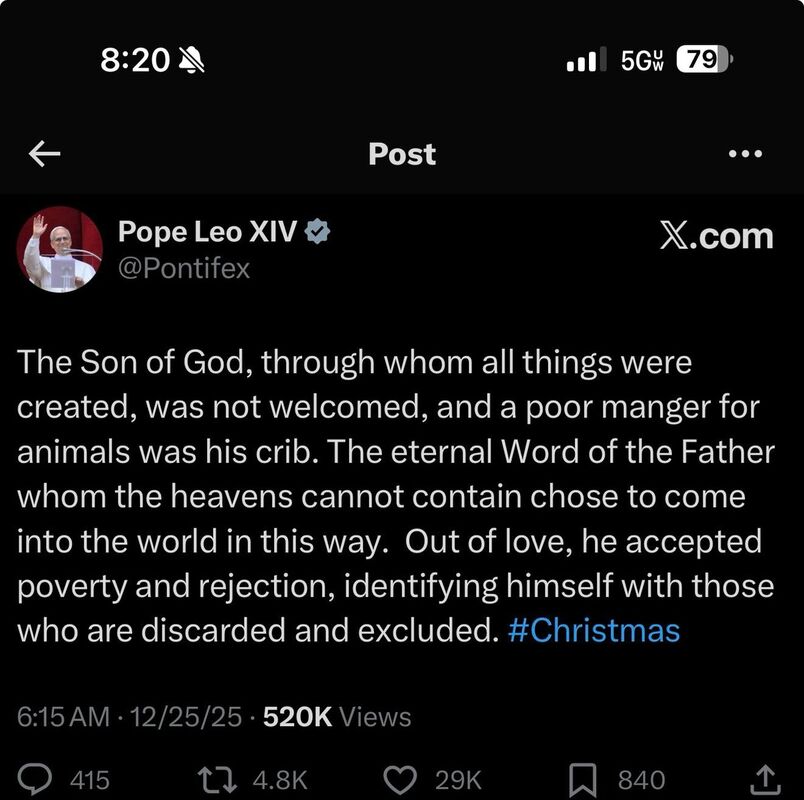
Pope Leo on X
On December 25, 2025, Pope Leo XIV delivered his first Christmas "Urbi et Orbi" blessing to a rain-soaked crowd of more than 26,000 gathered in St. Peter's Square. Speaking from the central loggia of the basilica, the Chicago-born pontiff offered a message of peace and responsibility, urging the world to shed indifference and embrace the suffering of others with compassion and resolve.
The address, Latin for "to the city and to the world," is traditionally used to reflect on global crises and offer spiritual encouragement. For Pope Leo, elected just eight months earlier, it was a defining moment - one that blended poetic reflection with pointed appeals for justice in some of the world's most troubled regions.
A Message Rooted in Bethlehem
"Let us all rejoice in the Lord, for our Savior has been born in the world," Pope Leo began, quoting the Entrance Antiphon from the Christmas Mass. "Today, true peace has come down to us from heaven."
He invoked the image of the Christ child born in a stable, reminding listeners that Jesus entered the world not in comfort but in rejection - "because there was no room for him in the inn." That rejection, the pope said, echoes today in the plight of refugees, the poor, and those caught in war.
"Indeed, he is our peace," Leo declared. "He has conquered hatred and enmity through God's merciful love."
Global Appeals for Peace
Pope Leo's message turned quickly to the world's most pressing conflicts. He called for an end to violence in the Middle East, naming Lebanon, Palestine, Israel, and Syria as places in need of "justice, peace, and stability". He also addressed the ongoing war in Ukraine, urging the international community to support "sincere, direct and respectful dialogue" between the parties involved.
In one of the most evocative moments of the address, the pope quoted Israeli poet Yehuda Amichai's "Wildpeace," contrasting the fragile calm of ceasefires with the deeper peace that "arrives unexpectedly - like wildflowers - after exhaustion and conflict".
"Responsibility is the sure way to peace," Leo said. "If all of us, at every level of society, embrace responsibility for one another, then peace will not be a distant hope, but a living reality."
A Call to Shed Indifference
The pope's appeal extended beyond war zones. He urged the faithful to reject indifference toward those who suffer - including impoverished families in Yemen, migrants crossing the Mediterranean and the Americas, and civilians in Gaza who have "lost everything".
"Let us not look away," he said. "Let us not grow numb to the cries of those who suffer. The birth of Christ is not a sentimental tale - it is a summons to action."
Leo's words resonated with many in the square, where umbrellas dotted the crowd and pilgrims from around the world stood shoulder to shoulder. Though the morning Mass had been held under a steady downpour, the skies cleared just in time for the pope's appearance.
A New Voice in the Vatican
Pope Leo XIV, born in Chicago and elected in May 2025, is the first American to lead the Catholic Church. His Christmas message reflected both his pastoral style and his global awareness, blending scriptural references with contemporary urgency.
Observers noted the balance between poetic imagery and direct appeals for diplomacy and humanitarian aid. His emphasis on "responsibility" - repeated throughout the address - suggested a theme likely to shape his papacy.
"He's asking us to be accountable," said one Vatican analyst. "Not just governments, but individuals, communities, and the Church itself."
Conclusion: Peace Begins With Us
As the bells of St. Peter's rang out and the crowd applauded, Pope Leo offered his final blessing: "From the Child of Bethlehem, we implore peace and consolation for all who suffer."
His message, delivered with quiet intensity, reminded the world that peace is not merely the absence of war - but the presence of love, justice, and shared humanity.




Reader Comments(0)