
The people's voice of reason


The people's voice of reason

Taking care of elderly parents at home can be rewarding. Many seniors prefer to age in a familiar place, encouraging adult children to have aging parents live at home instead of residential care facilities.
However, caregiving encompasses huge responsibilities. Your loved one’s degree of mobility and independence impacts the type of work to expect. You typically need to assist with their daily activities, offer emotional support and manage medical needs — on top of your full-time job and other responsibilities.
Caregivers usually spend several hours a week caring for their loved ones. Aging adults also have evolving needs, affecting the level of care you should provide. Sufficient planning and preparation are essential for quality and effective care. In this guide, Village Caregiving details the steps to take and what to expect in the process.

If you’re taking care of your aging parent, family member, friend or neighbor, then you’re considered an informal caregiver. Seniors who prefer to age at home are considered “aging in place” and can receive in-home care services for the short or long term.
As a caregiver, you typically assist with household tasks, personal care, medical care, food preparation and money matters. Here’s how you can get started:
First, plan for your loved one’s needs now and in the future. Consider whether they have illnesses, such as diabetes or heart disease, and understand how these conditions affect their daily activities.
Once you identify such needs, assess how much you can accommodate. For instance, your aging parent may only need help with bathing. This makes it easier to work on other responsibilities, such as work or errands. Caring for your loved one is an active role, but home care services can help you if you need them.
Additionally, prepare for caregiving costs. Even without professional caregivers, you need to account for medication, mobility aids and additional groceries. Home care services are usually more affordable than residential care facilities. However, government programs also provide financial assistance when caring for your loved ones.
Your home needs to be safe enough for your loved one to move about. A safe environment maintains their independence, while potentially reducing accidents and injuries. Check each area of your home and identify safety issues. Fix the most immediate dangers first, such as poor lighting and loose stair railings. You may also consider:
Regularly check for safety issues and address them promptly. The federal government, state housing finance agencies, community development groups or social services departments may be able to help with payments for home safety renovations.
Nutrition plays a key role in maintaining your loved one’s health. Consider consulting with a nutritionist for a meal plan, which may include fruits, vegetables, whole grains, lean proteins and healthy fats. Note any dietary restrictions that impact your loved one’s health issues, such as high blood pressure or diabetes. Food that’s easier to consume is important for seniors who have trouble with chewing or swallowing.
Additionally, encourage your loved one to drink plenty of water to stay hydrated. Other healthy beverages may be beneficial, including herbal tea and low-fat milk. If preparing meals on your own is challenging, consider meal delivery services that cater to unique dietary needs. Having your loved one prepare the meals with you, if possible, can also help them gain a sense of independence.
Seniors need to stay physically and mentally active to avoid feelings of loneliness. Activities, like exercise, can also alleviate potential illnesses and improve your loved one’s strength and balance. Remember to supervise them during physical activities to ensure their safety. Consult with a health care provider when deciding which exercises to pursue.
Companionship and emotional support can also foster stable mental and emotional health. Set a dedicated time to bond with your loved one and engage in meaningful conversations. For instance, you can reminisce and help them relive happy memories by looking at old photos or videos. You could also attend:
Professional caregivers can share some or take all of the responsibilities. They can tailor their care services based on your loved one’s needs and preferences. Examples of care services include:
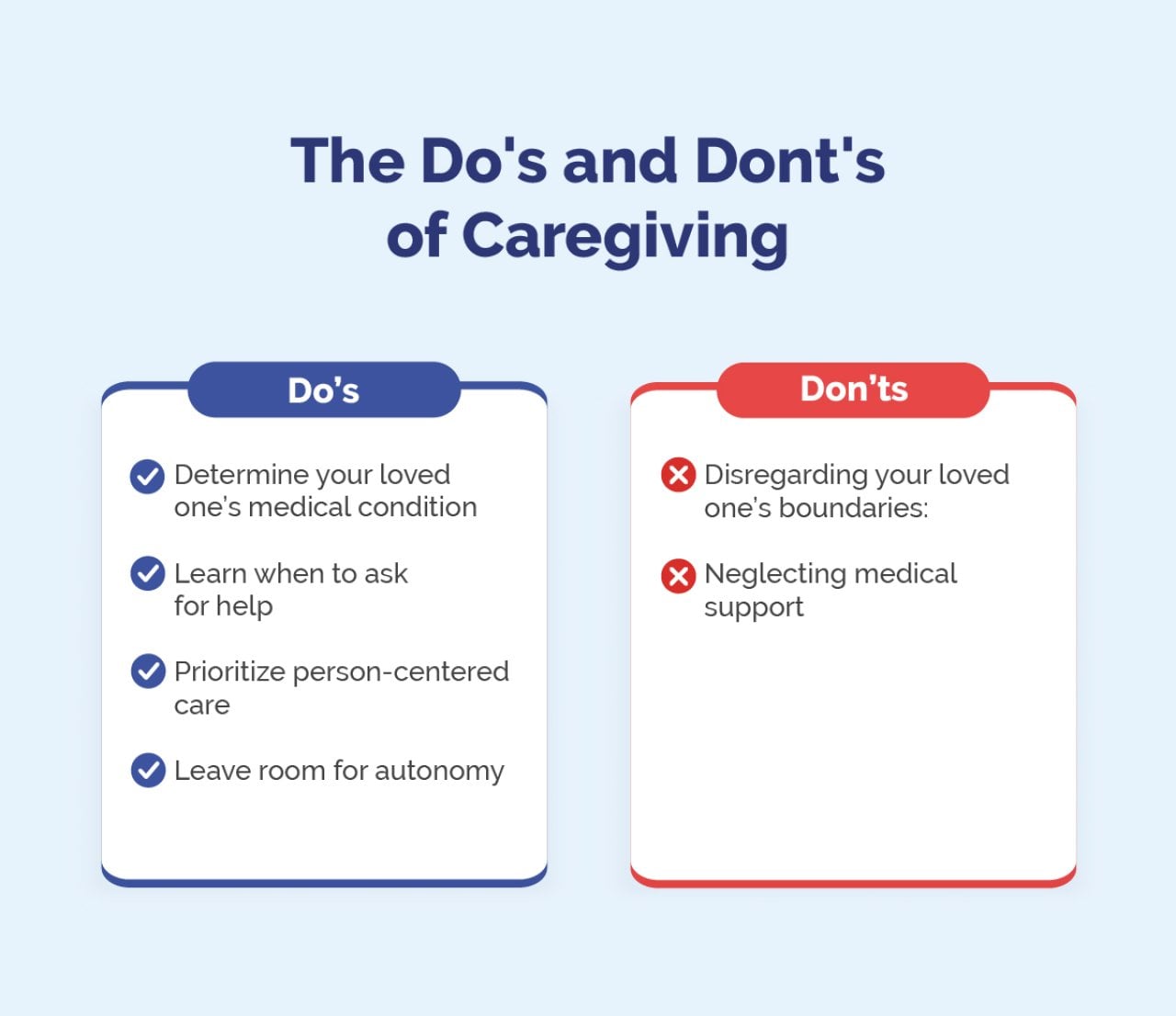
It takes serious effort to become a caregiver. To adequately care for your loved one, remember to do the following:
Additionally, remember to avoid the following when caring for your loved one:
Caregiving can be rewarding and fulfilling, but it can come with challenges that bring about emotional and physical stress. Here’s how you can navigate such challenges:
Many professionals offer counseling, including therapists and social workers. They can help you manage stress and understand other feelings you may have, such as anger, sadness or overwhelm. They can also help you create plans for unexpected events and navigate them. You can receive counseling at home or in their office, or attend virtual counseling sessions.
You need to take care of yourself to care for your loved one well. Here are a few things you can do for your well-being:
Caregiving costs can accumulate and contribute to your stress levels. However, some government programs pay for caring for your loved ones with disabilities. If your loved one receives Medicaid, you may benefit from a consumer-directed personal assistance program. The requirements and payments vary per state.
Various programs are also available for veterans. For instance, the Veteran-Directed Home and Community-Based Services program provides a flexible budget that lets veterans hire family members as caregivers. Long-term care insurance policies and paid family leave programs can also offer caregiving compensation.
To properly care for your loved one, consider the following questions and answers:
What is the first rule of caregiving?
The first rule of caregiving is to take care of yourself first. This way, you can adequately and sustainably care for your loved one while reducing emotional and mental strain.
What do caregivers need the most?
Caregivers need many things, but emotional support is potentially what they need the most. Consider working with other family members and friends if the responsibilities get overwhelming. You can also work with home care services for professional support. Reach out to a counselor if you need help managing your emotions. A healthy lifestyle, including a nutritious diet and regular exercise, can also protect your overall health.
What is the hardest responsibility of a caregiver?
Juggling a full-time job with caregiving responsibilities is one of the hardest parts of being a caregiver. You need effective time management skills, while also having the mental, emotional and physical capacity to handle the work. It’s important to be disciplined with your tasks and your thoughts — you need to learn to avoid negative self-talk and worrying consistently.
When preparing to care for your loved one at home, their needs determine the right steps to take. You need to:
The seriousness of the responsibilities also makes it essential to know the caregiving do’s and don’ts. Reaching out for support and opting for financial assistance can help you navigate the challenges. While your loved one is at the heart of the decisions you make, taking care of yourself first is of utmost priority. Caregiving is only effective if you’re also well-equipped mentally, emotionally and physically to perform the tasks.
This story was produced by Village Caregiving and reviewed and distributed by Stacker.






Reader Comments(0)