
The people's voice of reason


The people's voice of reason

Finding the right ADHD prescription can feel overwhelming at first. With dozens of stimulant and nonstimulant ADHD medications available, many people search for clarity on how these medications work, how they differ, and what to expect. Whether you’re newly diagnosed, supporting a child, or exploring ADHD medication options as an adult, understanding the fundamentals helps you make confident decisions with your healthcare provider. Because ADHD medications can be expensive—especially extended-release versions—many people explore prescription savings programs to help manage costs.
Below, SaveHealth, a prescription discount/savings card website, highlights eight important considerations to guide you as you compare ADHD treatments, manage side effects, and choose the most effective approach for your symptoms and lifestyle.
ADHD prescriptions fall into two primary categories, each with different benefits and mechanisms.
Stimulant ADHD Medications
Stimulants are the most commonly prescribed treatments and have decades of research supporting their effectiveness.
Common stimulant families:
Methylphenidate-based medications:
Amphetamine-based medications:
Key benefits of stimulants:
Nonstimulant ADHD Medications
Nonstimulants are an alternative for individuals who don’t respond well to stimulants or who prefer a nonstimulant option.
Common nonstimulants:
Key benefits of nonstimulants:
Understanding how these medications support executive function and focus can help you feel more confident in your treatment plan.
How stimulants work
Stimulants increase the availability of catecholamines (primarily dopamine and norepinephrine)—neurotransmitters essential for focus, motivation, and impulse control. By enhancing communication between brain networks, stimulants improve sustained attention and reduce hyperactive behaviors.
How nonstimulants work
Nonstimulants affect both dopamine and norepinephrine or specific brain receptors in ways that help regulate attention, emotional responses, and executive functioning. They typically take longer to reach full effectiveness but offer smoother, more consistent coverage.
Choose Between Short-Acting and Long-Acting Formulations
Medication duration matters just as much as the medication itself. Different formulations allow individuals to tailor their symptom coverage to school, work, or daily routines.
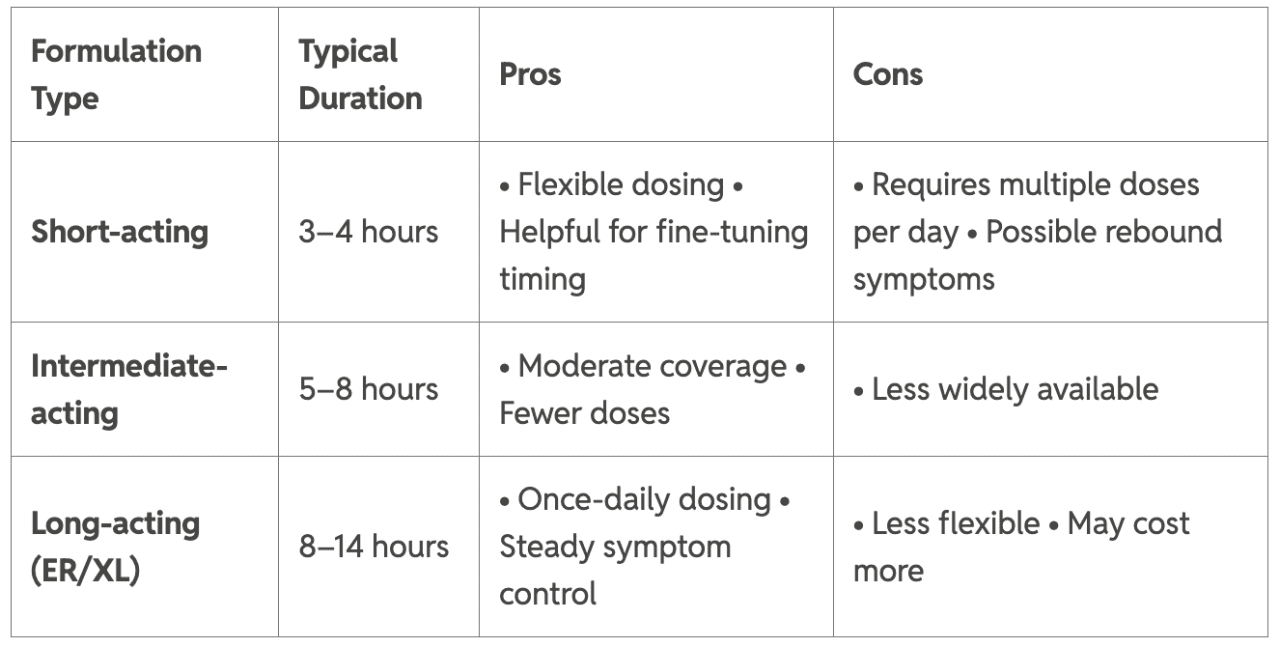
Many adults prefer long-acting options for all-day productivity, while children may use a combination of short-acting and long-acting doses.
Awareness of potential side effects helps you identify what’s normal, what’s temporary, and what requires follow-up with your clinician.
Stimulant ADHD Medication Side Effects
Nonstimulant ADHD Medication Side Effects
Side effects often improve after the first few weeks. Adjusting the timing, dosage, or formulation can also help.
ADHD medication for adults often differs from pediatric medication needs. Busy schedules, work expectations, and co-existing conditions such as anxiety or depression all influence treatment decisions.
Adult-specific considerations:
Some adults also prefer medications like Vyvanse or Concerta because they produce smoother effects with less abrupt “wear-off.”
Compare ADHD Medications by Effectiveness and Symptom Coverage
While stimulants tend to be the most effective class overall, nonstimulants provide important alternatives for certain patients. Comparing the two can help clarify expectations.
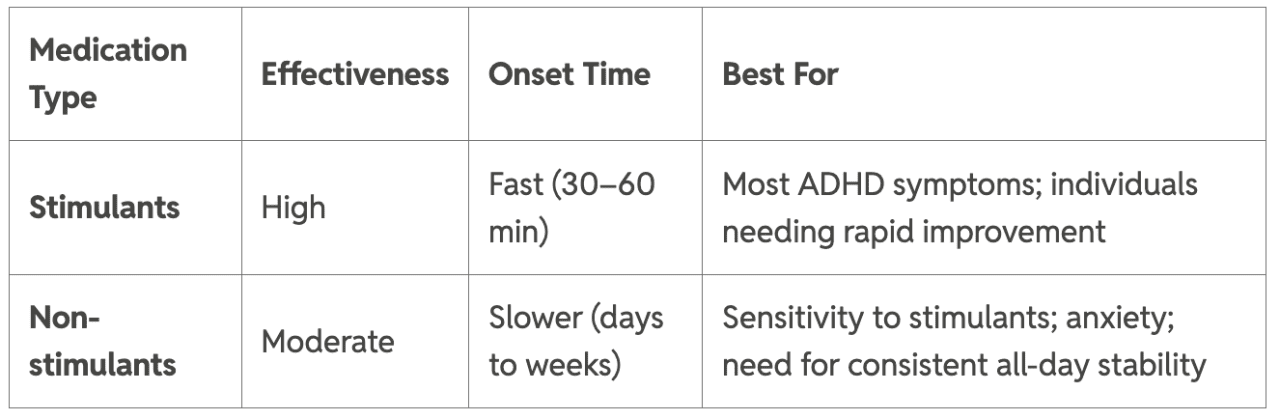
Many people try several options before finding their best fit—this is a normal part of the process.
Stimulant and nonstimulant medications have been studied extensively, and both are considered safe for long-term use when monitored appropriately.
Long-term considerations:
Regular check-ins with your prescribing provider help ensure long-term treatment remains stable and effective.
Medication cost varies widely depending on pharmacy, formulation (generic vs. brand), and insurance. Extended-release stimulants can be more expensive, and not all plans cover every option.
Strategies for lowering ADHD prescription costs:
This story was produced by SaveHealth and reviewed and distributed by Stacker.





Reader Comments(0)