Psoriatic arthritis medications: A comprehensive guide
Psoriatic arthritis is an autoimmune condition that causes joint inflammation, skin symptoms, and pain. People searching for psoriatic arthritis prescriptions are often looking for detailed information about medication options, their effectiveness, potential side effects, and ways to manage costs.
This guide from SaveHealth, a prescription discount/savings card website, explores the most commonly prescribed medications for psoriatic arthritis, including DMARDs, biologics, and NSAIDs, while highlighting considerations for effectiveness, safety, and cost.
How Psoriatic Arthritis Medications Work
Medications for psoriatic arthritis aim to reduce inflammation, slow disease progression, and relieve pain. They work through different mechanisms depending on the drug class.
Major medication categories:
DMARDs (Disease-Modifying Anti-Rheumatic Drugs): These slow disease progression and prevent joint damage. Examples include methotrexate and leflunomide.
Biologics: Target specific components of the immune system to control inflammation. Examples include Skyrizi and Humira.
NSAIDs (Non-Steroidal Anti-Inflammatory Drugs): Provide temporary relief from pain and stiffness without altering disease progression. Examples include naproxen and celecoxib.
Corticosteroids: Offer rapid symptom relief during flare-ups but are generally used short term.
PDE-4 Inhibitors: Commonly known as phosphodiesterase-4 inhibitors, these drugs work by blocking the PDE-4 enzyme which ultimately helps to lower inflammation in the body. A frequent used example is Otezla.
Top Psoriatic Arthritis Medications
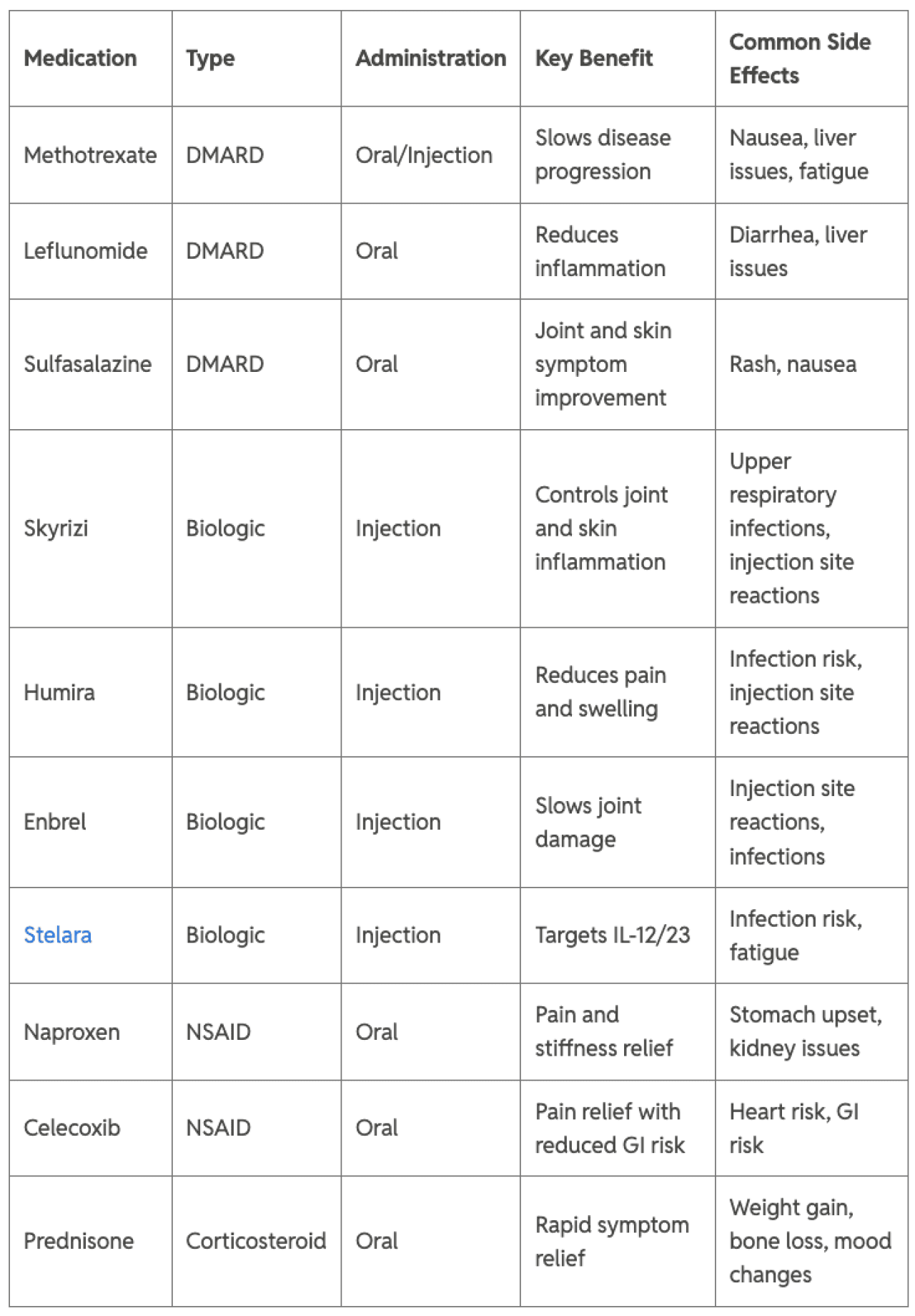
The following medications are among the most commonly prescribed for psoriatic arthritis. They include both traditional and newer therapies.
DMARDs
Methotrexate: Often first-line therapy for psoriatic arthritis. It slows joint damage and inflammation.
Leflunomide: Useful for patients who cannot tolerate methotrexate.
Sulfasalazine: Reduces joint inflammation and can improve skin symptoms.
Biologics
Skyrizi (risankizumab): Targets interleukin-23, reducing inflammation and improving both joint and skin symptoms.
Humira (adalimumab): TNF inhibitor that helps reduce pain and swelling.
Enbrel (etanercept):TNF inhibitor that can slow joint damage and improve quality of life.
Stelera, Imuldosa, Otulfi, Pyzchiva, Selarsdi, Steqeyma (ustekinumab): Targets IL-12 and IL-23 to control inflammation.
NSAIDs
Naproxen: Reduces pain and stiffness.
Celecoxib: Offers pain relief with reduced gastrointestinal risk compared to traditional NSAIDs.
Corticosteroids
Prednisone: Provides rapid relief during flares but is not intended for long-term use due to side effects.
Selecting the appropriate psoriatic arthritis medication requires balancing effectiveness, side effect tolerance, convenience, and cost.
Factors to consider:
Severity of joint and skin symptoms
Past medication response
Risk of side effects
Administration preference (oral vs injection)
Insurance coverage and out-of-pocket cost
Tips for Managing Psoriatic Arthritis Medication Costs
Psoriatic arthritis medications, particularly biologics and DMARDs, can be costly. Patients can reduce expenses by:
Comparing pharmacy prices
Considering generic options for DMARDs
Exploring manufacturer savings programs
Reviewing insurance co-pay assistance
Planning prescriptions to avoid gaps in therapy
Even small monthly savings can make a significant difference for long-term disease management.
Psoriatic Arthritis Medications & Prescriptions
Psoriatic arthritis management involves a range of medications, including DMARDs, biologics, NSAIDs, and corticosteroids. Understanding options like Methotrexate, Leflunomide, Sulfasalazine, Skyrizi, Humira, Enbrel, Stelara, Naproxen, Celecoxib, and Prednisone helps patients select effective therapies for their condition. Working closely with a healthcare provider while considering effectiveness, safety, and affordability can optimize long-term outcomes.









Reader Comments(0)