
The people's voice of reason


The people's voice of reason
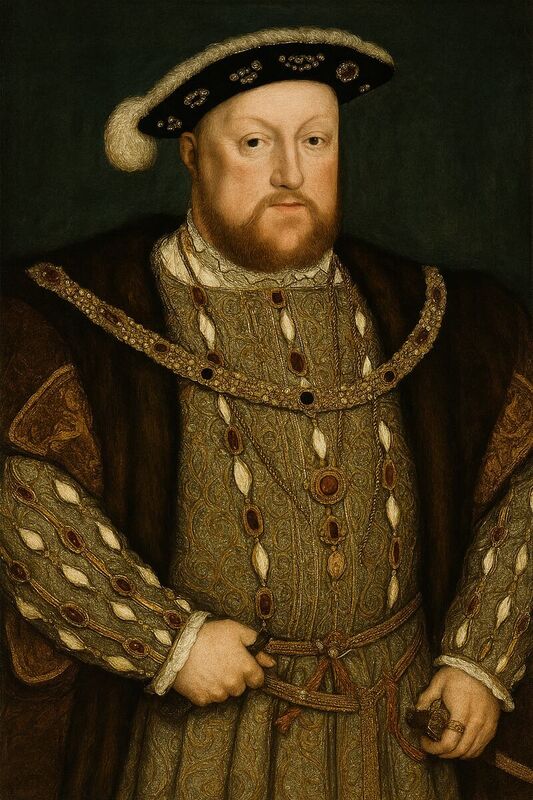
King Henry VIII
On January 25, 1533, in a quiet ceremony far removed from the splendor and spectacle normally associated with English royalty, King Henry VIII secretly married Anne Boleyn. The event, conducted in utmost secrecy at Whitehall Palace, marked a turning point not only in Henry's personal life but in the political and religious trajectory of England itself. What began as a private union would soon ignite a revolution that reshaped the nation's identity, its church, and its monarchy.
The clandestine wedding came after nearly seven years of courtship, frustration, and political maneuvering. Henry's first marriage to Catherine of Aragon had produced only one surviving child, Princess Mary, and the king had become convinced that his lack of a male heir was a sign of divine displeasure. Anne Boleyn, intelligent, charismatic, and politically astute, refused to become the king's mistress. Instead, she insisted on marriage - a bold stance that forced Henry to challenge the authority of the Pope himself.
By early 1533, Henry's patience had run out. Pope Clement VII continued to delay any ruling on the annulment of Henry's marriage to Catherine, largely due to political pressure from Catherine's nephew, the powerful Holy Roman Emperor Charles V. Henry, determined to secure his succession and marry Anne, decided to act without Rome's approval. The secret wedding was the culmination of this defiance.
The ceremony was performed by Rowland Lee, a cleric loyal to the king and willing to risk the wrath of Rome. Only a handful of witnesses were present, and the event was kept hidden even from many members of the royal court. Anne, already pregnant at the time, understood the urgency: the legitimacy of her child - who would later become Queen Elizabeth I - depended on the marriage being recognized as lawful.
The secrecy surrounding the wedding reflected the political volatility of the moment. Henry had not yet formally broken with the Catholic Church, and the annulment of his marriage to Catherine had not been officially declared. To marry Anne before resolving these issues was a direct challenge to papal authority. Yet Henry believed he had moral and scriptural justification, arguing that his marriage to Catherine had been invalid from the start because she had previously been married to his brother, Arthur. The Pope had granted a dispensation for the marriage, but Henry now claimed that the dispensation itself violated divine law.
In the months following the secret ceremony, Henry moved swiftly to consolidate his position. Thomas Cranmer, a reform-minded cleric and ally of Anne Boleyn, was appointed Archbishop of Canterbury. Cranmer soon convened a special court that declared Henry's marriage to Catherine null and void. With that obstacle removed, Cranmer publicly validated Henry's marriage to Anne, transforming the once-secret union into the official royal marriage of England.
The fallout was immediate and far-reaching. Catherine of Aragon was stripped of her title and confined to increasingly remote residences. Her daughter Mary was declared illegitimate. Anne Boleyn was crowned queen in a lavish ceremony at Westminster Abbey on June 1, 1533, a stark contrast to the quiet wedding months earlier. Yet even as Anne ascended to the height of royal power, she faced fierce opposition from those loyal to Catherine and from conservative factions within the church.
The marriage also accelerated England's break with Rome. In 1534, Parliament passed the Act of Supremacy, declaring Henry VIII the Supreme Head of the Church of England. This legislative act severed centuries of papal authority and laid the foundation for the English Reformation. What began as a personal quest for a male heir had transformed into a seismic shift in religious and political power.
Anne's own story, however, would take a tragic turn. Though she gave birth to Elizabeth in September 1533, she suffered subsequent miscarriages, including a male child in 1536. Henry, increasingly frustrated and influenced by court factions hostile to Anne, turned his attention to Jane Seymour. In May 1536, Anne was arrested on charges of adultery, treason, and incest - charges widely regarded by historians as fabricated. She was executed on May 19, 1536, becoming one of history's most famous victims of political intrigue.
Yet despite her downfall, Anne Boleyn's impact on England was profound. Her marriage to Henry VIII set in motion the events that created the Church of England, reshaped the monarchy, and produced one of the most influential rulers in world history: Elizabeth I. The secret wedding of January 25, 1533, was not merely a private act of passion but a catalyst for national transformation.
Nearly five centuries later, the story of Henry and Anne continues to fascinate scholars, filmmakers, and the public. It is a tale of ambition, faith, power, and the unpredictable consequences of personal decisions made at the highest levels of authority. The quiet ceremony at Whitehall, witnessed by only a few, would echo across generations - altering the course of English history and leaving a legacy still felt today.







Reader Comments(0)