
The people's voice of reason


The people's voice of reason
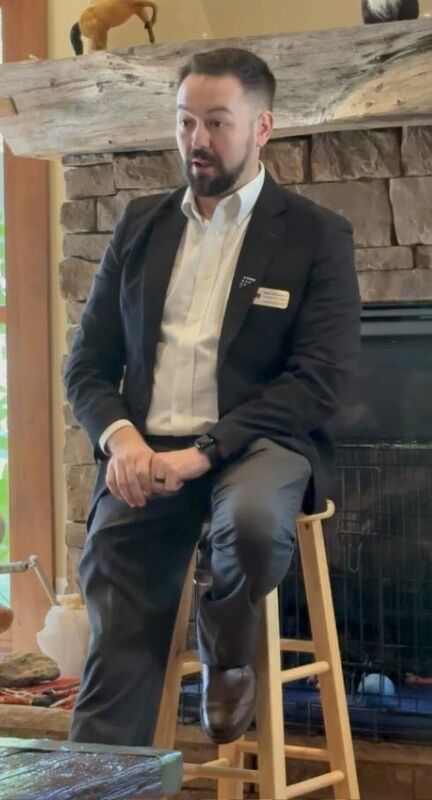
Mark Wheeler is running for U.S. Senate
Democrat Mark Wheeler has officially qualified for the 2026 U.S. Senate race in Alabama, adding a compelling new voice to a contest that is already drawing statewide and national attention. Wheeler, a chemist from Heflin with deep roots in east Alabama, enters the Democratic primary with a platform centered on economic fairness, health care access, and government transparency - themes he says reflect the everyday concerns of working families across the state.
Wheeler's qualification was confirmed as part of the Alabama Democratic Party's full slate of federal candidates, marking the first time since 2018 that Democrats have fielded contenders in every congressional race. His name now appears alongside Dakarai Larriett, Lamont Lavender, and Kyle Sweetser in what is shaping up to be one of the most competitive Democratic primaries in recent memory.
A Candidate Shaped by Alabama Roots
Wheeler was born in Anniston and graduated from Cleburne High School before earning a bachelor's degree from Jacksonville State University in 2024. His professional background as a chemist gives him a technical lens on policy, particularly in areas like environmental regulation, infrastructure, and public health.
But Wheeler's story is also marked by personal resilience. He has spoken openly about growing up in poverty and navigating a difficult family history - including the incarceration of both his father and stepfather - experiences he says shaped his belief in accountability, opportunity, and community support. His willingness to discuss those challenges has drawn attention from grassroots groups and local Democratic clubs, who see his candidacy as a break from traditional political narratives.
A Platform Focused on Working Families
Wheeler's campaign emphasizes several core issues that resonate across Alabama:
- Economic equity, including policies aimed at reducing poverty and supporting working‑class families
- Universal health coverage, with a call for a national insurance program
- Consumer privacy and responsible innovation, particularly around emerging technologies
- Modern infrastructure, including expanded mass transit and rural connectivity improvements
Wheeler argues that Alabama's economic challenges - rising costs, stagnant wages, and limited access to health care - require leaders who understand the lived experiences of ordinary residents. He has said that conversations with voters, including many Republicans, suggest a growing appetite for change as affordability concerns intensify.
A Competitive Democratic Primary Ahead
The Democratic primary is scheduled for May 19, 2026, and features four candidates: Wheeler, Larriett, Lavender, and Sweetser. All four completed Ballotpedia's Candidate Connection survey, signaling a competitive and issues‑driven race.
Wheeler's entry adds another dimension to the contest. His background in science, his personal story, and his focus on transparency distinguish him from his opponents, while his grassroots outreach has already gained traction in counties across east Alabama.
The Republican primary, meanwhile, includes high‑profile contenders such as Attorney General Steve Marshall, Congressman Barry Moore, former Navy SEAL Jared Hudson, Morgan Murphy, and Rodney Walker - setting up a potentially high‑stakes general election in November.
Democrats See an Opening - Even in a Deep‑Red State
While Alabama remains one of the most reliably Republican states in the country, Democratic leaders say the party's full slate of candidates reflects renewed energy heading into 2026. At a recent qualifying event in Montgomery, party officials emphasized that rising costs, health care access, and insurance premiums are reshaping voter priorities statewide.
Wheeler echoed that sentiment, telling supporters that he has met lifelong Republicans who are open to voting for a Democrat for the first time. He argues that economic pressure - especially the cost of food, health care, and insurance - is creating space for new political conversations across Alabama.
Looking Ahead
With qualifying complete, Wheeler now turns to the next phase of the campaign: expanding his grassroots network, sharpening his policy proposals, and introducing himself to voters across Alabama's diverse regions. His candidacy brings a mix of scientific expertise, personal resilience, and working‑class authenticity to a race that could help shape the state's political landscape in 2026.
As the primary approaches, Wheeler and his fellow Democratic contenders will work to distinguish themselves in a crowded field - and to convince voters that their vision offers a meaningful alternative in a state hungry for economic stability and practical leadership.






Reader Comments(0)