
The people's voice of reason


The people's voice of reason
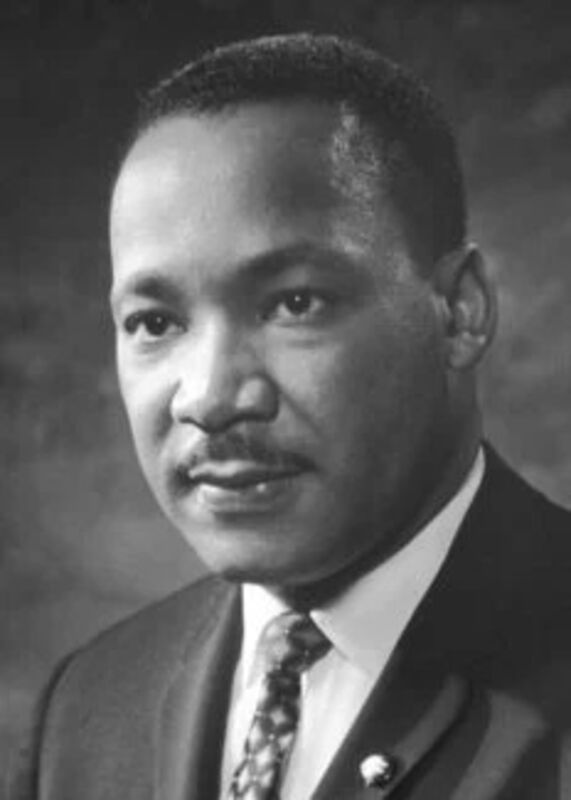
Dr. Martin Luther King Jr.
Today, the United States marks Martin Luther King Jr. Day, the annual federal holiday set aside to recognize the life and work of the Baptist minister and civil rights leader whose influence helped reshape American law and society. Observed on the third Monday of January, the holiday aligns with King's birthday on January 15, 1929, and has become both a day of remembrance and a day of service across the country.
Martin Luther King Jr. Day is one of the nation's newer federal holidays, officially established in 1983 and first observed in 1986. Its creation followed a 15‑year effort that began almost immediately after King's assassination in 1968. While many states and cities began honoring King's birthday as early as 1970, national recognition faced political and regional resistance before ultimately gaining bipartisan support in Congress. President Ronald Reagan signed the holiday into law on November 2, 1983, and by 2000 all 50 states had adopted some form of official observance.
A Leader Who Emerged From Montgomery
King's national prominence began in Alabama. In 1955, the 26‑year‑old pastor of Dexter Avenue Baptist Church in Montgomery became a central figure in the Montgomery Bus Boycott, a 381‑day protest sparked by the arrest of Rosa Parks. The boycott's success helped end legally enforced segregation on Montgomery's buses and introduced King as a leading voice for nonviolent resistance.
Two years later, King helped found the Southern Christian Leadership Conference (SCLC), headquartered in Atlanta but deeply connected to Alabama's civil rights battles. Through the SCLC, King and other ministers coordinated campaigns across the South, including Birmingham in 1963 and Selma in 1965. These efforts contributed to the passage of the Civil Rights Act of 1964 and the Voting Rights Act of 1965-two of the most significant federal civil rights laws of the 20th century.
A Holiday With a Long Road to Passage
Although King was widely recognized during his lifetime-receiving the Nobel Peace Prize in 1964-efforts to create a national holiday in his honor were far from immediate. Representative John Conyers of Michigan introduced the first bill just four days after King's death, but Congress rejected it in 1979, falling five votes short of passage.
Public pressure grew through the late 1970s and early 1980s, aided by labor unions, civil rights organizations, and a national petition campaign. The turning point came in 1983, when the bill passed both chambers of Congress and reached the president's desk. The first nationwide observance took place on January 20, 1986.
Even then, several states resisted adopting the holiday. Some renamed it, combined it with other observances, or declined to recognize it at all. By 2000, however, every state had formally incorporated Martin Luther King Jr. Day into its calendar.
How the Day Is Observed
Across the country, MLK Day is marked by parades, marches, educational programs, and community service projects. Banks, government offices, courthouses, most schools, and many businesses will be closed as this is both a federal and state holiday. The holiday has increasingly become associated with volunteerism, often referred to as the "MLK Day of Service," a concept promoted by federal agencies and nonprofit organizations. Many Americans spend the day participating in food drives, neighborhood cleanups, mentoring programs, or other civic efforts.
In Alabama, the holiday carries particular historical weight. Montgomery, Birmingham, and Selma remain central landmarks of the civil rights movement, and events across the state often highlight local history alongside King's national impact. Churches, universities, and civic groups typically host lectures, prayer breakfasts, and service initiatives that connect King's work to ongoing community needs.
A Legacy Rooted in Nonviolence and Civic Pressure
King's approach to social change was grounded in nonviolent protest, civil disobedience, and organized pressure on political institutions. His leadership during the 1963 March on Washington-where he delivered the "I Have a Dream" speech-helped galvanize public support for federal civil rights legislation. While that speech is often remembered for its aspirational tone, King's broader message emphasized the need for sustained political engagement, legal reform, and accountability.
His assassination on April 4, 1968, in Memphis, Tennessee, at age 39, sent shockwaves across the country and accelerated calls for national recognition of his work. James Earl Ray later confessed to the killing and was sentenced to 99 years in prison.
Why the Holiday Still Matters
Martin Luther King Jr. Day is not simply a commemoration of one individual. It is a reminder of a period in American history when ordinary citizens-many of them in Alabama-challenged entrenched systems of segregation and discrimination. The holiday encourages reflection on the legal and social changes that emerged from that struggle, as well as the work that remains.
For many communities, the day serves as an annual checkpoint: a moment to assess progress, identify ongoing challenges, and renew commitments to civic participation. Whether through voting, volunteering, or engaging in local issues, the holiday underscores the idea that change requires sustained effort.
A Day of Reflection and Responsibility
As the nation observes Martin Luther King Jr. Day today, the focus is not solely on honoring King's memory but on understanding the historical context of his work and the responsibilities it places on citizens today. The holiday invites Americans to look beyond symbolic gestures and consider the practical ways they can contribute to their communities.
King's legacy, rooted in disciplined activism and a belief in democratic participation, continues to shape national conversations about equality, justice, and civic responsibility. Today's observance offers an opportunity to revisit that legacy with clarity, historical grounding, and a commitment to the work still ahead.







Reader Comments(0)