
The people's voice of reason


The people's voice of reason
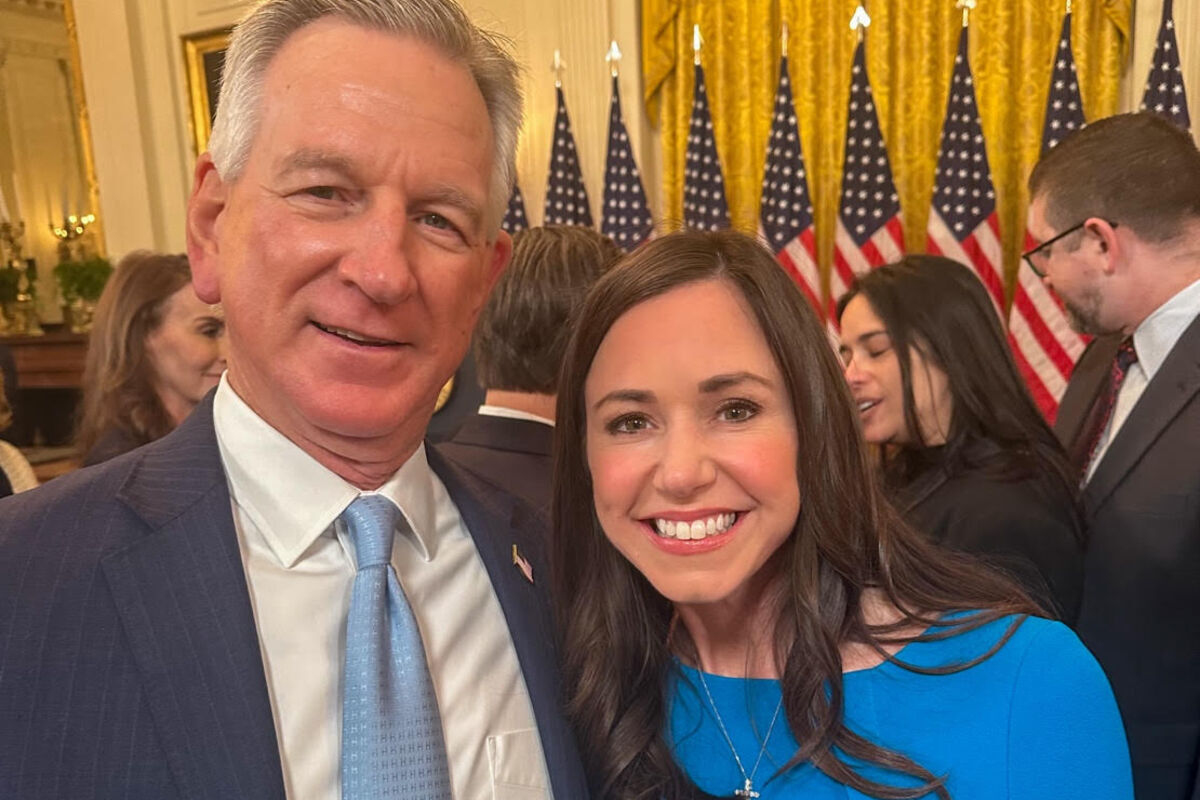
Senators Tommy Tuberville and Katie Britt
For decades, the Mobile River Bridge and I‑10 Bayway project has been Alabama's most anticipated - and most delayed - infrastructure undertaking. Now, Alabama's two U.S. Senators, Tommy Tuberville and Katie Britt, are sharpening their focus on accelerating the timeline, arguing that the state and the Gulf Coast economy cannot afford another round of slow‑walking.
Their message is simple: the federal government must move faster, and Alabama must be empowered to build sooner.
A Project Stuck in Slow Gear
The Alabama Department of Transportation (ALDOT) currently projects a groundbreaking "towards the end of 2025", with the new six‑lane bridge and elevated Bayway opening before 2030. The $3.2–$3.5 billion effort includes a 215‑foot cable‑stayed bridge, a redesigned Bayway built 10 feet higher for storm resilience, and major improvements to I‑10 interchanges and approaches.
But Tuberville and Britt say that timeline is too slow for a region that has outgrown its infrastructure. The Wallace Tunnel and existing Bayway were built for roughly 35,000 vehicles a day; today, they carry more than double that load. The result is daily gridlock, safety concerns, and a bottleneck that affects everything from tourism to freight movement at the Port of Mobile.
Tuberville: "Alabama is ready - Washington needs to keep up"
Senator Tommy Tuberville has repeatedly argued that the federal permitting and grant‑approval process is dragging out a project that should already be under construction. He has pointed to Huntsville's rapid progress on major defense infrastructure as proof that Alabama can deliver when Washington gets out of the way.
Tuberville has also emphasized the national importance of the I‑10 corridor - a major east‑west artery for commercial trucking - and has pushed for quicker release of federal funds tied to programs like INFRA, MEGA, and the TIFIA loan program, which are expected to cover a significant portion of the project's cost.
Britt: "This is about safety, growth, and the future of coastal Alabama"
Senator Katie Britt has framed the issue around economic competitiveness and hurricane resilience. With the new Bayway designed to sit higher and withstand major storm surge events, Britt argues that every year of delay leaves coastal Alabama more vulnerable.
She has also highlighted the project's role in supporting the Port of Mobile - one of the fastest‑growing ports in the country - and the broader Gulf Coast economy. Britt has been vocal about securing additional federal dollars to close the remaining funding gap, which ALDOT hopes to fill through federal grant programs.
A Unified Push for Acceleration
While the two senators often focus on different aspects of the project - Tuberville on federal red tape, Britt on economic and safety impacts - both have aligned on a shared goal: move the groundbreaking earlier than late 2025.
Their offices have jointly pressed the U.S. Department of Transportation to expedite environmental reevaluations, accelerate grant decisions, and streamline the approval process for the progressive design‑build contract ALDOT is using to speed up construction.
Local Leaders Welcome the Pressure
Mobile and Baldwin County officials have long argued that the region's growth is being held back by the current I‑10 chokepoint. Business groups, port officials, and tourism leaders have echoed the senators' calls for urgency, noting that the project has been studied, debated, redesigned, and delayed for nearly three decades.
ALDOT's project director has said the state is "ready to move forward" once design, environmental updates, and funding are finalized - but federal action remains the key variable.
What Comes Next
If Tuberville and Britt succeed in accelerating federal approvals, construction could begin earlier than the current late‑2025 target. That would put the project on a faster track toward relieving congestion, improving hurricane resilience, and supporting long‑term economic growth along the Gulf Coast.
For now, Alabama's senators are making it clear: the Mobile River Bridge and Bayway project is no longer just a regional priority - it's a national infrastructure test case. And they want Washington to treat it like one.






Reader Comments(0)