
The people's voice of reason


The people's voice of reason
A Turning Point in the Opioid Crisis
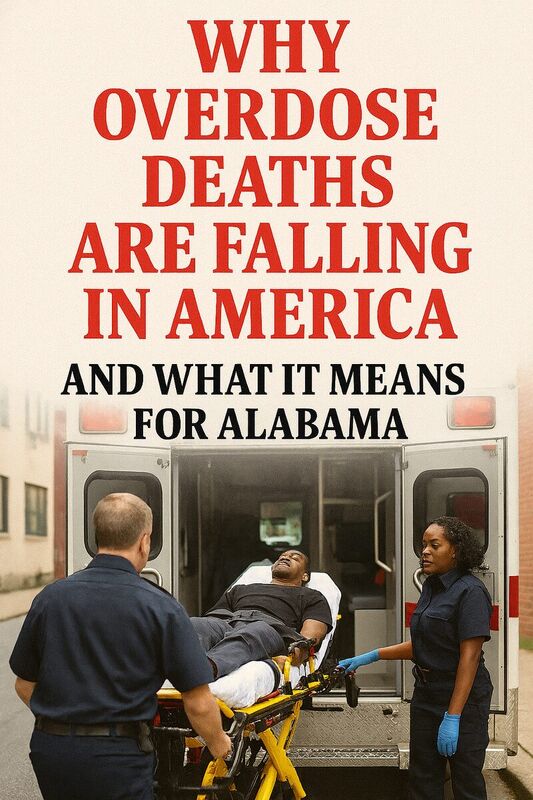
After years of devastating loss, the United States is seeing a dramatic and unexpected decline in overdose deaths. According to CDC data, fatalities dropped by nearly 25% from 2023 to 2024, with some states reporting even steeper declines. For Alabama families, this shift offers a glimmer of hope - but also a reminder that progress remains fragile.
What's Driving the Decline?
Experts point to a mix of public health interventions, drug market changes, and community resilience:
- Wider access to naloxone (Narcan): This life-saving nasal spray reverses opioid overdoses and is now available over the counter. In high-risk areas, it's distributed freely, and many users carry it themselves.
- Expanded treatment options: Medications like methadone and buprenorphine are more accessible, especially through Medicaid and community clinics.
- Weaker fentanyl supply: Drug testing programs have found lower purity levels in street fentanyl, possibly due to law enforcement pressure on supply chains.
- Peer support and harm reduction: Grassroots efforts - including syringe exchange programs and overdose prevention sites - are helping users stay alive and seek help.
Uneven Progress Across Communities
While overdose deaths are falling nationally, the benefits aren't evenly distributed. Rural areas, including parts of Alabama, still face barriers:
- Limited treatment access: Many counties lack addiction specialists or clinics offering medication-assisted treatment.
- Medicaid cuts: Proposed federal reductions could hit Alabama hard, where Medicaid is a lifeline for substance use and mental health care.
- Stigma and isolation: Cultural resistance to harm reduction strategies can leave families without support.
What Alabama Can Do
To sustain and expand this progress, Alabama leaders and communities can:
- Support local naloxone distribution: Ensure every county has access to free overdose reversal kits.
- Protect Medicaid coverage: Advocate against federal cuts that would reduce treatment access.
- Invest in rural outreach: Fund mobile clinics, peer support networks, and telehealth services.
- Educate without shame: Promote addiction awareness in schools, churches, and civic groups.
A Moment of Hope - and Urgency
The drop in overdose deaths is real, but it's not guaranteed to last. Alabama has a chance to build on this momentum - not just with policy, but with compassion, education, and community action.

Reader Comments(0)