
The people's voice of reason


The people's voice of reason
Steve Marshall applauds Legislature for action to protect children
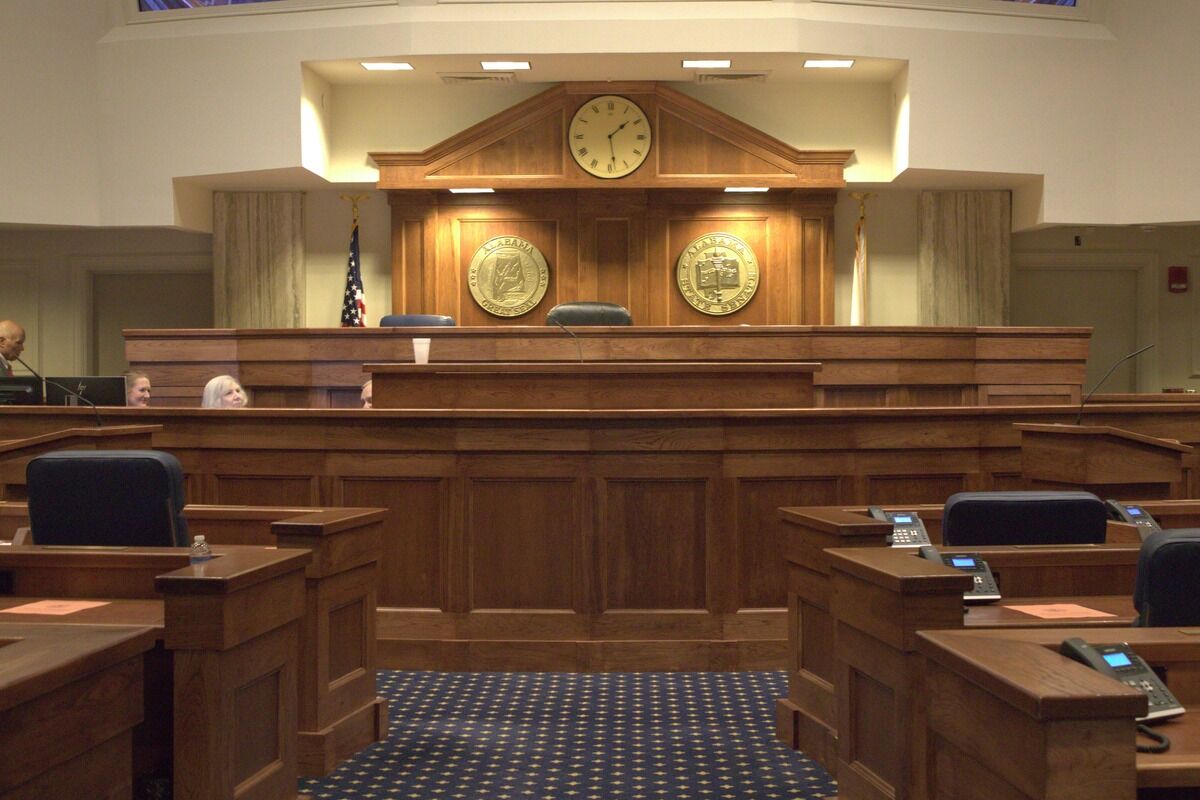
Alabama Senate
Alabama took a historic step in its criminal justice system this week as the State Senate overwhelmingly approved the **Child Predator Death Penalty Act**, a measure that would make certain sexual crimes against children under the age of 12 eligible for capital punishment. The bill, **House Bill 41**, passed the Senate by a vote of **33–1** after having already cleared the House earlier in the session. It now heads to Governor Kay Ivey for her signature.
The legislation marks one of the most forceful policy responses to child sexual abuse in Alabama history. Supporters describe it as a necessary and moral stand against what they consider the most depraved crimes imaginable-acts that inflict lifelong trauma on the state's youngest and most vulnerable citizens.
## A Landmark Expansion of Capital Punishment
HB41 classifies specific sexual offenses against children under 12 as **capital crimes**, placing them in the same category as murder and other offenses already eligible for the death penalty. While the U.S. Supreme Court ruled in *Kennedy v. Louisiana* (2008) that the death penalty could not be applied to child rape where the victim did not die, Alabama lawmakers crafted HB41 with the expectation that the current Court may be willing to revisit or narrow that precedent.
The bill's sponsors-**Rep. Matt Simpson (R‑Daphne)** in the House and **Sen. April Weaver (R‑Brierfield)** in the Senate-argued that Alabama has a moral obligation to push the legal boundaries in order to protect children. Both lawmakers have emphasized that the bill is narrowly tailored to target only the most severe and violent sexual crimes.
## Attorney General Steve Marshall Praises Passage
Attorney General **Steve Marshall**, one of the state's most vocal advocates for tougher penalties against child predators, issued a forceful statement following the bill's passage:
> "I applaud the Alabama Legislature for passing HB41, the Child Predator Death Penalty Act, which sends the strongest possible message that our state will not tolerate crimes against our children, who are among our most vulnerable citizens.
>
> Our children deserve to grow up safe, protected, and free from harm. This legislation provides law enforcement and prosecutors with the tools they need to pursue the ultimate penalty against those who commit the most depraved acts against children.
>
> I commend Representative Matt Simpson, Senator April Weaver, and all members of the Legislature who supported this critical measure. Alabama is leading the way in child protection, and this bill affirms that we will always stand on the side of our children."
Marshall has long argued that the state must take a more aggressive stance against child sexual abuse, and HB41 represents one of the most significant victories of his tenure.
## Strong Bipartisan Support in the Senate
The Senate's **33–1** vote reflects broad bipartisan agreement on the severity of the crimes targeted by the bill. Lawmakers from both parties spoke about the devastating impact of child sexual abuse and the need for the state to send a clear message of zero tolerance.
Supporters emphasized that the bill is not symbolic-it is designed to give prosecutors a powerful tool in cases involving extreme violence, repeated offenses, or circumstances where the child's life and safety were gravely endangered.
Opponents, while few, raised concerns about potential constitutional challenges and the possibility of the law being struck down in federal court. Some also questioned whether expanding capital punishment would deter crimes that are often driven by psychological disorders rather than rational calculation.
Still, the overwhelming majority of senators argued that the moral imperative to protect children outweighed those concerns.
## A National Flashpoint
Alabama now becomes the latest state to challenge the boundaries of the Supreme Court's 2008 ruling. Several states-including Florida and Louisiana-have recently passed similar laws, setting up what many legal scholars believe will become a major constitutional test in the coming years.
If signed by Governor Ivey, Alabama's law would immediately place the state at the forefront of a national movement to expand capital punishment for crimes against children.
## What Comes Next
With the bill now on the governor's desk, Alabama is poised to enact one of the toughest child‑protection laws in the country. Prosecutors would gain the authority to seek the death penalty in cases involving the most severe sexual offenses against children under 12, though any resulting convictions would almost certainly face legal challenges.
For supporters, HB41 is a moral declaration that Alabama will use every tool available to defend its children. For critics, it raises complex constitutional questions that the courts will ultimately have to resolve.
Either way, the passage of the Child Predator Death Penalty Act marks a defining moment in Alabama's ongoing effort to confront and punish crimes against its most vulnerable citizens.








Reader Comments(0)