
The people's voice of reason


The people's voice of reason
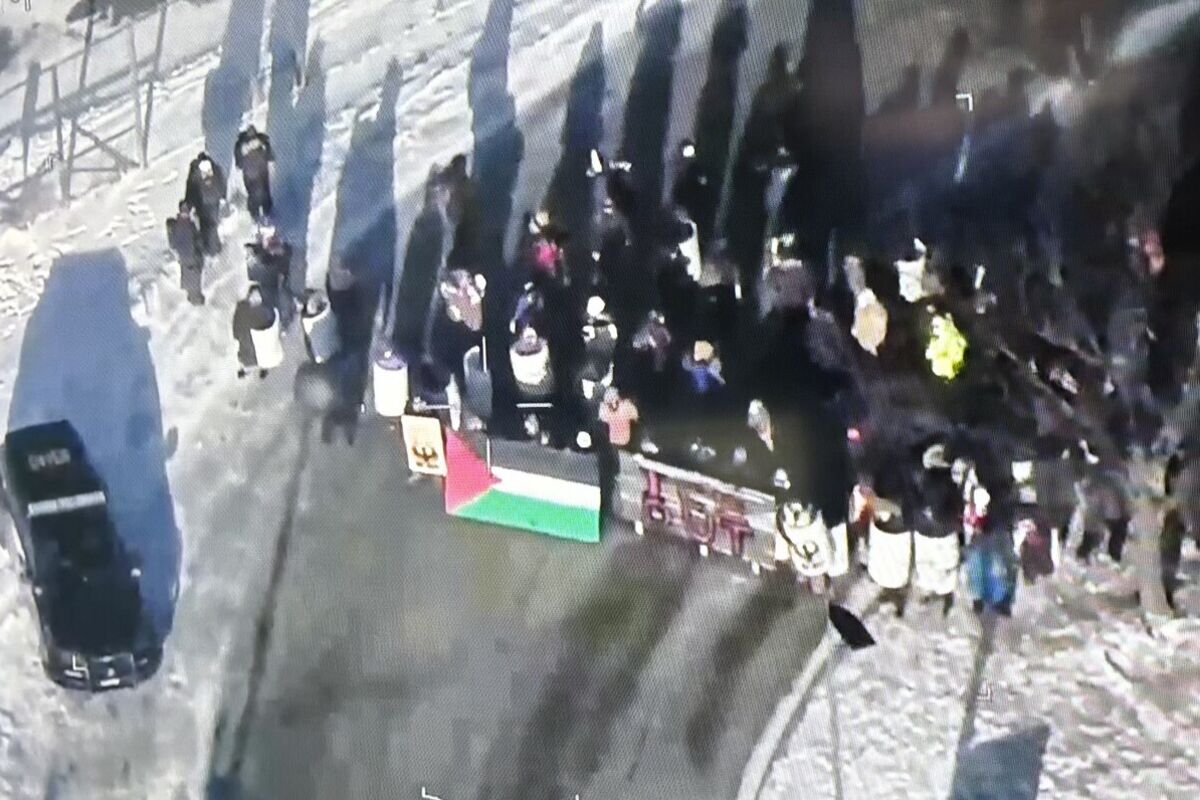
ICE protestors in Whipple, Minnesota attempting to surround and block entry and exit to an ICE facility in Whipple, Minnesota
MINNEAPOLIS - What began as a tense confrontation between Immigration and Customs Enforcement (ICE) agents and protesters in Minneapolis has escalated into a national political flashpoint after Minnesota Governor Tim Walz invoked one of the most consequential moments in American history: the firing on Fort Sumter, the spark that ignited the Civil War.
Walz's comparison - delivered during an interview with The Atlantic - instantly reverberated through political circles, drawing sharp criticism from President Donald Trump and igniting a broader debate about the boundaries of federal authority, the responsibilities of state leaders, and the risks of using Civil War imagery in modern political discourse.
A Fatal Shooting and a State on Edge
The controversy traces back to a fatal shooting in Minneapolis, where ICE officers opened fire during an attempted arrest, killing a man they said posed an imminent threat. The incident triggered immediate protests, with demonstrators surrounding federal vehicles, blocking streets, and clashing with law enforcement.
Local officials accused ICE of escalating the situation with aggressive tactics. ICE insisted its officers acted in self‑defense. The conflicting narratives only intensified public anger.
As the unrest grew, Walz described the situation as a dangerous breakdown in the relationship between federal agents and Minnesota residents. His language was stark, even alarming:
"A physical assault... an armed force that's assaulting, that's killing my constituents, my citizens."
It was in this context that he raised the analogy that would dominate headlines.
Walz Invokes Fort Sumter
Walz questioned whether Minnesota was witnessing a modern‑day version of Fort Sumter, the 1861 attack in which Confederate forces fired on a federal fort in Charleston Harbor, prompting President Abraham Lincoln to call for troops and plunging the nation into civil war.
The analogy was dramatic - and deliberate. Walz suggested that the confrontation between federal agents and Minnesota residents represented a fundamental clash over authority, legitimacy, and the use of force.
To understand why the comparison landed with such force, it helps to revisit the historical moment Walz invoked.
Historical Context: What Fort Sumter Actually Was
Fort Sumter was a federal military installation located in Charleston Harbor, South Carolina. After Abraham Lincoln's election, Southern states began seceding from the Union, claiming federal authority no longer applied within their borders.
By April 1861:
- South Carolina demanded the fort's surrender
- Lincoln refused
- Confederate forces opened fire on April 12
- The bombardment lasted 34 hours
- The Union garrison eventually surrendered
- The attack unified the North and marked the official beginning of the Civil War
Fort Sumter is widely understood as the moment when political conflict crossed the threshold into armed confrontation between federal and state‑aligned forces.
By invoking it, Walz was suggesting that Minnesota was approaching a similarly dangerous inflection point - not in scale, but in principle.
Political Shockwaves and Trump's Response
President Trump responded swiftly and dismissively, mocking Walz's historical analogy during a press gaggle.
"Does he know what Fort Sumter was, or do you think somebody wrote it out for him?"
Trump framed Walz's comments as irresponsible and historically unserious, accusing the governor of inflaming tensions rather than calming them. Several Republican lawmakers echoed the criticism, arguing that Walz was "fomenting civil war rhetoric" and undermining federal law enforcement.
Democrats in Minnesota defended Walz, saying he was sounding the alarm about federal overreach and the potential for violence if ICE continued operating with what they described as "militarized tactics."
A Deeper Struggle Over Authority
Walz's comments didn't emerge in a vacuum. Minnesota has long been a battleground over immigration enforcement, with state officials frequently clashing with federal authorities over tactics, transparency, and jurisdiction.
The fatal shooting brought those tensions to a boiling point.
Walz even suggested he might activate the Minnesota National Guard if the situation deteriorated further - a statement that added gravity to his Fort Sumter analogy and raised questions about the limits of state versus federal power.
Legal scholars noted that while the analogy was historically imperfect, it reflected a genuine constitutional tension:
What happens when state leaders believe federal agents are endangering their citizens rather than protecting them?
The Risks of Civil War Imagery in Modern Politics
Walz's analogy tapped into a broader trend: the increasing use of Civil War language in American political rhetoric. Historians warn that such comparisons can be inflammatory, especially when deployed in moments of crisis.
Supporters argue that historical analogies can help leaders communicate the seriousness of a situation. Critics counter that invoking Fort Sumter - a moment that led to 620,000 deaths - risks escalating tensions rather than clarifying them.
In Minnesota, the analogy became a political Rorschach test:
- To Walz's supporters, it was a warning about federal overreach.
- To his critics, it was reckless hyperbole.
- To historians, it was a reminder of how easily political conflict can be framed in existential terms.
Where the Situation Stands Now
As protests continue and investigations unfold, Minnesota remains at the center of a national debate about:
- The limits of federal enforcement
- The responsibilities of state leaders
- The power of historical memory in shaping political narratives
Whether Walz's Fort Sumter analogy will be remembered as a prescient warning or a rhetorical misstep remains to be seen. But the episode has already cemented itself as one of the most striking examples of how the language of the Civil War continues to echo in modern American politics.







Reader Comments(0)