
The people's voice of reason


The people's voice of reason
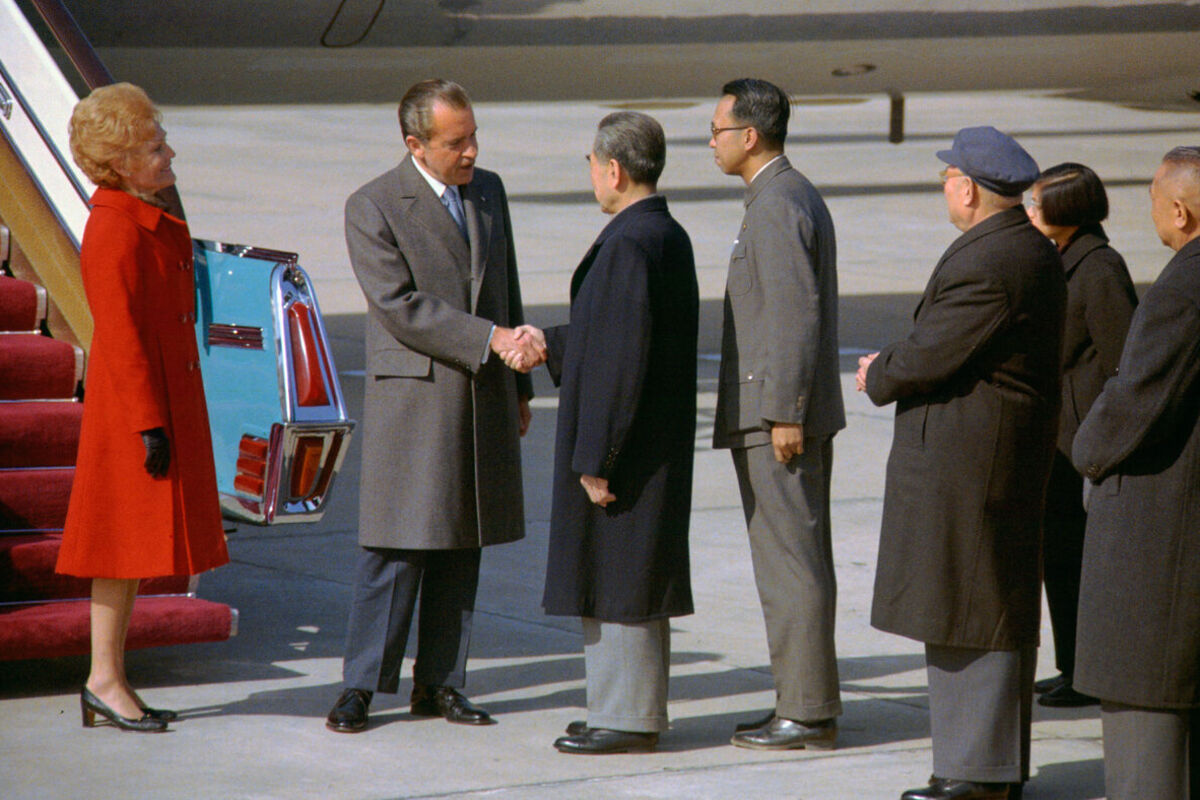
President Richard Nixon greeting Chinese President Chou En-lai
February 21, 1972 - BEIJING, China - President Richard M. Nixon (R) arrived in the People's Republic of China, becoming the first U.S. president to visit the country and marking a dramatic turning point in Cold War diplomacy. The week‑long trip, broadcast around the world, began the process of normalizing Sino‑American relations after more than two decades of isolation and hostility.
Nixon's arrival in Beijing - greeted by Premier Zhou Enlai on the tarmac - symbolized a strategic shift in global politics. At the height of the Cold War, the United States and China had been estranged since the Communist victory in 1949. Nixon's decision to engage Beijing was driven by a mix of geopolitical calculation and diplomatic opportunity: easing tensions with China could counterbalance the Soviet Union, reshape the global balance of power, and open new channels of communication in Asia.
During the visit, Nixon met with both Premier Zhou Enlai and Chairman Mao Zedong. The discussions were wide‑ranging, touching on Taiwan, the Vietnam War, and the broader question of how two ideologically opposed nations could coexist without conflict. The trip concluded with the Shanghai Communiqué, a foundational document in which both sides acknowledged their differences but committed to pursuing peaceful relations and expanding cultural, economic, and diplomatic exchanges.
The visit stunned the world and redefined U.S. foreign policy. It paved the way for the eventual establishment of formal diplomatic relations in 1979 and opened China to greater global engagement. For Nixon, it became one of the defining achievements of his presidency - a moment when bold diplomacy reshaped the international landscape.
More than fifty years later, the 1972 trip remains a landmark in American diplomacy, remembered as the moment when two global powers stepped out of isolation and into a new, if complicated, relationship that continues to shape world affairs.



Reader Comments(0)