
The people's voice of reason


The people's voice of reason
Power in the Muslim world shifted to Egypt after the Mongols put Baghdad to the torch
In February 1258, the world witnessed one of the most consequential turning points in Middle Eastern and global history: the Mongol conquest and destruction of Baghdad. Led by Hulegu Khan, grandson of Genghis Khan, Mongol forces captured and sacked the city that had served for centuries as the intellectual, cultural, and political heart of the Islamic world. The fall of Baghdad effectively ended the Abbasid Caliphate and is widely regarded as the symbolic end of the Islamic Golden Age - a period of extraordinary scientific, artistic, and philosophical achievement.
Baghdad Before the Siege: A Center of the World
For more than 500 years, Baghdad had been a beacon of learning and culture. Founded in 762 by the Abbasid caliphs, the city became home to the famed House of Wisdom, where scholars translated Greek, Persian, Indian, and Syriac texts into Arabic. Advances in mathematics, astronomy, medicine, geography, and philosophy radiated outward from Baghdad to Europe, Africa, and Asia.
By the 13th century, however, the Abbasid Caliphate had weakened. Political fragmentation, internal rivalries, and the rise of regional powers left Baghdad vulnerable. The caliph, al‑Mustasim, ruled more in name than in power, and the city's defenses were outdated. When the Mongols turned their attention toward Mesopotamia, Baghdad was no longer the formidable capital it once had been.
Hulegu Khan's March West
Hulegu Khan had been tasked by his brother, the Great Khan Möngke, with expanding Mongol control into the Islamic world. His campaign had already crushed the Nizari Ismailis - the so‑called "Assassins" - and dismantled their mountain fortresses. Baghdad was next.
In late 1257, Hulegu's army - estimated at more than 100,000 soldiers, including Chinese engineers and Christian auxiliaries - advanced toward the city. The Mongols demanded surrender. Caliph al‑Mustasim refused, believing Baghdad's prestige and divine protection would deter the invaders. It was a fatal miscalculation.
The Siege Begins
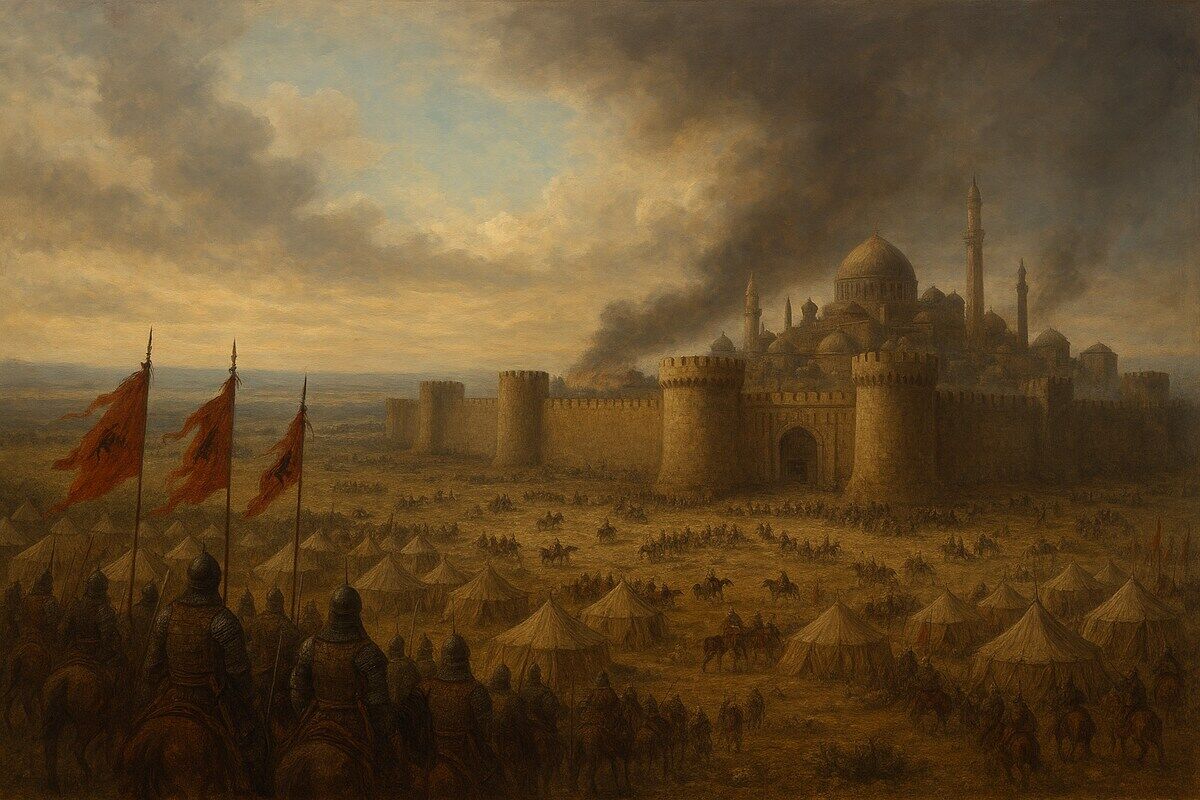
The Mongols reached Baghdad in January 1258 and quickly encircled the city. Using advanced siege technology, including catapults, mangonels, and sappers, they breached the city's outer defenses within days. The Tigris River, which had long served as a natural barrier, offered little protection against a force that had mastered both engineering and psychological warfare.
By early February, Mongol troops poured into the city. What followed was one of the most devastating sacks in medieval history.
The Sack of Baghdad
For seven days, Mongol soldiers looted, burned, and destroyed Baghdad. Contemporary accounts - though often exaggerated - describe scenes of staggering violence. Tens of thousands were killed; some chronicles claim the death toll reached into the hundreds of thousands. Scholars, poets, and scientists were not spared. Libraries, including the House of Wisdom, were destroyed. Priceless manuscripts were thrown into the Tigris River, which reportedly ran black with ink.
The Mongols executed Caliph al‑Mustasim, ending the Abbasid line that had ruled since 750. The method of his death remains debated, but all sources agree it was meant to symbolize the end of an era.
Why Baghdad Fell So Quickly
Several factors explain the speed and totality of the Mongol victory:
- Military superiority: Mongol armies were highly disciplined, mobile, and equipped with advanced siege technology.
- Political weakness: The Abbasid state was fractured, and the caliph lacked strong allies.
- Strategic isolation: Regional powers such as the Mamluks and Seljuks offered no meaningful support.
- Underestimation of the Mongols: Baghdad's leadership believed the city's prestige alone would deter attack.
The result was a catastrophe that reshaped the Islamic world.
The End of the Islamic Golden Age
Historians often mark 1258 as the symbolic end of the Islamic Golden Age. While intellectual life continued in places like Cairo, Damascus, and later Istanbul, Baghdad's destruction severed the institutional and scholarly networks that had made it the center of global learning.
The loss of the House of Wisdom - and the scholars who worked there - represented a cultural wound that would take centuries to heal. The Mongols themselves did not intend to extinguish Islamic civilization, but their conquest shattered the political and intellectual infrastructure that had sustained it.
Aftermath and Long‑Term Consequences
The Mongols installed a puppet administration in Baghdad, but the city never regained its former prominence. The region eventually came under the control of the Ilkhanate, a Mongol successor state that later converted to Islam. Yet the Abbasid Caliphate, once the most powerful empire in the world, was gone.
Several long‑term consequences followed:
- Shift of power to Cairo: The Mamluk Sultanate became the new center of Islamic authority.
- Rise of new empires: The Ottomans, Safavids, and Mughals emerged in the centuries that followed, each shaping the Islamic world in different ways.
- Cultural fragmentation: Without Baghdad's centralizing influence, intellectual life became more regionalized.
- Memory of trauma: The fall of Baghdad remains one of the most painful episodes in Islamic history, often invoked as a symbol of civilizational vulnerability.
A Turning Point in World History
The fall of Baghdad in 1258 was more than the collapse of a city. It marked the end of a world order and the beginning of a new one. The Mongol conquest reshaped the Middle East, altered the trajectory of Islamic civilization, and left a legacy still felt today.








Reader Comments(0)