
The people's voice of reason


The people's voice of reason
Congresswoman Sewell sayd, "The power to regulate trade lies with Congress."
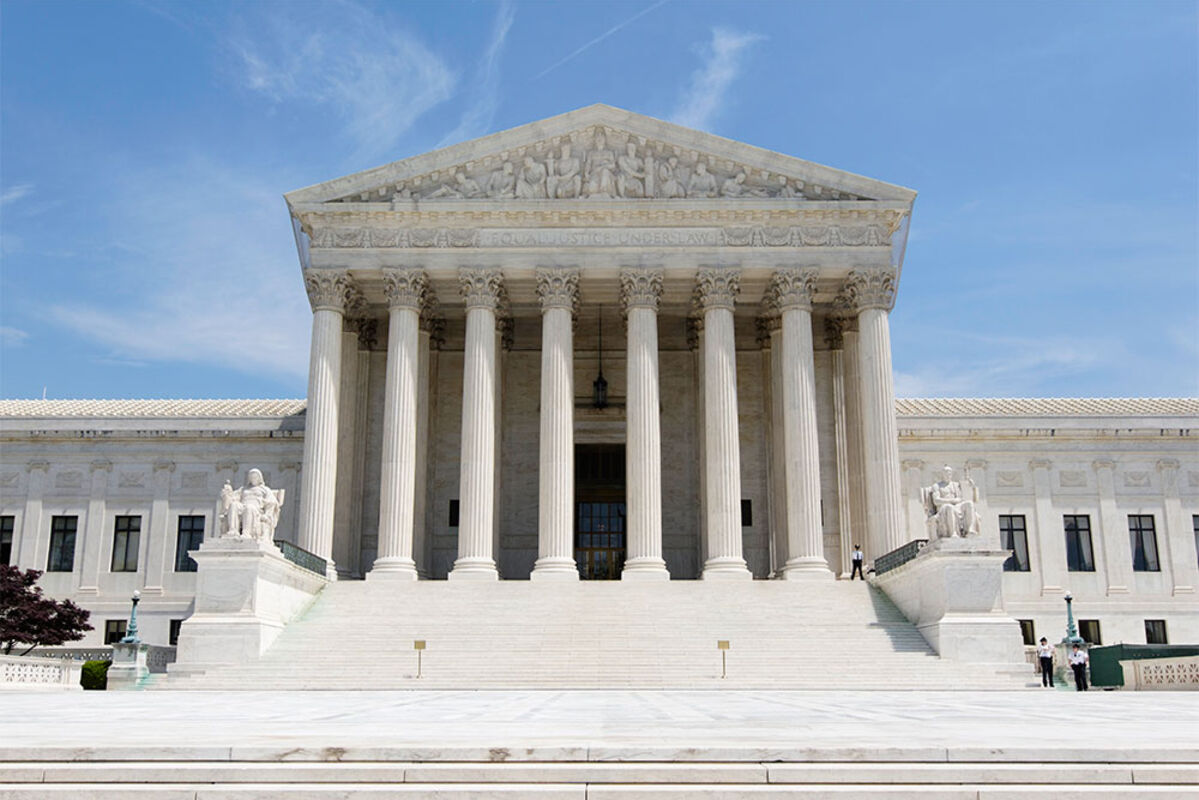
U.S. Supreme Court Building
February 20, 2026 - WASHINGTON, D.C. - In a major rebuke of presidential trade authority, the U.S. Supreme Court ruled 6–3 on Friday that President Donald Trump exceeded his legal powers when he used the International Emergency Economic Powers Act (IEEPA) to impose sweeping global tariffs throughout 2025. The decision places more than $175 billion in tariff collections at risk of refund and sharply narrows the scope of unilateral tariff actions available to the White House.
Chief Justice John Roberts, writing for the majority, said the administration's interpretation of two key statutory terms - "regulate" and "importation" - stretched IEEPA far beyond what Congress intended. "Those words cannot bear such weight," Roberts wrote, concluding that the law does not authorize the president to impose tariffs on any product, from any country, for any duration, without explicit congressional approval.
Justices Thomas, Alito, and Kavanaugh dissented. Justice Neil Gorsuch, a Trump appointee, filed a separate concurring opinion.
Impact on U.S. Tariffs and the Economy
The ruling invalidates major portions of Trump's 2025 tariff program, including duties on steel, aluminum, and a wide range of Chinese imports. The Court emphasized that tariffs function as taxes on U.S. importers and consumers - powers the Constitution assigns to Congress.
Economists at the Penn-Wharton Budget Model estimate that $175 billion in tariff revenue may now be subject to refund claims, including $133.5 billion collected in 2025 and 2026 under IEEPA. The Court did not address how refunds should be handled, leaving the process uncertain.
Business groups and analysts have long argued that the tariffs raised costs for American manufacturers and consumers. Duties on steel and aluminum increased expenses for automakers, construction firms, and equipment manufacturers, while tariffs on Chinese goods drove up prices on electronics, furniture, and household items. Retaliatory tariffs from China further hit U.S. agriculture and industrial exporters.
Rep. Terri Sewell Responds
Alabama Congresswoman Terri Sewell (AL‑07), a member of the House Ways and Means Trade Subcommittee, welcomed the ruling and said it validated concerns raised by congressional Democrats.
In a statement released Friday, Sewell said:
"Today, the Supreme Court affirmed what my Democratic colleagues and I have been arguing all along. President Trump's use of IEEPA (the International Emergency Economic Powers Act) to justify his global tariffs is illegal and unconstitutional.
"The Constitution is clear. The power to regulate trade lies with Congress. As a member of the Trade Subcommittee on Ways and Means, I will continue to hold this president accountable, and I will never stop fighting to lower costs for Alabamians.
"We must return to a sensible trade policy that levels the playing field for American workers and businesses, respects and deepens our economic ties with our allies, and focuses on combating illegal trade practices from China."
Her comments reflect ongoing concerns among Alabama manufacturers, farmers, and importers who have faced higher costs and disrupted supply chains under the tariff regime.
Administration and Market Reaction
The Trump administration defended its tariff actions as necessary to counter national‑security threats and unfair trade practices, arguing that IEEPA gave presidents flexibility to act swiftly during economic emergencies. Officials warned that the ruling could weaken U.S. leverage in negotiations with China and other trading partners.
Market reaction was muted. The S&P 500 rose less than 1% after the ruling, with analysts noting that the decision had been widely anticipated. David Wagner, Head of Equity at Aptus Capital Advisors, called the ruling "a non-event - at least for now," but noted that the refund process and future trade strategy remain significant unknowns.
Blake Harden, Managing Director at EY's global trade policy practice, said companies should begin preparing documentation for potential refund claims. "This is far from the end of tariffs," Harden said. "The administration still has several other tariff authorities available."
What Comes Next
The ruling leaves IEEPA intact for traditional uses - such as sanctions and targeted trade restrictions - but blocks its use for broad, indefinite tariff programs. The administration may now turn to other trade tools, including Section 301 and Section 232, to pursue its agenda.
For Alabama businesses, the decision brings both relief and uncertainty. Manufacturers and importers may benefit from lower costs if tariffs unwind, while exporters await clarity on how foreign partners will respond.





Reader Comments(0)