
The people's voice of reason


The people's voice of reason

Improving engagement is a priority for many organizations. You introduce new initiatives, invest in better communication, and offer more perks, all in the hope of creating a more connected and motivated workplace. But even with those efforts, something can still feel off. Engagement doesn’t always respond the way you expect.
So what if the most important factor isn’t what you’re doing, but how your leadership team is showing up?
The truth is: Employee engagement isn’t rooted in surface-level perks. It grows through trust, meaningful feedback, and consistent support from leaders in the moments that matter most. Understanding that connection is the first step toward creating real impact. WorkTango examines how leadership can affect engagement among employees and how surveys can help.
Employee engagement is built (or broken) by leadership.
Your employees are paying attention. They see how leaders communicate, how they handle feedback, and whether or not they follow through. These behaviors directly shape how connected employees are to their work and your culture.
That’s why engagement isn’t just an HR initiative. It’s an organization-wide initiative that relies heavily on leaders.
It’s no surprise that employee engagement and leadership development are now ranked among the top three priorities for businesses in 2025, according to Society for Human Resource Management research. And it’s also why organizations that treat leadership development and engagement as separate priorities often struggle to move the needle on either.
To support engagement, leaders need clarity on what effective leadership looks like and how their behavior shapes the employee experience.
Leaders don’t all show up the same way, but that’s not necessarily a bad thing. WorkTango developed five core leadership archetypes that show up across organizations. Each has a distinct way of building engagement and supporting team success.
Leaders don’t need to fit one style. What matters is recognizing their strengths and building the behaviors that fit the evolving needs of their teams.
Regardless of their approach, what sets high-performing leaders apart is how they consistently model behaviors that strengthen trust, clarity, and connection.
Research shows that the behaviors that matter most for leadership and engagement fall into five key areas:
When leaders consistently demonstrate these behaviors, they create the foundation for engagement. But sustaining the momentum takes more than consistency. It takes awareness.
You need to know how employees are experiencing that leadership in real time. That’s where surveys come in.
To build high-performing leaders and more engaged teams, organizations need a clear process for listening at scale. Employee surveys create that foundation.
Surveys offer a reliable way for leaders to understand how their teams are doing. Instead of relying on informal conversations or scattered input, surveys create a consistent process for collecting and responding to feedback. This helps leaders track patterns, focus their efforts, and build trust through regular check-ins.
Employee surveys give insight into how leadership is experienced across the organization. They surface patterns around communication, recognition, and support, making it easier to understand where your leaders are building trust and where they may need support.
While surveys create important awareness, what happens after the survey determines whether engagement actually improves.
Once you’ve collected employee feedback, your next move matters. What leaders do with survey results is what really drives engagement and culture.
There are a few common ways leaders typically respond after collecting feedback. Only one of them actually moves engagement forward.
Here are three common responses.
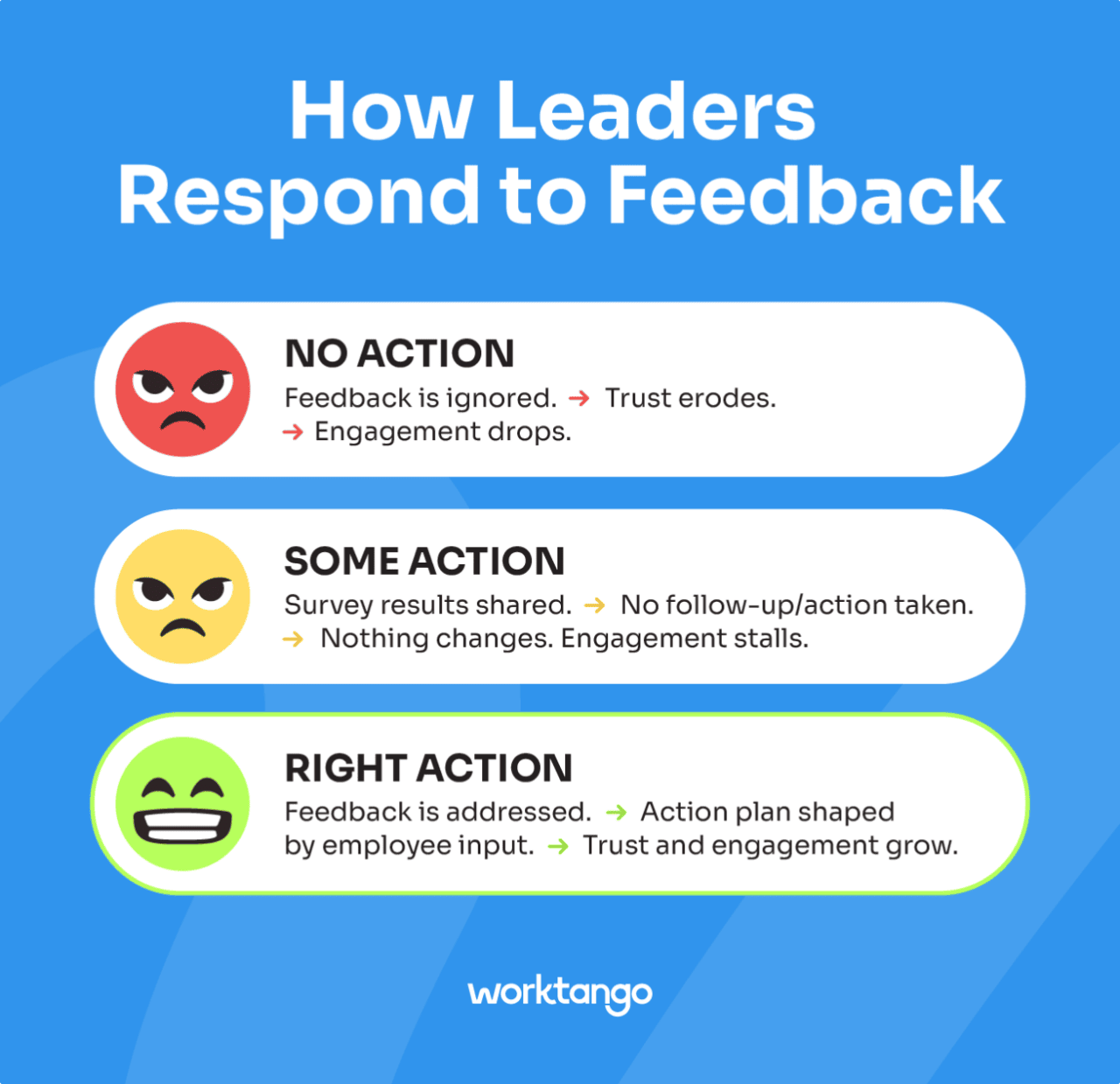
To encourage the right type of action from leaders, organizations need to equip them with the tools and support to take the right next steps.
Collecting feedback is only the start. Engagement only improves if leaders take visible, consistent action based on what employees share.
Here’s what high-performing leaders do to drive employee engagement through action and how you can support it.
Acknowledging employee feedback is one of the fastest ways leaders can build trust. When leaders show they are open and grateful for feedback, it creates space for honest conversations and reinforces that employee voices matter.
How you can make it easier for leaders: Invest in employee survey tools that automate thank-you communications immediately after surveys close, helping leaders set a positive tone without extra manual work.
Strong leaders communicate major survey themes and results clearly with their teams, even when the feedback is difficult. Being open about the results builds credibility, shows that feedback is taken seriously, and sets the foundation for meaningful change.
How you can make it easier for leaders: Provide simple dashboards and communication templates that help leaders share insights quickly and clearly with their teams. An even more effective approach is giving them real-time access to survey data so they can explore trends and take action directly.
While some leaders make decisions in isolation, the most effective ones involve employees in shaping action plans. This collaboration leads to stronger ownership, better solutions, and deeper engagement across teams.
How you can make it easier for leaders: Offer built-in action planning tools that guide leaders through setting shared priorities and co-creating solutions with their teams.
Setting specific goals, assigning accountability, and creating clear timelines help keep engagement efforts focused. When leaders provide clarity on what’s happening and when, good intentions turn into visible, measurable progress.
How you can make it easier for leaders: Support leaders with frameworks, reminders, and planning tools that organize commitments and track progress over time.
Sustaining employee engagement requires ongoing communication. Strong leaders continue to share updates as priorities evolve, showing employees that feedback is not only heard but acted on consistently.
How you can make it easier for leaders: Use tools that provide progress-tracking dashboards and action planning tools to help leaders keep engagement efforts visible, build accountability, and reinforce trust for the long term.
A strong employee survey strategy is only the beginning. Real engagement happens when leadership teams are empowered to listen, act, and follow through consistently.
This story was produced by WorkTango and reviewed and distributed by Stacker.











Reader Comments(0)