
The people's voice of reason


The people's voice of reason
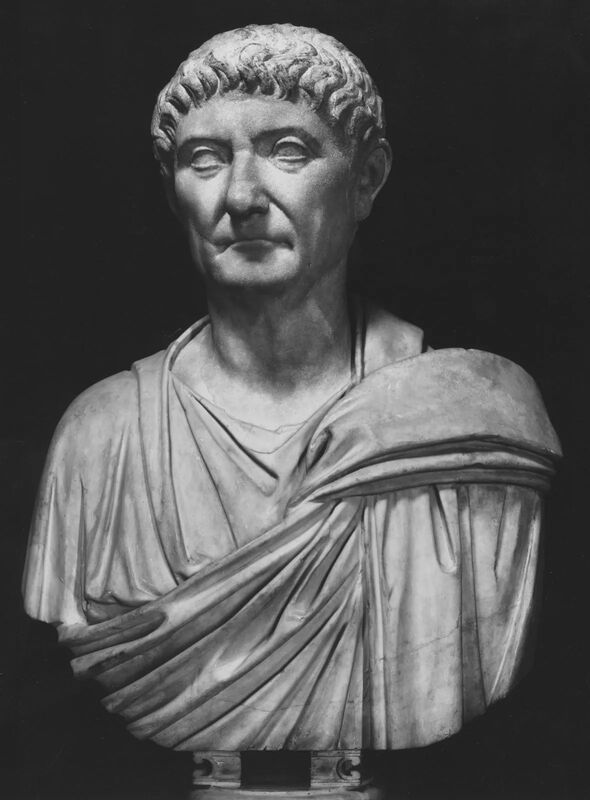
Emperor Diocletian
On February 24, 303, the Roman Empire crossed a threshold that would shape the future of Christianity and the empire itself. Emperor Diocletian, long celebrated for restoring stability after decades of crisis, issued the first of four sweeping edicts targeting Christians across the empire. This initial decree ordered churches destroyed, Christian scriptures burned, and believers stripped of legal protections. What began that day in Nicomedia would become the Great Persecution, the most systematic attempt the Roman state ever made to eradicate the Christian faith.
The edict did not emerge from a vacuum. By the early fourth century, Christianity had grown from a small, persecuted sect into a widespread and increasingly visible community. Christians served in the army, held positions in government, and were found in every major city. Their refusal to sacrifice to the Roman gods-an act seen as essential to civic loyalty-made them appear, in the eyes of traditionalists, as a threat to the empire's unity and divine protection.
Diocletian himself was not initially inclined toward violence. A pragmatic administrator, he spent most of his reign reorganizing the empire's finances, military, and provincial structure. But he was also deeply committed to the traditional Roman religion. His co‑emperor in the East, Galerius, was far more hostile to Christians and played a decisive role in pushing Diocletian toward confrontation. Ancient sources describe Galerius as urging the emperor to purge Christians from the army and public life, arguing that Rome's gods were offended by their presence.
The immediate spark came in Nicomedia, the eastern imperial capital. A fire broke out in the palace shortly after a tense debate in the imperial court about how to handle the Christian population. Galerius blamed Christians for the blaze, though historians widely view this accusation as politically motivated. The incident hardened Diocletian's resolve. Within days, he authorized the first edict.
The decree was sweeping. Christian churches were to be demolished. All Christian writings-scriptures, liturgical books, theological works-were to be burned. Christians holding government positions were to be removed from office. Those of high status lost their legal rights; those of lower status could be tortured. The edict did not yet mandate execution, but it opened the door to harsher measures that would follow.
The destruction began immediately. Soldiers tore down the great church of Nicomedia, which stood prominently across from the imperial palace. According to the historian Lactantius, the building was leveled in a single day, its scriptures burned in the streets. Imperial officials moved quickly to enforce the edict across the eastern provinces, though enforcement varied widely depending on local governors.
The edict's emphasis on burning scriptures was unprecedented. Earlier persecutions had targeted individuals; this one targeted the faith's intellectual and spiritual foundations. Christian communities scrambled to hide sacred texts, often at great personal risk. Some handed them over under pressure, creating deep internal divisions that would later shape debates about forgiveness and church leadership.
Despite Diocletian's hopes, the edict did not crush Christianity. Instead, it set off a chain of events that ultimately strengthened the movement. Many Christians refused to comply, becoming martyrs whose stories circulated widely. Others fled to the countryside or sought refuge with sympathetic officials. The empire's attempt to suppress the faith only highlighted its resilience and unity.
The persecution intensified over the next two years. Additional edicts ordered the arrest of clergy, mandated universal sacrifice to the Roman gods, and authorized torture and execution for those who refused. Diocletian, increasingly ill and exhausted, abdicated in 305. Galerius continued the persecution with even greater severity, but by 311 he was forced-on his deathbed-to issue an edict of toleration acknowledging that the policy had failed.
Within two years, Constantine would issue the Edict of Milan, granting full legal freedom to Christians and restoring confiscated property. The empire that had once tried to destroy the faith would soon adopt it as its favored religion.
The events of February 24, 303, therefore stand as a turning point. The edict marked the Roman state's most aggressive attempt to suppress Christianity, yet it also revealed the limits of imperial power in the face of a determined and spiritually unified community. The persecution forged new heroes, deepened theological reflection, and ultimately accelerated Christianity's transformation from a persecuted minority into a dominant cultural force.
Today, historians view Diocletian's edict as both a tragedy and a paradox. It unleashed suffering on countless believers, yet it also set the stage for Christianity's eventual triumph. The empire that sought to silence the faith instead became the vehicle through which it spread across Europe and the Mediterranean world.
In the long arc of history, the edict of 303 stands as a reminder of the resilience of belief and the unintended consequences of state power. What began as an attempt to extinguish a movement instead helped ignite a transformation that would reshape the ancient world and echo through centuries.






Reader Comments(0)