
The people's voice of reason


The people's voice of reason
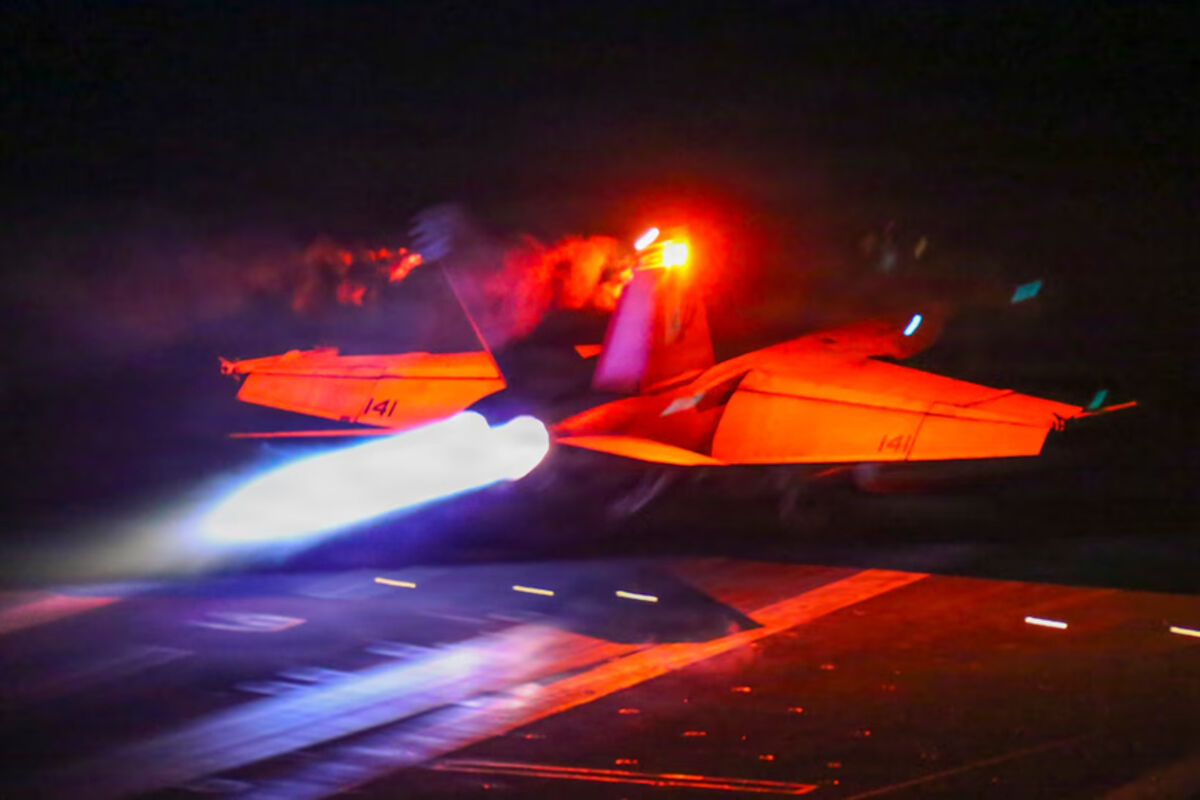
An F/A-18F Super Hornet launches from the flight deck of the aircraft carrier USS Abraham Lincoln in support of Operation Epic Fury in the U.S. Central Command area of responsibility, March 1, 2026.
March 2, 2026 - WASHINGTON, D.C. - As the U.S.–Israel war with Iran enters a volatile new phase, the Pentagon is accelerating the largest American military buildup in the Middle East in decades. Senior defense officials now acknowledge that additional U.S. troops, aircraft, and naval assets are flowing into the region daily, reflecting Washington's expectation that the conflict will intensify and potentially widen. While the Pentagon has not deployed large-scale ground combat brigades, it has begun reinforcing key bases with additional ground forces, signaling a shift toward a more sustained and complex campaign.
The surge comes as American forces face mounting threats, including Iranian ballistic missile attacks, drone swarms, and the fog of war that recently contributed to the friendly‑fire shootdown of three U.S. F‑15E Strike Eagles over Kuwait. With three American service members killed in Iranian strikes and more wounded across the region, U.S. commanders warn that further casualties are likely as operations expand.
A Rapid and Expanding U.S. Buildup
Pentagon leaders have confirmed that the United States is reinforcing its military posture across the Middle East with additional troops, fighter jets, and naval power. Gen. Dan Caine, Chairman of the Joint Chiefs of Staff, said the U.S. is "bolstering its forces in the Middle East, sending more troops and fighter jets to the region as America's war in Iran expands." He added that more aircraft will arrive "in the coming days," bringing U.S. combat power to levels commanders believe are necessary for the unfolding campaign.
In an interview with The New York Post, President Donald J. Trump (R) stated that he won't make the same blanket promises previous presidents have made about avoiding ground deployments. The President emphasized that while he "probably" does not expect to need ground troops, he would use them "if they were necessary."
The buildup includes a dramatic increase in tactical aviation, missile‑defense units, and support personnel. Two U.S. aircraft carrier strike groups are now operating in the region, accompanied by at least 16 Navy ships and more than 100 fighter jets, including F‑35s, F‑22s, F‑15s, and F‑16s. Defense officials say this represents the largest concentration of American air and naval power in the Middle East since the height of the Iraq War.
Defense Secretary Pete Hegseth described the current phase as "major combat operations," warning that the campaign "will take some time" and that the U.S. must be prepared for additional losses.
Ground Forces: Reinforcements Without a Full‑Scale Deployment
While the Pentagon has not launched a ground invasion or deployed large combat brigades, it has quietly increased the number of U.S. ground forces across the Gulf. These reinforcements are primarily defensive and logistical, aimed at protecting American installations and supporting the surge in air operations.
Additional ground forces include:
- Missile‑defense units, such as Patriot and THAAD crews, deployed to counter Iran's ballistic missile and drone attacks.
- Security forces and rapid‑response elements positioned at bases in Kuwait, Bahrain, Qatar, and the UAE.
- Engineering and logistics units brought in to support expanded air operations and base hardening.
- Command‑and‑control personnel moved into key hubs like Al Udeid Air Base, which has shifted to a 24/7 war‑planning posture.
These deployments reflect a Pentagon strategy focused on strengthening defensive positions and preparing for potential escalation, rather than initiating large‑scale ground combat. President Trump has said he "won't rule out" sending ground troops into Iran if necessary, but officials emphasize that such a move remains a contingency, not an active plan.
A Region Under Fire
The troop buildup comes amid intensifying Iranian attacks across the region. Three American service members were killed when Iranian ballistic missiles struck a U.S. base in Kuwait, part of a broader wave of Iranian retaliation for U.S. and Israeli strikes on Iranian military and nuclear‑linked sites. Several more U.S. personnel have been wounded in attacks on bases in Kuwait, Bahrain, and Qatar.
The chaos of overlapping missile and drone strikes contributed to a major friendly‑fire incident in which Kuwaiti air defenses mistakenly shot down three U.S. F‑15E Strike Eagles. All six aircrew members survived, but the incident underscored the confusion gripping regional airspace as Iranian attacks continue.
Civilian aviation has also been disrupted. Major airports across the Gulf-including Dubai International-were forced to shut down for days, stranding tens of thousands of travelers and highlighting the broader regional instability.
Why the Buildup Matters
The Pentagon's rapid reinforcement of the Middle East signals several strategic realities:
- Iran's missile and drone capabilities pose a sustained threat to U.S. forces and regional partners.
- American bases require additional protection, especially as Iran targets logistics hubs and command centers.
- The U.S. expects the conflict to continue, despite public statements expressing hope for a short campaign.
- Washington is preparing for multiple contingencies, including the possibility of broader regional involvement or a sudden escalation requiring rapid ground‑force deployment.
Senior defense officials say the U.S. is not seeking a prolonged war, but the scale of the buildup suggests Washington is preparing for a conflict that could become more complex before it stabilizes.
A Conflict Entering a Dangerous New Phase
As the war enters its third day, the United States finds itself balancing offensive operations with the need to protect its forces from Iranian retaliation. The deaths of American service members, the friendly‑fire loss of advanced fighter jets, and the steady flow of reinforcements all point to a conflict that is expanding rather than winding down.
With Iranian missile launches continuing and U.S. forces surging into the region, commanders warn that the coming days may bring even more intense exchanges-and potentially more American casualties-as the war moves into a dangerous and unpredictable phase.








Reader Comments(0)