
The people's voice of reason


The people's voice of reason
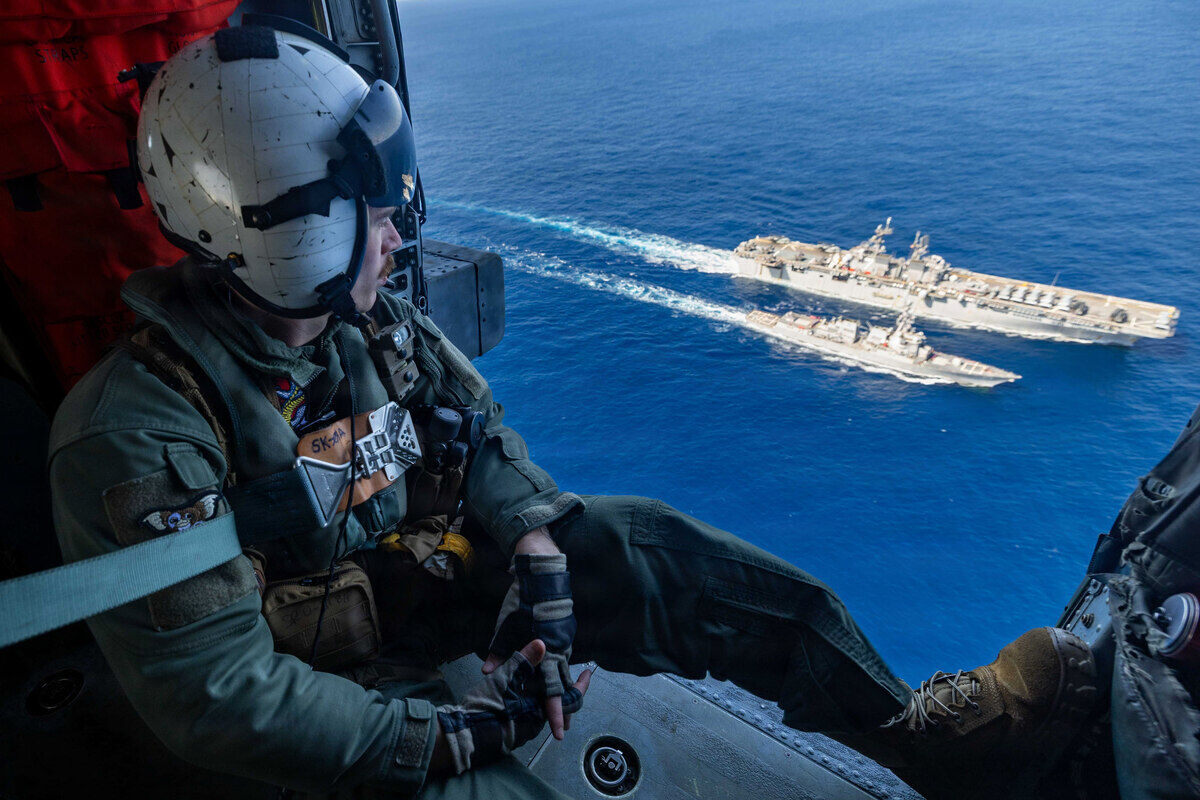
U.S.S. Tripoli with 2,500 Marines on board is being sent to Middle East in support of Operation Epic Fury
U.S. Marines are moving toward the Middle East in one of the most significant Marine deployments of the current Iran conflict, adding a fast‑moving, crisis‑response force to an already large American presence in the region. Roughly 2,500 Marines, along with amphibious warships including the USS Tripoli, are now en route as Washington and its allies continue sustained strikes on Iranian targets.
Why the Marines Are Being Sent
The deployment reflects a shift toward deterrence, crisis response, and protection of U.S. interests as Iran escalates attacks on shipping lanes and energy infrastructure in the Persian Gulf.
- Iran has intensified activity around the Strait of Hormuz, one of the world's most important maritime chokepoints.
- U.S. officials say the Marines add a mobile, flexible force capable of embassy reinforcement, civilian evacuations, and rapid-response missions if the conflict widens.
- The deployment supplements more than 50,000 U.S. troops already positioned across the region.
What Forces Are Moving
The core of the deployment comes from the 31st Marine Expeditionary Unit (MEU), a forward‑deployed, highly trained Marine air‑ground task force.
Key elements include:
- Infantry battalion landing team (about 1,100 Marines and sailors)
- Aviation combat element with F‑35Bs, tiltrotors, helicopters, and support aircraft
- Combat logistics battalion capable of sustaining operations for up to 15 days in austere environments
- Amphibious warships: USS Tripoli, USS New Orleans, and USS San Diego (part of the Tripoli Amphibious Ready Group)
These ships function as floating bases, allowing Marines to launch missions without relying on land installations.
How This Fits Into the Wider Conflict
The Marine movement comes as the U.S. and Israel have struck thousands of targets inside Iran since the war began. CENTCOM reports more than 6,000 Iranian targets hit, including naval vessels and minelayers.
Iran's response has included:
- Attacks on commercial shipping
- Drone and missile strikes near U.S. bases
- Increased naval activity near the Strait of Hormuz
This has slowed tanker traffic and contributed to rising global oil prices.
What This Does Not Mean
Pentagon officials emphasize that the Marine deployment does not automatically signal a ground invasion of Iran.
- MEUs are designed for rapid, limited operations, not large‑scale land wars.
- Their presence is meant to deter escalation, protect U.S. personnel, and respond quickly if embassies or civilians come under threat.
Still, the scale of the movement-combined with the ongoing air campaign-shows Washington preparing for a conflict that could expand or intensify.
What to Watch Next
Several developments will shape what happens from here:
- Whether Iran increases attacks on shipping or U.S. bases
- How quickly the Tripoli Amphibious Ready Group reaches the region
- Whether additional Marine or Army units are placed on standby
- How regional partners like Bahrain, Kuwait, and the UAE respond to rising tensions
As the situation evolves, the Marines' arrival will give U.S. commanders more options at a moment when the conflict remains unpredictable.





Reader Comments(0)