
The people's voice of reason


The people's voice of reason
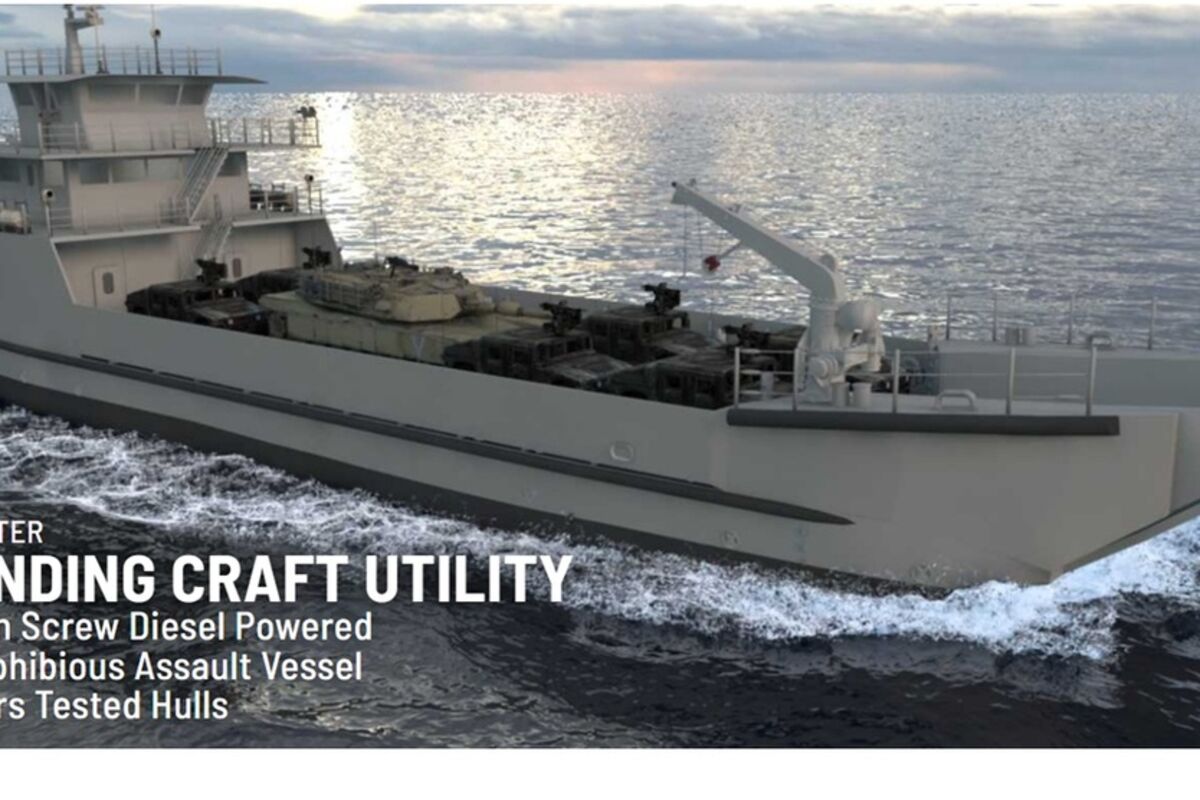
Switftships was to design and build new landing craft to replace the aged Vietnam era ships the Navy currently relies on
March 19, 2026 - MORGAN CITY, La. - Swiftships, the 84‑year‑old Louisiana shipbuilder known for producing military and commercial vessels for the U.S. Navy and foreign partners, has filed for Chapter 11 bankruptcy protection, marking a dramatic turn for a company long embedded in America's defense industrial base. The filing comes despite rising U.S. military spending, highlighting how shifts in procurement priorities can destabilize even established defense contractors.
Swiftships filed its voluntary Chapter 11 petition on March 18, 2026, in the U.S. Bankruptcy Court for the Western District of Louisiana, and the case was assigned No. 26‑50237. The company reported $10 million to $50 million in assets and $10 million to $50 million in liabilities, according to bankruptcy summaries.
A Bankruptcy Amid Rising U.S. Military Spending
The bankruptcy comes at a time when U.S. defense spending is surging. According to the Stockholm International Peace Research Institute (SIPRI), U.S. military spending rose 5.7% to $997 billion in 2024, representing 66% of NATO defense spending and 37% of global military spending. Much of that increase went toward modernization of nuclear forces and advanced capabilities aimed at countering Russia and China.
Yet Swiftships-despite being a longtime supplier of troop carriers, patrol craft, and other vessels-found itself squeezed by the nature of that spending. Modernization priorities shifted toward high‑tech systems, unmanned platforms, and nuclear modernization, leaving some traditional shipbuilders vulnerable.
Loss of a Critical Navy Contract
Swiftships' financial crisis accelerated after the U.S. Navy terminated its contract for the Landing Craft Utility (LCU) 1700 program, a next‑generation troop and equipment transport vessel. The Navy ordered Swiftships to stop work in 2024 and moved to terminate the agreement after years of disputes over performance and design issues, according to reporting from Defense News.
The LCU program had been a major revenue source:
2018: $18 million contract for detailed design and first craft
2019: $26.7 million for two additional craft
2020: $50.1 million for four more craft
The contract included options for up to 32 vessels, enough to replace the Navy's aging Vietnam‑era LCU fleet.
When the Navy halted the program, Swiftships sued in March 2024, alleging the termination was made in bad faith and seeking $150 million in damages, according to filings referenced by Law360 and Justia. The company accused the Navy of obstructing its ability to succeed on the program.
Why Swiftships Collapsed
Industry analysts note that Swiftships' bankruptcy reflects a convergence of pressures:
1. Loss of the LCU 1700 Program
The termination of the Navy's LCU contract removed Swiftships' most significant revenue stream and left the company with sunk costs and idle production capacity.
2. Shifting Defense Priorities
Even as defense spending grows, funds are increasingly directed toward:
Nuclear modernization
Hypersonic weapons
Cyber and space capabilities
Unmanned systems
Traditional shipbuilders without diversified portfolios face heightened risk.
3. Legal and Financial Strain
The ongoing lawsuit against the Navy created uncertainty and legal expenses at a time when Swiftships was already financially stressed.
What Chapter 11 Means for Swiftships
Under Chapter 11, Swiftships will attempt to reorganize its debts while continuing limited operations. The filing lists:
Debtor: Swiftships, LLC
Court: U.S. Bankruptcy Court, Western District of Louisiana
Case Number: 26‑50237
Filing Type: Voluntary Chapter 11
Assets: $10M–$50M
Liabilities: $10M–$50M
These details were confirmed through bankruptcy monitoring services.
The company's future will depend heavily on the outcome of its lawsuit against the Navy and its ability to secure new contracts or investors.
A Blow to the Gulf Coast Shipbuilding Sector
Swiftships has long been a major employer in Morgan City and a key contributor to the Gulf Coast's maritime industrial base. Its vessels have served in the U.S. Navy, Coast Guard, and foreign militaries for decades.
The bankruptcy raises concerns about:
Job losses in an already strained regional shipbuilding economy
Reduced domestic capacity for small and medium military craft
Potential delays in Navy and foreign military procurement
What Comes Next
Swiftships will now submit a reorganization plan to the bankruptcy court. The company's lawsuit against the Navy could become a pivotal asset in restructuring negotiations. If Swiftships prevails or reaches a settlement, it may gain the capital needed to stabilize operations.
If not, the company could face liquidation-ending more than eight decades of shipbuilding history.








Reader Comments(0)