
The people's voice of reason


The people's voice of reason
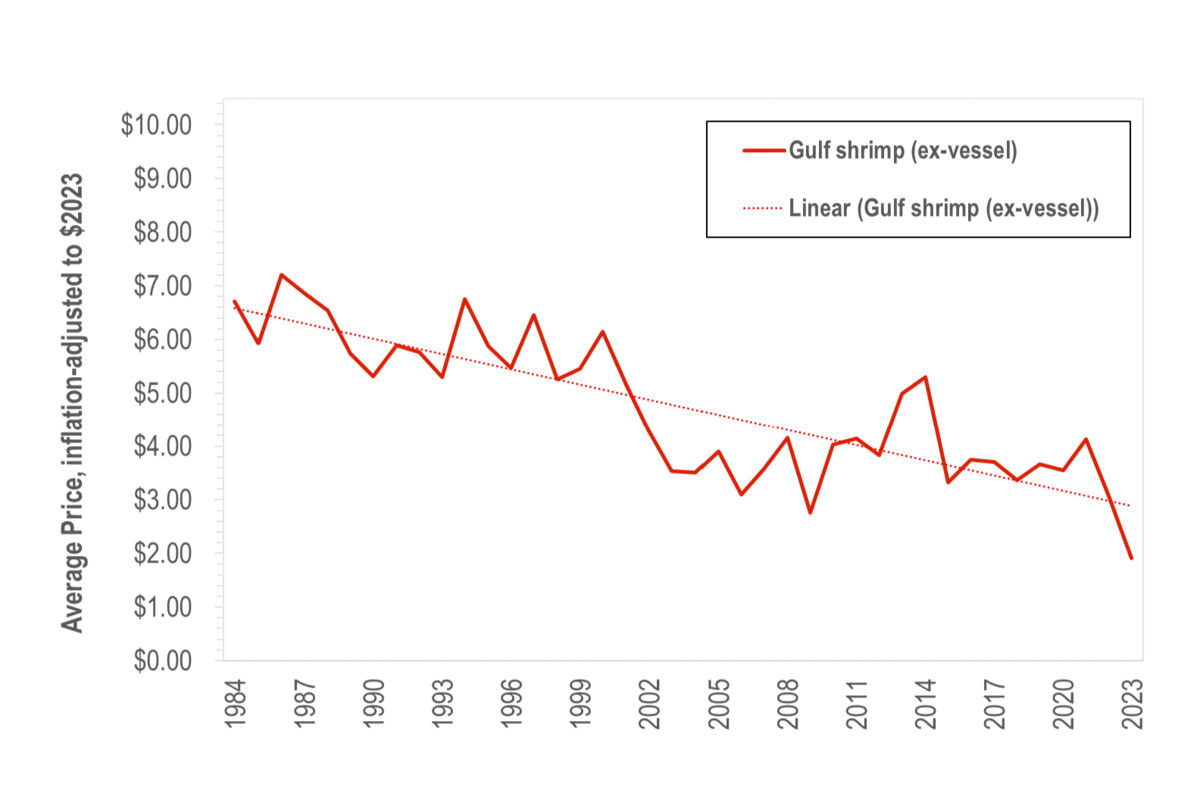
The prices that shrimpers get for their shrimp has steadily declined over the last 40 years when adjusted for inflation
March 19, 2026 - BAYOU LA BATRE, Ala. - A new NOAA Fisheries economic snapshot paints a stark picture of the U.S. Gulf shrimp industry, revealing a long‑term decline in profitability, shrinking participation, and mounting structural challenges that threaten the future of one of the Gulf Coast's most iconic fisheries.
The report, released as part of NOAA's Shrimp Futures Initiative, shows the industry has lost $268 million in revenue since 2021, with total earnings plunging from $489 million to just $221 million in two years. Researchers say the downturn is not the result of dwindling shrimp populations, but of economic pressures that have pushed many shrimpers to the brink.
A Fishery Under Pressure
According to the report, the Gulf shrimp industry has endured a multi‑decade decline in economic stability, driven by two major forces:
A flood of low‑priced imported shrimp, especially farm‑raised products from overseas
Rising operating costs, including fuel, maintenance, and labor
While Americans are eating more shrimp than ever-U.S. consumption has quadrupled since 1984-domestic shrimpers are capturing a shrinking share of the market. In 1984, Gulf‑harvested shrimp made up 28.7% of U.S. supply. By 2023, that number had fallen to 4.5%.
As imports surged, prices collapsed. Adjusted for inflation, the average price paid to Gulf shrimpers dropped from over $6 per pound in the 1980s to under $2 per pound in 2023.
"This is an industry consuming its own capital to stay afloat," said Dr. Christopher Liese, NOAA economist and lead author of the report. "The long life of shrimp vessels has masked a fundamental weakness: the fishery is not economically sustainable enough to reinvest in itself."
Landings Fall as Shrimpers Exit the Industry
Despite the economic collapse, shrimp populations remain healthy. NOAA scientists report no signs of overfishing and stable abundance across the Gulf.
Yet landings continue to fall. In 2023, U.S. wild‑caught Gulf shrimp landings were:
15% below the 10‑year average
24% below the 50‑year average
The reason, researchers say, is simple: fewer shrimpers are still in the water.
Between 2021 and 2023:
The number of active shrimp vessels dropped 19%
The industry lost an estimated 1,200 jobs
Many remaining vessels reduced their time at sea
"We know shrimp abundance is not the issue," said Dr. John Walter, Deputy Director of the Southeast Fisheries Science Center. "Declining profits are driving vessels out of the fishery, reducing effort, and accelerating revenue losses."
Communities Feeling the Strain
From Bayou La Batre, Alabama, to Brownsville, Texas, the economic strain is visible along the docks.
"Docks are in disrepair while giant vessels with peeling paint sit idly," said Dr. Carissa Gervasi, lead of the Shrimp Futures Initiative. "For many shrimpers, prices are so low that it's cheaper to leave the boats tied up than to go out."
But idled vessels create a vicious cycle:
Crews leave for more stable jobs
Boats deteriorate and become costly to repair
Owners cannot afford to shrimp, but also cannot afford to sell
One fleet owner estimated it would cost $4 million just to exit the industry.
"Shrimpers can't afford to shrimp, and they can't afford to stop shrimping," Gervasi said.
A Path Forward: Restoring Competitiveness
NOAA officials say the new report is only the first step in a broader effort to stabilize and rebuild the domestic shrimp sector.
"This report puts numbers to the economic challenges facing the U.S. shrimp industry," said Sarah Shoffler, NOAA Fisheries seafood advisor. "A resilient Gulf shrimp industry depends on restoring profitability."
Potential solutions include:
Technological upgrades to reduce operating costs
Market differentiation, such as branding Gulf shrimp as a premium domestic product
Public‑private partnerships to modernize infrastructure and support innovation
The Shrimp Futures Initiative aims to identify actionable strategies that align with the NOAA Fisheries Seafood Strategy and Executive Order 14276: Restoring American Seafood Competitiveness.
A Defining Moment for a Historic Fishery
For generations, shrimping has been a cultural and economic cornerstone of Gulf Coast communities. But without intervention, NOAA warns the industry may continue its downward spiral.
The report's findings underscore a pivotal moment: whether the United States chooses to rebuild its domestic shrimp fleet-or watch it fade into history as imported seafood dominates the market.
To read the original NOAA report:







Reader Comments(0)