
The people's voice of reason


The people's voice of reason

Spring is here, and that means the housing market is gearing up for its busiest season. Every year, as buyers and sellers emerge from the winter freeze, more homes hit the market, more buyers go on tours, and more deals close.
But in recent years, the reliably busy spring homebuying season has been noticeably quieter. Since the housing market’s pandemic-era peak in 2022, high prices, elevated mortgage rates, and broader economic uncertainty have prompted more buyers and sellers to step back and wait for conditions to improve, creating a very slow buyer’s market. As a result, home sales have dropped to historically low levels over the last two years—even during spring, when activity is typically at its peak.
So, what can homebuyers do to win today? Redfin Real Estate and Thumbtack surveyed hundreds of real estate agents, home professionals, and experts across the country to provide the answers, asking questions like “What do repairs typically cost?” and “Which features do buyers first notice when they walk into a home?” Their insights reveal what buyers need to know about touring a home, outcompeting other buyers, navigating the inspection, and buying with confidence. In this article, Redfin shares the findings.
Touring a home is likely one of the first steps a prospective homebuyer will take. A critical part of the touring process is noticing potential red flags. These can range from minor issues like chipped paint or old carpeting to more serious problems like cracks, water damage, or mold.
Buyers don’t often catch potentially major problems during home tours. According to Thumbtack professionals, cracked walls or floors are the most commonly overlooked red flag, with 45% of pros saying buyers miss them during tours. Next came strong odors (43%) and roofing issues (37%).
While touring homes, buyers should watch for signs of deferred maintenance that may not be obvious at first glance, like water stains, uneven flooring, strong odors, or cracks. These don’t always signal major issues, but they should prompt questions. Look inside closets, cabinets, and utility spaces to get a feel for the home’s overall condition.
Not all issues are major red flags, though, even if they look like deal breakers on the surface. Thumbtack pros say that the most common “scary but manageable” problems they see are plumbing leaks (48%), minor electrical fixes (42%), and drywall scuffs (34%).
In today’s slower housing market, buyers often have more negotiating power—but that doesn’t mean competition has disappeared.
Redfin agents say that the most common strategy buyers use to close on a competitive home is offering fewer contingencies, with 71% of agents reporting this as the most effective approach. Making an all-cash offer (53%) and strong financing (40%) rounded out the top three. Note: Waiving contingencies may not be the best strategy for everyone.

While many areas have cooled, some pockets of the country—particularly in parts of the Northeast, Midwest, and West Coast— are still red hot, especially places like Rochester, New York, and San Jose, California. In these markets, buyers may need to move quickly and submit strong offers to secure a home.
Even in the slowest markets like Austin, Texas, some homes still attract multiple buyers and sell within days. Move-in ready homes, in particular, tend to get the most attention and sell the fastest.
For buyers, the key is knowing when to act fast and when to take advantage of a slower market. If a home has been sitting longer, there may be more opportunity to negotiate on price, contingencies, or repairs. But if a home is well-priced and in great condition, being prepared to move quickly can still make all the difference."
When home inspections go awry, they can quickly delay or even derail a sale. According to 67% of Redfin agents, roof damage is the most common issue uncovered during inspections that led to delays or cancellations. This is followed by foundation or structural problems (64%) and water damage (30%).
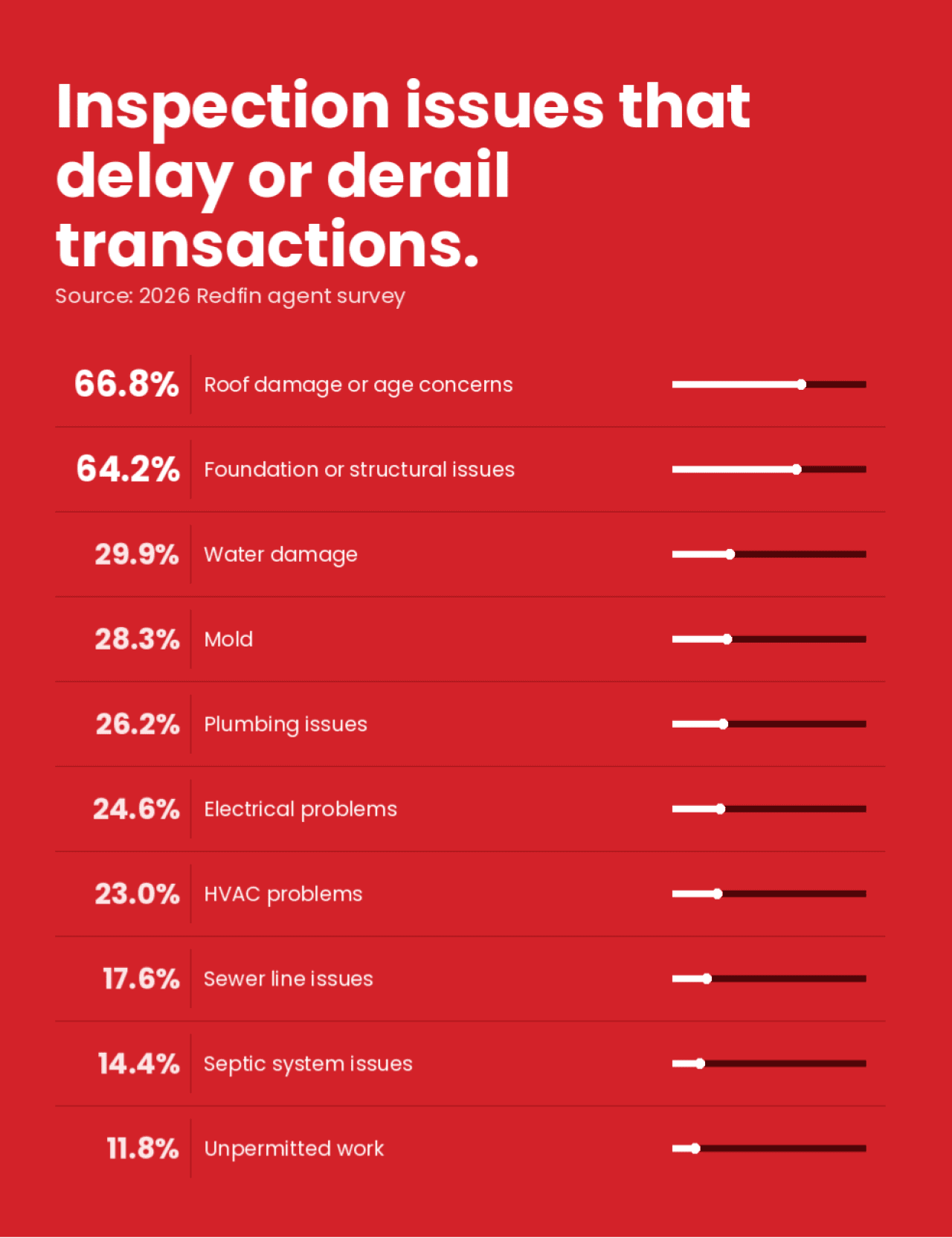
Overlooking red flags can lead to buyer's remorse and potentially a major renovation bill down the line. This is why the home inspection is critical for both buyers and sellers—so both parties can help support a smoother closing, faster sale, and reduce the chances of the deal falling through.
Deciding how much house you can afford should be one of the first steps a buyer takes on their housing journey. But it’s important to remember that expenses extend beyond the house price and monthly payments, especially when it comes to maintenance.
Redfin agents say most new homebuyers spend between $1,000 and $5,000 on basic home maintenance equipment in their first year, with a significant share spending as much as $5,000 to over $10,000.
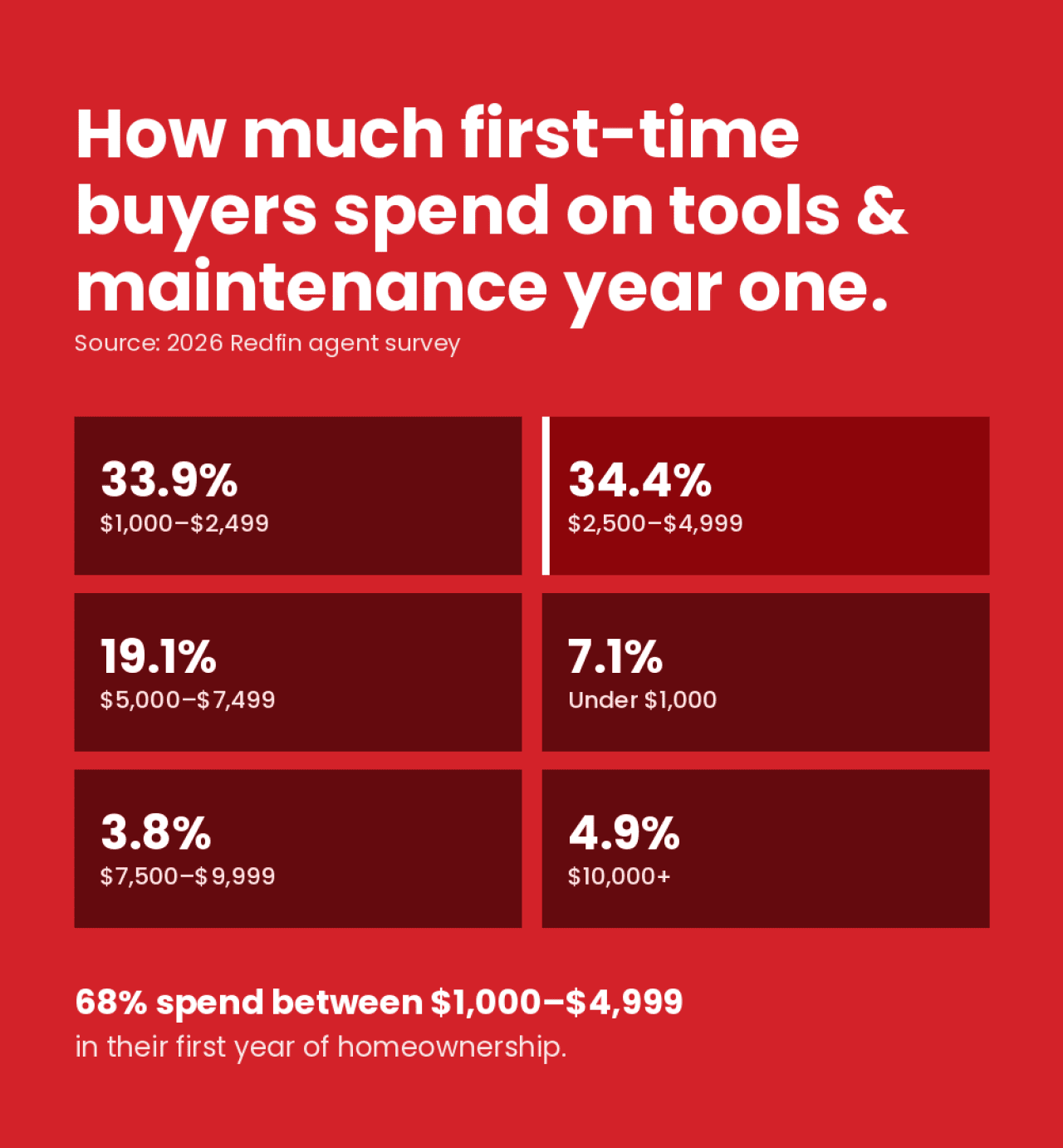
It’s crucial to have a deep understanding of your finances. Know exactly what you can afford, including your down payment, closing costs, monthly mortgage payment, property taxes, insurance, and any maintenance issues that may arise. For example, closing costs alone are usually 2%-5% of the purchase price.
One way to prevent costly repairs is to proactively stay on top of home maintenance. Around one-third of Thumbtack professionals say water damage from untreated leaks is the most preventable big-ticket problem. This is followed by HVAC replacement due to lack of servicing (19%) and roof damage from delayed maintenance (15%).
The housing market has been difficult for nearly everyone for the last few years, with record-high costs, limited supply, and economic uncertainty.
But heading into spring, Redfin and Thumbtack experts say that homebuyers can get a head start by watching for red flags during tours, outcompeting other buyers, prioritizing the inspection, and planning ahead for maintenance costs.
Data comes from two surveys conducted by Redfin and Thumbtack in February 2026. Redfin surveyed 187 real estate agents and Thumbtack surveyed over 100 home professionals (home inspectors, roofers, handymen, etc.), asking questions like “Which home updates or renovations are sellers most often completing before listing their home on the market?” and “What causes the most buyer regret?”.
National average renovation cost estimate data comes from Thumbtack.
This story was produced by Redfin Real Estate and reviewed and distributed by Stacker.





Reader Comments(0)