
The people's voice of reason


The people's voice of reason
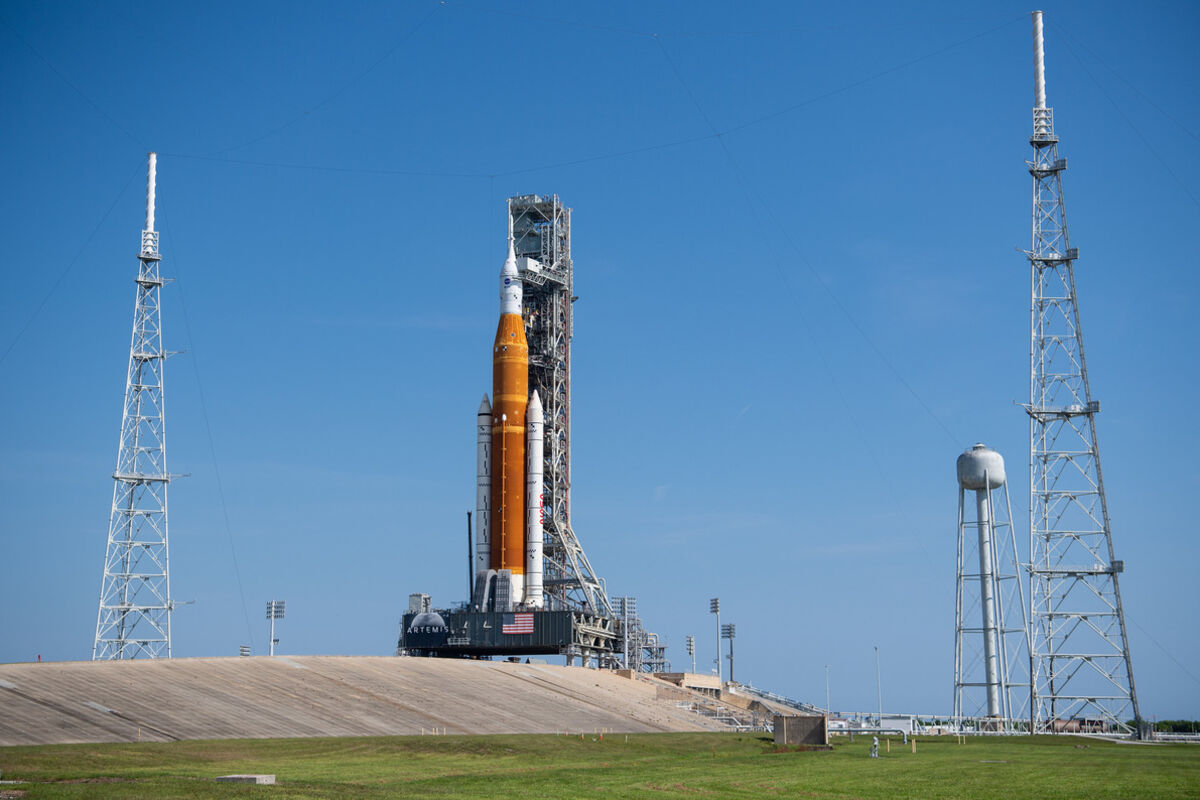
The Space Launch System carries the Artemis missions to the moon
April 29, 2026 - WASHINGTON, D.C. – U.S. Senator Katie Britt (R-Alabama) joined a Senate Commerce, Justice, and Science Subcommittee Hearing to discuss the President's Fiscal Year (FY) 2027 budget request for National Aeronautics and Space Administration (NASA).
Britt applauded the recent successful Artemis II mission, highlighting Marshall Space Flight Center's critical role in the mission, and pressed Administrator Isaacman on the Space Launch System (SLS) production and fully implementing funding appropriated to NASA for nuclear thermal propulsion (NTP) in FY26.
Britt said that she is, "Proud of the men and women at NASA Marshall who helped make this historic Artemis II mission a reality."
"I couldn't be prouder to support Marshall's space programs," Britt continued.
Britt asked about maintaining a robust launch architecture for future Artemis missions.
"Your revised architecture depends on sustaining a launch cadence of roughly every ten months. Can you tell the subcommittee what NASA needs in FY27 to keep SLS production lines moving without gaps that would undermine the schedule that you've committed to?"
Administrator Isaacman responded, "Couldn't agree more about the contributions from Marshall Space Flight Center and the importance for a rocket that complicated to be in a cadence ... at least on an annual level, or we certainly risk ... going back in the barn and having delays. And we don't want that when we are in a great power competition."
"The Working Families Tax Cuts Act certainly gave us the resources to be committed to this platform through Artemis V, but if we're launching a greater frequency, then we're going to use the rockets up that much faster. And if we're building a moon base, what we're going to want to send astronauts there with great frequency. ... so we have an Artemis 100 someday, so, we never give up the moon again."
Senator Britt warned that Artemis and other NASA programs do not end prematurely.
"NASA and our space program have been repeatedly plagued with starts and stops and departures from different production models, many of which [have] been premature and has threatened our ability to ultimately continue our mission to have access to the moon ahead of China, so I appreciate you taking that into consideration," Senator Britt said.
The Artemis mission took NASA astronauts further into space than any humans since the Apollo missions of the early 1970s. NASA hopes to land on the Moon in 2027.
To comment or to ask a question email: brandonmreporter@gmail.com



Reader Comments(0)