
The people's voice of reason


The people's voice of reason

The escalation of conflict in the Middle East following the U.S.-Israeli military strikes on Iran on Feb. 28, 2026, sent shockwaves through the energy industry and financial markets. Oil prices surged amid global supply fears tied to disruptions in the Strait of Hormuz, and investors rushed to reposition for higher crude valuations. According to the data, there was plenty of upside.
To add to the uncertainty, the full effects on global supply chains are still unfolding.
The following data is of energy stock price action from Feb. 27, 2026 (the day before the strikes) through April 17, 2026. Finder explores the data of energy stocks and the impact of the Iran war globally to see which oil stocks have accelerated since the Feb. 28 military action began.
The military action has disrupted key oil supply routes and heightened geopolitical risk, driving up global crude prices and boosting revenue potential for producers and midstream operators. While companies with diversified or non-Middle East production could gain a competitive edge, industry analysts believe this conflict drove strong gains across most of the energy sector as higher oil prices flow through to the bottom line.
The energy industry has complex, cross-border operations, meaning no major player is completely insulated from global price swings.
Even as the conflict continues to create significant global uncertainty, the Feb. 28 strikes are driving solid returns for many energy stocks, though results are mixed.
As of the close of April 17, 2026, the stocks experiencing the most growth in response to the Iran war are BW Energy (BWEFF), Sky Quarry (SKYQ), TC Energy (TCANF), La Française de l’Énergie (FDENF) and NCS Multistage Holdings (NCSM). These stocks have seen the largest gains since Feb. 27 — the day before the strikes.
The biggest laggards are Oil States International, Inc. (OIS), Sinopec Kantons Holdings Limited (SPKOY), Mexco Energy Corporation (MXC), Texas Pacific Land Corporation (TPL) and SandRidge Energy (SD). These stocks have seen the smallest gains or outright declines since the strikes began.
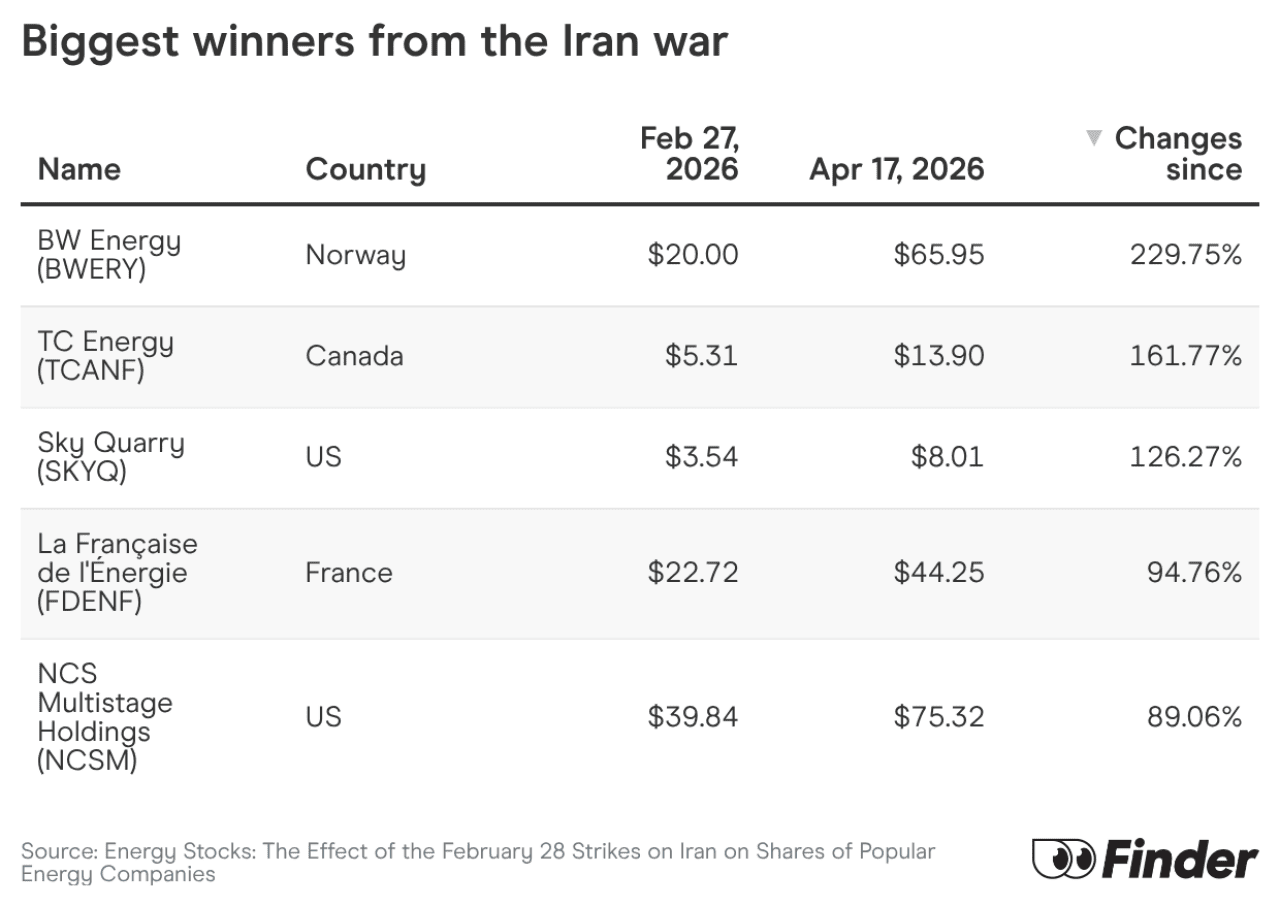
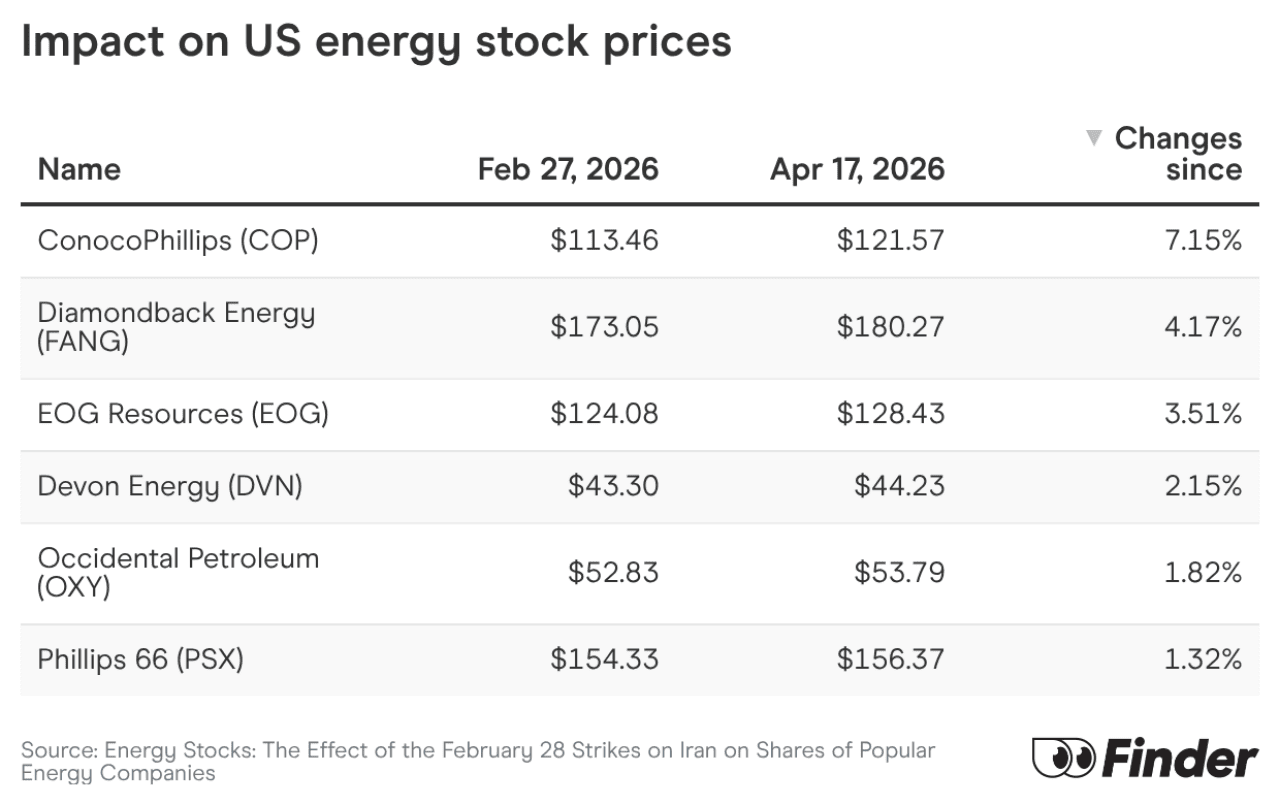
Energy stocks across the board responded positively to the U.S.-Israeli strikes, with solid gains reflecting the surge in oil prices. U.S. producers stood to benefit the most from the price surge with limited direct exposure to the conflict, as investors favored domestic producers less exposed to direct Middle East risk.
It’s been a strong period for many U.S. energy companies, including ConocoPhillips (COP), EOG Resources (EOG), Occidental Petroleum (OXY) and Phillips 66 (PSX). While smaller and more leveraged names posted triple-digit gains, even the largest integrated and E&P players delivered healthy double-digit returns.
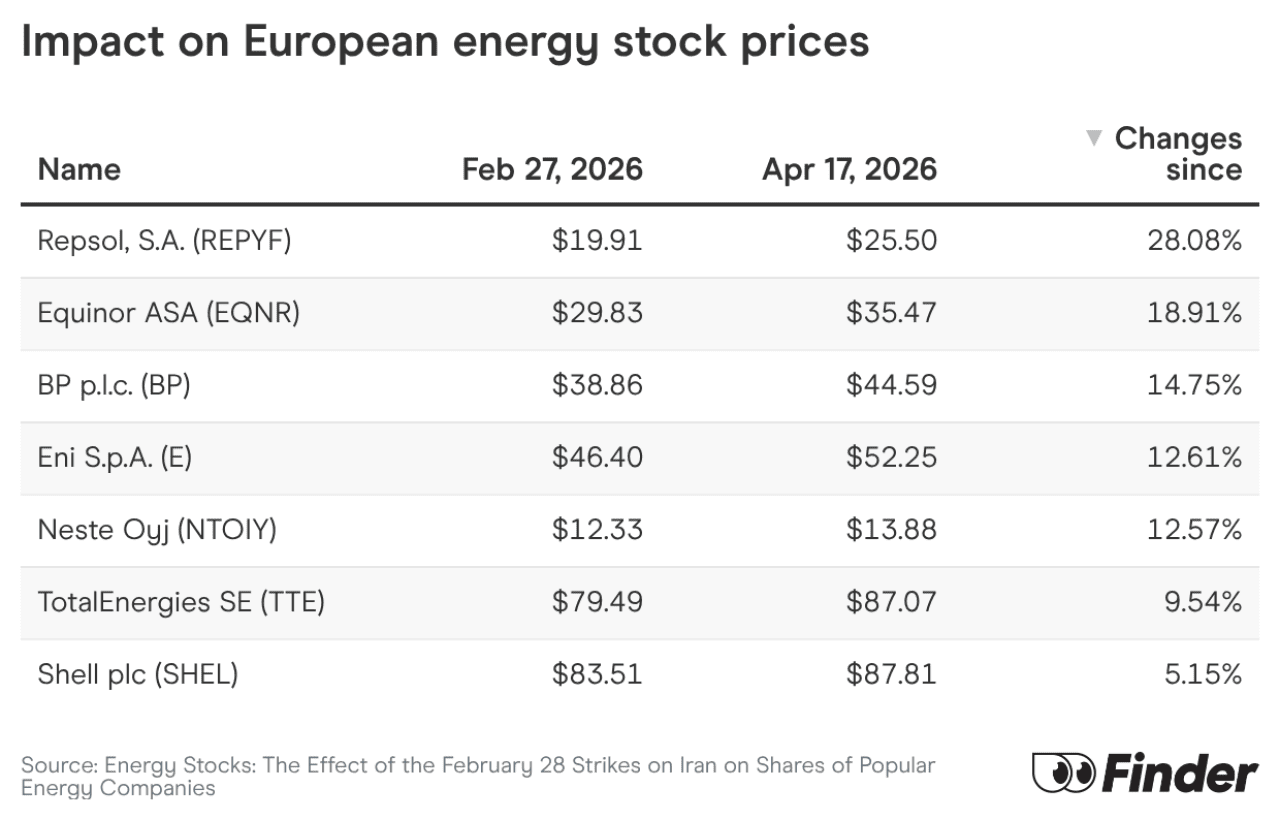
European names posted solid gains as higher oil prices flowed through to integrated majors and operators with limited direct Middle East exposure. No major European energy company was left behind in the broad sector rally.
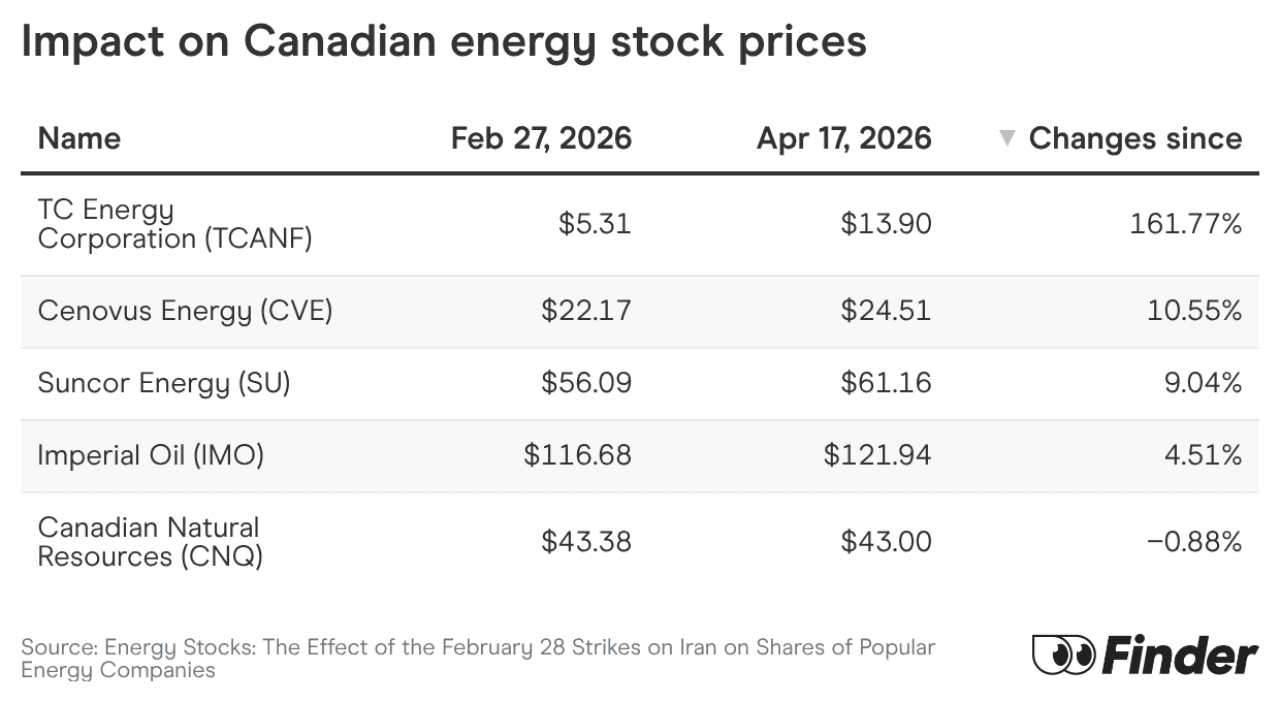
Canadian producers and pipeline operators saw healthy appreciation, especially those with strong North American exposure. Pipeline names like TC Energy delivered outsized gains while larger integrated players posted steady double-digit returns.
U.S. producers and midstream companies — particularly smaller and more leveraged names — delivered some of the strongest gains, as they were largely insulated from direct Middle East supply risks while capturing the upside of higher global oil prices. European and other international integrated majors also posted solid returns, but gains were generally more moderate due to their broader global exposure.
This story was produced by Finder and reviewed and distributed by Stacker.










Reader Comments(0)