
The people's voice of reason


The people's voice of reason
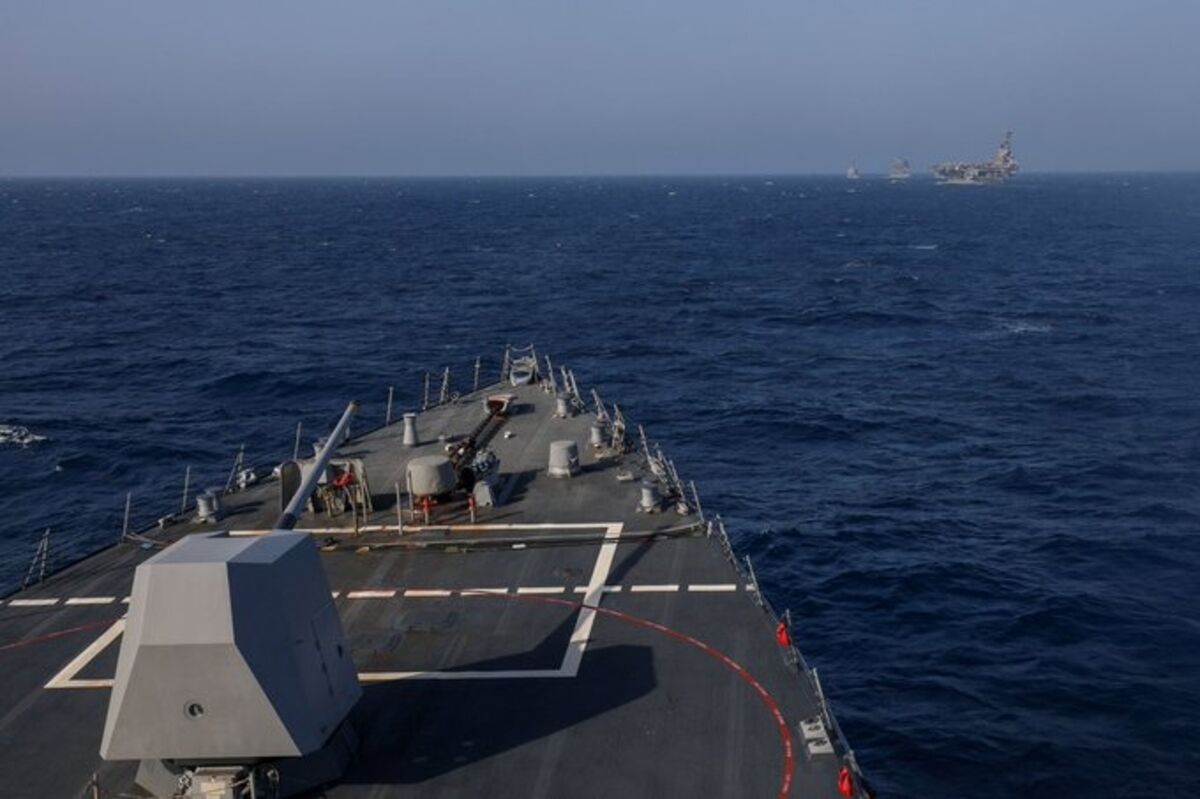
USS John Finn (DDG 113) sails behind USS Milius (DDG 69), USNS Carl Brashear (T-AKE-7), and USS George H.W. Bush (CVN 77) in the Arabian Sea. Over 20 U.S. warships are enforcing the blockade against Iran. CENTCOM forces have redirected 61 commercial vessels and disabled 4 to ensure compliance.
The United States military has struck and disabled two Iranian oil tankers in the Gulf of Oman, marking the latest escalation in a conflict that has strained a fragile ceasefire and disrupted global energy markets. U.S. Central Command (CENTCOM) said the tankers were attempting to breach an American naval blockade of Iran's ports when they were hit.
A Direct Hit on Two Tankers
CENTCOM confirmed that a U.S. Navy fighter jet fired precision munitions into the smokestacks of two Iran‑flagged, unladen oil tankers on Friday, preventing them from entering an Iranian port. The vessels were identified as the M/T Sea Star III and M/T Sevda. The strikes disabled both ships as they transited the Gulf of Oman.
The U.S. military said the tankers were attempting to evade the blockade imposed after the U.S. and Israel launched coordinated strikes on Iran on February 28, igniting a regional war that has since drawn in multiple countries. CENTCOM reports that U.S. forces have now redirected 57 commercial vessels and disabled four tankers in total since the blockade began.
Ceasefire Under Strain
The tanker strikes occurred as the U.S. and Iran remain in a tenuous ceasefire. Despite the truce, both sides have exchanged fire in recent days. On Thursday, U.S. Navy ships intercepted Iranian attacks in the Strait of Hormuz, prompting retaliatory strikes on Iranian military facilities. Iran's Foreign Ministry condemned the U.S. actions as a "clear violation" of the ceasefire.
President Donald Trump downplayed the U.S. strikes in an interview, calling them "a love tap," but warned that full‑scale bombing would resume if Iran does not accept a U.S. proposal to end the war and reopen the Strait of Hormuz. "If they don't agree, the bombing starts," Trump said earlier in the week.
Global Energy Markets on Edge
The Strait of Hormuz-normally responsible for moving 20% of the world's oil-has become a battleground since the war began. Iran has effectively closed the waterway, and the U.S. blockade has further restricted tanker traffic. The result has been a global spike in fuel prices and mounting concern among world leaders about long‑term energy stability.
U.S. officials say reopening the strait is a priority, but progress has been slow. Defense Secretary Pete Hegseth recently paused "Project Freedom," a mission intended to protect commercial shipping, only a day after it began.
Diplomacy in Motion, But Uncertain
Secretary of State Marco Rubio said Friday he expects Iran to respond soon to a U.S. proposal aimed at ending the war and initiating nuclear negotiations. "I hope it's a serious offer," Rubio said. Iran has not publicly indicated whether it will accept the terms.
Meanwhile, regional tensions continue to rise. The United Arab Emirates reported injuries after intercepting Iranian ballistic missiles and drones, and Israel has resumed strikes in Beirut despite its own ceasefire with Hezbollah.
What Comes Next
The disabling of two Iranian tankers underscores how quickly the conflict can escalate despite diplomatic overtures. With both sides trading fire and the global energy supply under strain, the coming days may determine whether the region moves toward a negotiated settlement-or slides back into full‑scale war.





Reader Comments(0)