
The people's voice of reason


The people's voice of reason
Xi in Ping and President Trump
Diplomacy, Trade, and Strategic Dialogue in Beijing
President Donald J. Trump's visit to China marked one of the most closely watched diplomatic events of his administration - a high‑stakes meeting between two of the world's largest economies and most powerful nations. The trip, held in Beijing, symbolized both continuity and confrontation in a relationship defined by trade, technology, and global influence.
A Warm Welcome in Beijing
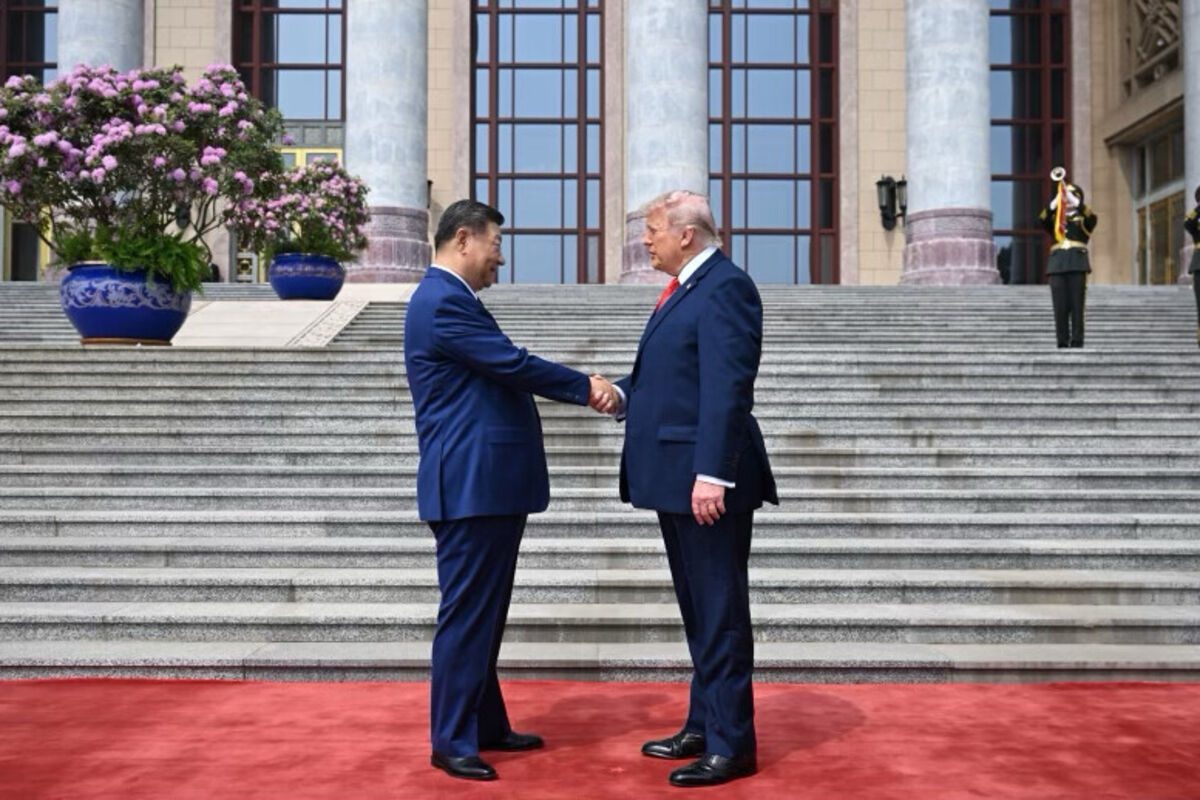
Upon arrival, President Trump was greeted with full state honors at the Great Hall of the People, underscoring the importance China placed on the visit. President Xi Jinping hosted a lavish welcome ceremony, complete with military bands and a red‑carpet review of troops. The two leaders then held extended talks covering trade, security, and regional stability.
Chinese officials described the visit as a "state visit plus," a term reserved for occasions of exceptional diplomatic significance. The tone was cordial, but the agenda was weighty.
Trade and Economic Negotiations
At the heart of the discussions was the U.S.–China trade relationship, which had grown increasingly complex. President Trump emphasized the need for fair and reciprocal trade, pressing Beijing to reduce barriers and address intellectual property concerns.
The two sides announced a series of commercial agreements worth billions of dollars, including energy, aviation, and agricultural deals. While these agreements were largely symbolic, they reflected a mutual interest in stabilizing economic ties amid global uncertainty.
Security and Regional Issues
Beyond trade, the leaders discussed pressing security challenges:
North Korea's nuclear program, with both nations agreeing on the need for denuclearization of the Korean Peninsula.
South China Sea tensions, where Trump reaffirmed the U.S. commitment to freedom of navigation.
Counterterrorism cooperation, focusing on intelligence sharing and regional stability.
Though differences remained, both sides pledged to maintain open lines of communication to prevent escalation.
Cultural Diplomacy and Symbolism
President Trump and First Lady Melania Trump toured the Forbidden City, an unprecedented gesture of hospitality from the Chinese government. The visit blended diplomacy with cultural outreach, highlighting centuries of Chinese history and artistry.
The imagery of the two leaders walking through imperial courtyards was widely broadcast - a reminder that diplomacy often unfolds as much in symbolism as in policy.
A Balancing Act for Both Nations
For China, the visit reinforced its role as a global power capable of hosting high‑level summits with confidence. For the United States, it was an opportunity to assert leadership while navigating the realities of economic interdependence.
Analysts noted that while the visit produced few immediate breakthroughs, it set the tone for ongoing negotiations and underscored the complexity of modern U.S.–China relations - a mix of competition, cooperation, and cautious respect.
Legacy and Implications
President Trump's trip to China will be remembered as a moment when two rival powers sought common ground amid global uncertainty. It reflected a pragmatic approach to diplomacy - one that balanced firmness on trade with openness to dialogue.
In the long arc of history, the visit stands alongside earlier milestones such as Richard Nixon's 1972 trip, reminding observers that U.S.–China relations continue to evolve through cycles of tension and engagement.





Reader Comments(0)