
The people's voice of reason


The people's voice of reason
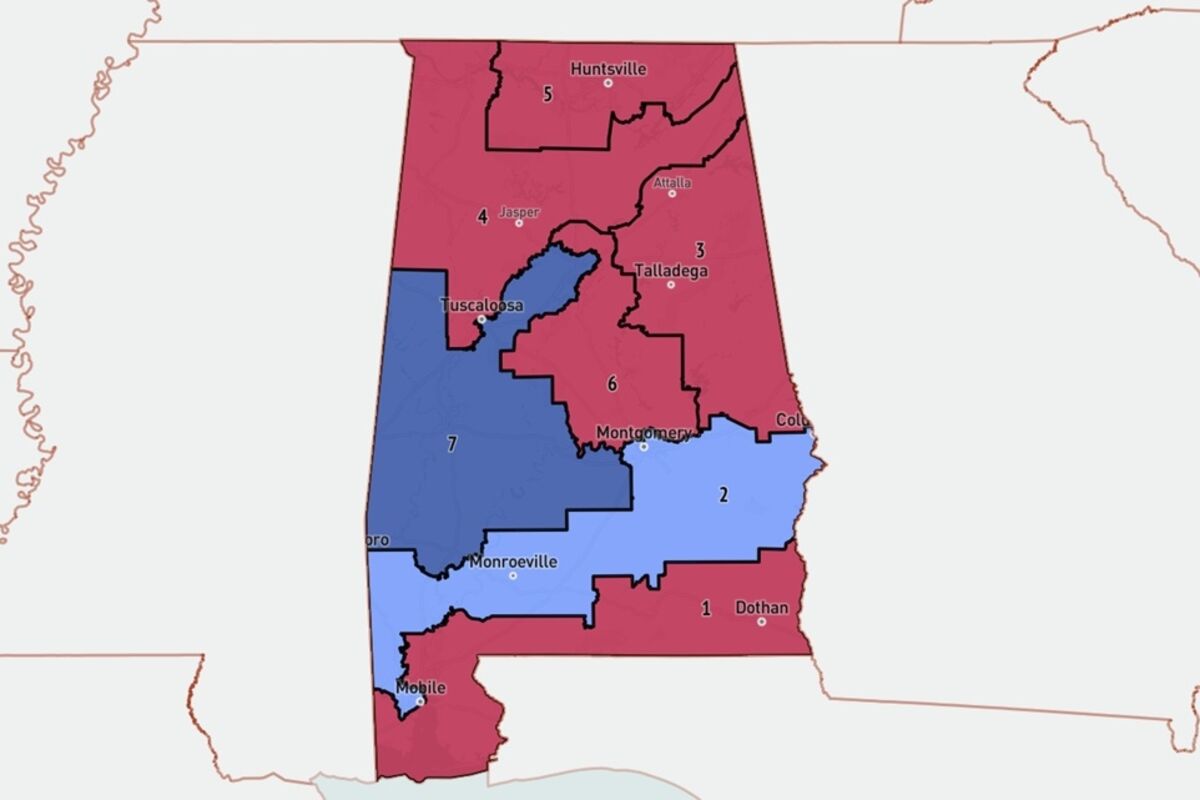
The court drawn 2024 congressional redistricting map that the state hopes to invalidate
May 22, 2026 - WASHINGTON, D.C. - A federal judge in the Northern District of Alabama will hear arguments today that could determine which congressional map the state uses in the 2026 elections. At 10 a.m. ET, the court is scheduled to begin a preliminary injunction hearing in Caster v. Allen, a redistricting case brought by voters backed by the National Redistricting Foundation (NRF).
Ahead of the hearing, NRF Executive Director Marina Jenkins briefed reporters on the organization's legal strategy and the stakes of the case. The NRF is directing litigation and providing financial support for the Caster plaintiffs, who argue that Alabama is attempting an unlawful mid‑decade gerrymander that threatens ballots already cast in the state's ongoing primary elections.
NRF: "Cancel the burial" of Section 2
Jenkins pushed back against claims that the U.S. Supreme Court's recent ruling in Louisiana v. Callais effectively ended enforcement of Section 2 of the Voting Rights Act.
"Since Callais, pundits and politicians have been quick to declare Section 2 of the Voting Rights Act dead," Jenkins said. "But our filing with the Court has a clear response: cancel the burial. Callais narrowed Section 2 - but it did not kill it. And this case clears every bar Callais set."
Challenge to Alabama's attempt to reinstate the last map that the Alabama Legislature passed
Jenkins said Alabama is attempting to "cancel an election" in order to reinstate a congressional map that a federal court previously found was drawn with racially discriminatory intent.
"No other Section 2 case comes to court with a record like this one," she said, citing a prior finding of intentional discrimination, a Supreme Court ruling affirming the underlying facts, a race‑blind Special Master map, and an election in which ballots have already been cast.
"We are asking this court to block Alabama's gerrymander, protect the votes already cast, and require Alabama to conduct its congressional elections under a lawful map," Jenkins said.
Background: A years-long legal battle over Alabama's maps
The NRF initiated Allen v. Milligan on behalf of the Caster plaintiffs, a landmark case in which the U.S. Supreme Court ruled in 2023 that Alabama's 2021 congressional map violated Section 2 of the Voting Rights Act. The ruling required the state to adopt a map containing two Black-opportunity districts.
But after the Supreme Court's decision in Callais earlier this year - a ruling that sharply limited the scope of Section 2 - Alabama lawmakers moved quickly to revive their previously invalidated 2023 map. At the time, the state's 2026 congressional primaries were already underway using a map that the federal court drew and forced the state of Alabama to use against the Legislature and the Governor's will.
Following the friendly ruling in Louisiana V. Callias, the Legislature convened a special session to pass a bill canceling and rescheduling primaries in several districts and reinstating the 2023 map, which contains only one majority‑Black district. After the U.S. Supreme Court lifted an injunction preventing the state from redistricting, Gov. Kay Ivey then called special primary elections in the 1st, 2nd, 6th, and 7th districts under the reinstated map, raising concerns that ballots cast under the prior map could be discarded.
The Caster plaintiffs first sought a temporary restraining order to halt the state's actions. Today's preliminary injunction hearing will determine whether Alabama may proceed with its revived map or whether the court will block its implementation in violation of Alabama's state rights under the Constitution.
(Brandon Moseley contributed to this report/)


Reader Comments(0)