
The people's voice of reason


The people's voice of reason

For years, the conversation around men’s declining mental health has focused on loneliness, social isolation, economic stress, and the stigma against seeking help. While those are all important factors, new data from Hone Health suggests another potential factor: hormones.
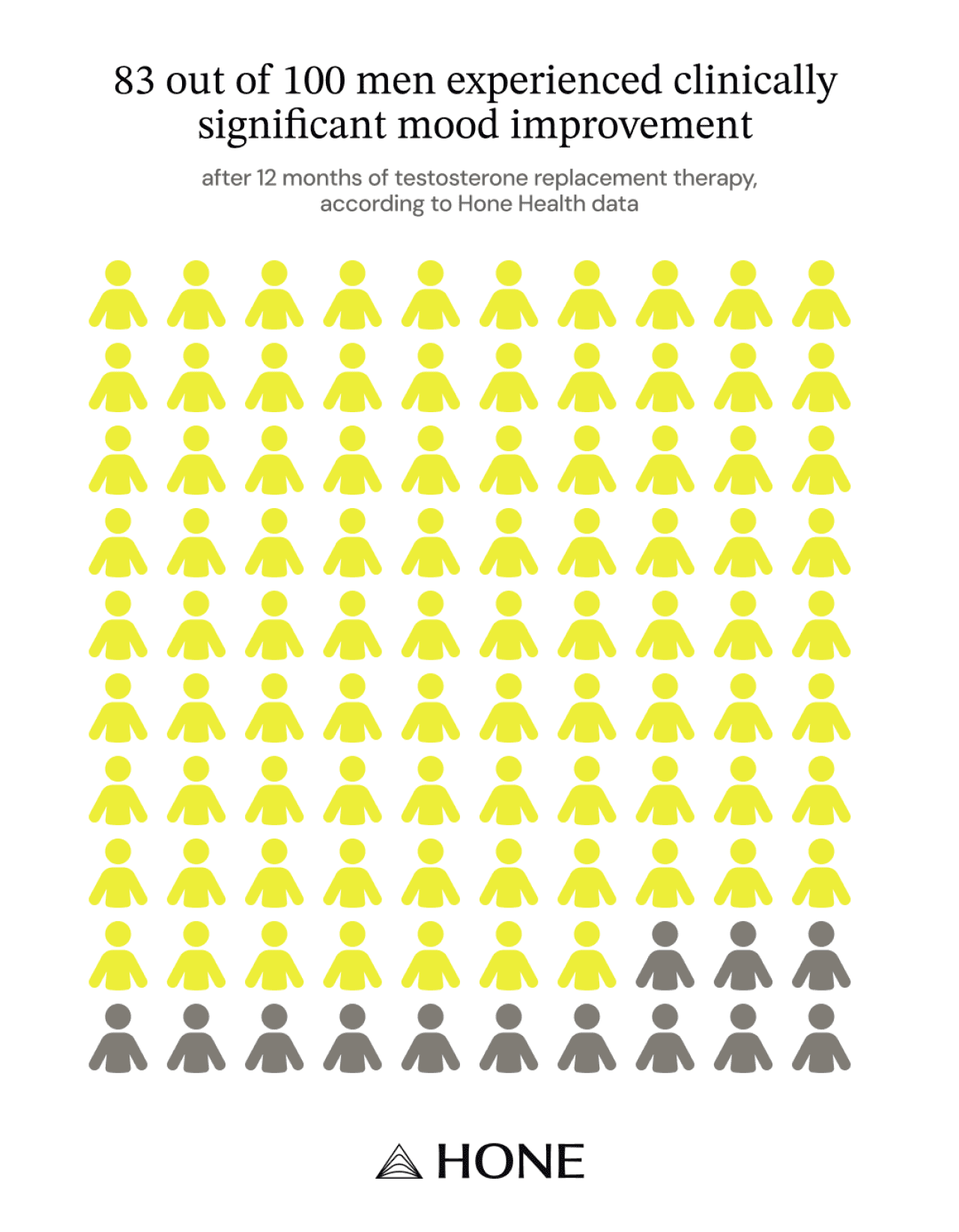
An analysis of 3,239 men with low testosterone found that 83% of those who entered treatment with moderate depression symptoms experienced a clinically meaningful improvement in their depression scores within 12 months of starting testosterone replacement therapy (TRT). Average scores fell from 11.7 (moderately severe) to 3.9 (minimal or no depression) on the PHQ-9, a widely used depression screening tool.
The findings don't prove that TRT treats depression from any cause or that hormones are fully responsible for mental health issues in men. But they do suggest that low testosterone may be an overlooked contributor to men’s low mood.
Testosterone is usually discussed in terms of muscle, sex drive, and body composition. Many men seek treatment because they're gaining weight, losing strength, or feeling less interested in sex.
What the data shows is that mood and energy often move alongside those physical markers, and the shift can be substantial.
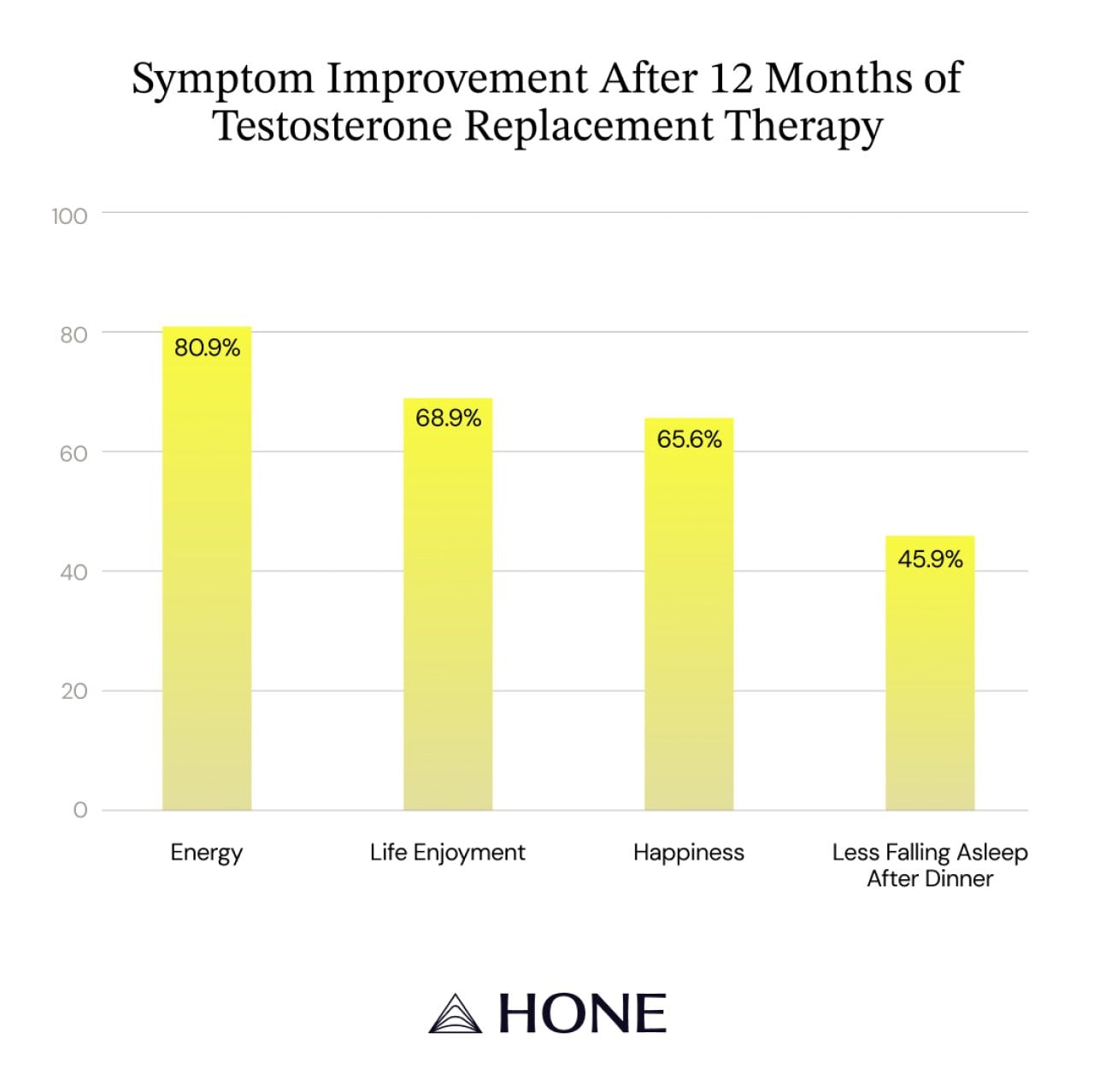
Among 3,239 patients who completed both baseline and 12-month assessments:
The biggest score jumps took place between three and six months, with continued improvement through the one-year mark. Notably, fewer than 9% of participants reported a history of mental health conditions, and only 4.5% were taking antidepressants.
"We can't say from this data how much of these improvements came from testosterone itself," Joshua Calvert, M.D., a urologist who specializes in testosterone deficiency, says. "What we can say is that many men reported feeling happier, more energetic, and more engaged in their lives after treatment."
Low testosterone and depression often look remarkably similar, says Calvert. Studies have found that between 35% and 50% of men with clinically low testosterone experience fatigue, insomnia, reduced motivation, and anhedonia (absence of pleasure).
Testosterone acts on parts of the brain involved in motivation, reward, and emotional regulation — which may explain why some men with low testosterone describe feeling flat, disconnected, or less interested in things they used to enjoy.
Because testosterone levels naturally decline by 1–2% per year beginning in a man's 30s, many men attribute symptoms like fatigue, low motivation, and poor sleep to stress, getting older, or simply feeling burned out.
“It’s not uncommon for doctors to see men who have been in therapy for years or who’ve tried multiple antidepressants without meaningful relief, and then we find they have low testosterone levels,” Calvert says. “These men could have been a lot happier for a lot longer if someone had just thought to test their hormones."
Research shows low testosterone affects a growing number of men — likely due in part to rising rates of obesity and other lifestyle factors — yet many remain undiagnosed. During a Food and Drug Administration expert panel on testosterone in December, one panel expert recommended that all men over 40 be tested for low testosterone.
Men experiencing persistent fatigue, low motivation, reduced enjoyment of life, or poor sleep may benefit from discussing hormone testing with a physician — particularly if those symptoms haven't responded to other treatments.
This story was produced by Hone Health and reviewed and distributed by Stacker.









Reader Comments(0)