
The people's voice of reason


The people's voice of reason
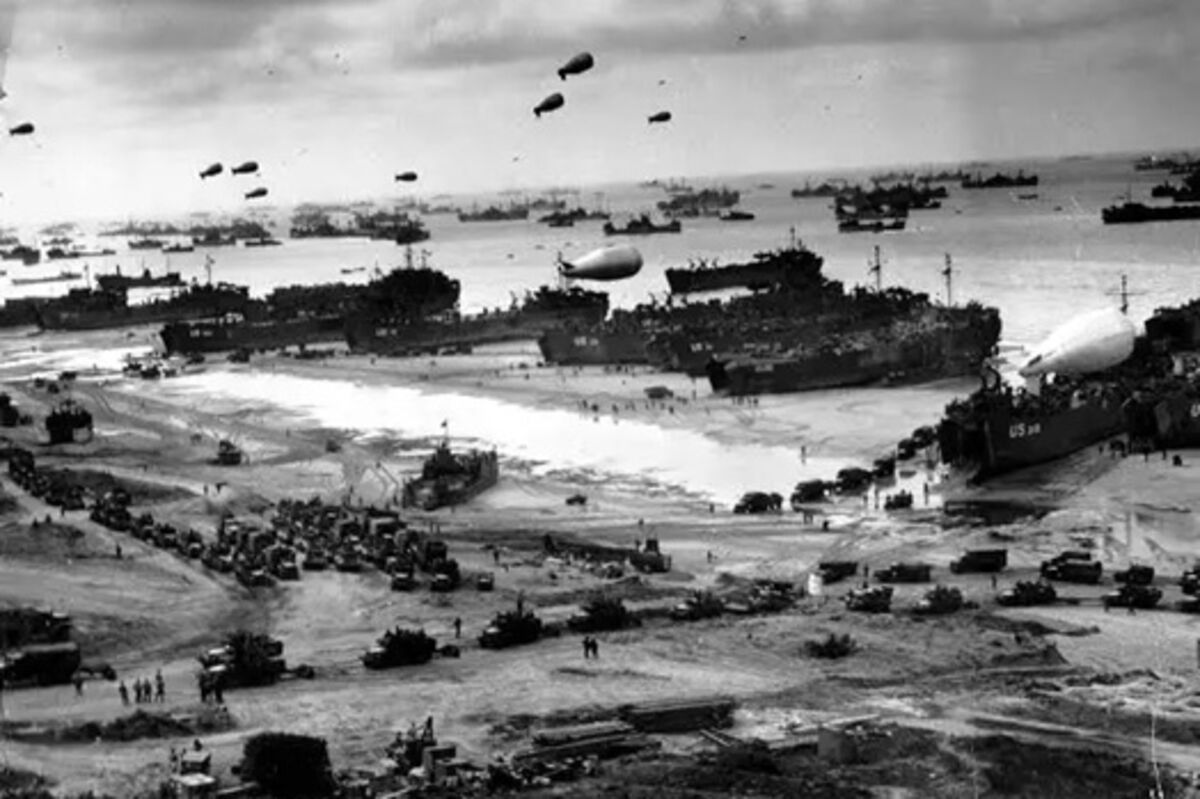
Allied forces landing on the Normandy Coast June 6, 1944
Today marks the 82nd anniversary of D-Day, the historic June 6, 1944, invasion of Normandy that altered the trajectory of World War II and permanently reshaped the modern world.
Code-named Operation Overlord, this massive undertaking remains the largest and most complex amphibious assault in military history. It stands as an enduring testament to the power of international collaboration, the defense of democratic freedom, and the immense personal sacrifices of the "Greatest Generation".
On this day of remembrance, citizens and nations around the globe honor the memory of those who braved terrifying odds to pierce Nazi Germany's "Atlantic Wall" and open the hard-fought path toward liberating Western Europe.
By the spring of 1944, Nazi Germany had held continental Europe in a brutal grip for four long years. To defeat Adolf Hitler's fascist regime, Allied leaders knew they had to establish a western front. Supreme Allied Commander General Dwight D. Eisenhower oversaw more than a year of meticulous planning, assembling an unprecedented coalition of American, British, Canadian, Free French, and other Allied forces in Southern England. Originally scheduled for June 5, the invasion was pushed back by 24 hours due to severe English Channel storms, adding immense psychological pressure to the millions of personnel waiting for the final order to move.
In the pre-dawn darkness of June 6, the operation commenced. Thousands of Allied paratroopers from elite units, such as the U.S. 82nd and 101st Airborne Divisions, dropped behind enemy lines into the French countryside. Their objectives were to seize strategic bridges, disrupt German counterattacks, and secure vital exit routes from the landing beaches. Flying through heavy anti-aircraft fire and navigating pitch-black terrain, many paratroopers were misdirected far from their drop zones. Yet, their scattered presence inadvertently worked to their advantage, sowing chaos and confusion among the German defenses.
At H-Hour, the main amphibious assault struck five codenamed beaches along a 50-mile stretch of the Normandy coast: Utah, Omaha, Gold, Juno, and Sword. Nearly 160,000 Allied troops stormed the coastal shorelines on that first day, facing a formidable network of steel obstacles, landmines, anti-tank guns, and heavily fortified concrete bunkers. The American forces landing at Omaha Beach encountered the fiercest resistance, pinning soldiers down on the blood-soaked sand under relentless machine-gun crossfire. Despite devastating initial casualties, the sheer grit and determination of individual soldiers allowed the Allies to breach the seawalls and scale the bluffs.
The human cost of D-Day was staggering. More than 4,400 Allied service members are confirmed to have lost their lives on June 6 alone, with over 2,500 of those casualties being American. Total Allied casualties on that single day exceeded 9,000 men. Yet, their bravery secured the vital foothold needed to turn the tide of the conflict. By the end of June, the Allies had successfully landed over 850,000 troops, 150,000 vehicles, and 570,000 tons of supplies in France, initiating the steady, bloody march that would lead to the liberation of Paris and the eventual unconditional surrender of Germany in May 1945.Today, eighty-two years later, the tranquil landscape of Normandy is peaceful, but the deep scars of battle and the monuments of remembrance remain. Commemorative events held across the region continue to honor this legacy of valor. At the Normandy American Cemetery in Colleville-sur-Mer, which overlooks the once-deadly expanse of Omaha Beach, world leaders, military personnel, and citizens gather solemnly among the 9,389 white marble crosses and Stars of David. This annual pause serves as a sobering reminder of the true cost of global peace.
As the number of living World War II veterans rapidly dwindles, the responsibility of preserving their memory shifts entirely to subsequent generations. The legacy of D-Day extends far beyond military strategy; it reinforces the importance of international alliances, unity of purpose, and the shared duty to confront tyranny. On this June 6, we reflect on the courage of ordinary individuals who performed extraordinary feats in the face of absolute terror, ensuring that the freedoms we enjoy today were bought by their collective sacrifice.
Ultimately, the lesson of D-Day is that liberty requires vigilance and unity. The cross-channel invasion proved that when free nations bind themselves together for a righteous cause, even the most formidable totalitarian walls can be shattered. As the bugles play Taps over the cliffs of France today, the global community is called not just to look backward in nostalgia, but to look forward with a renewed commitment to the democratic values those soldiers died to protect





Reader Comments(0)