
The people's voice of reason


The people's voice of reason
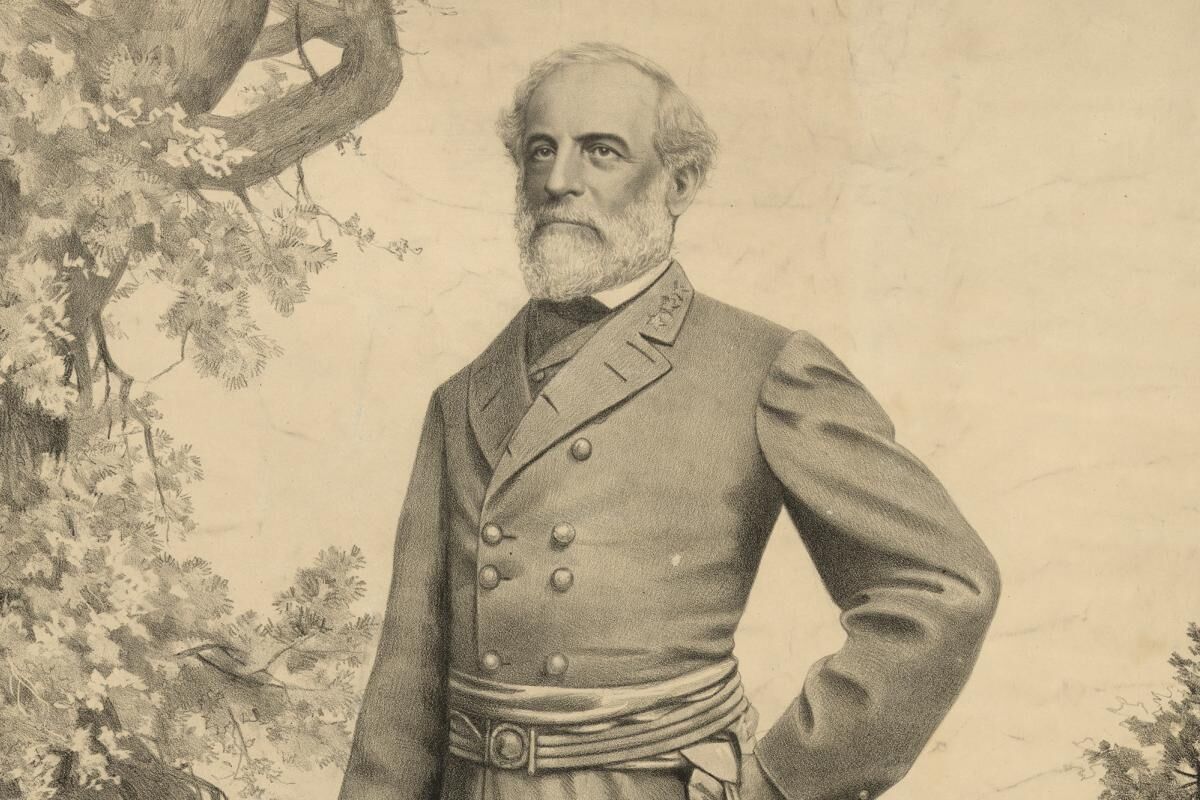
Confederate General Robert E. Lee
The Battle of Gettysburg stands as the pivotal clash of the American Civil War-three days of brutal combat, bold decisions, and staggering losses that reshaped the conflict's trajectory. Fought July 1–3, 1863, the battle pitted Union Maj. Gen. George G. Meade against Confederate Gen. Robert E. Lee, each commanding armies exceeding 70,000 men. The Union ultimately prevailed, halting Lee's invasion of the North and marking the war's turning point.
Commanders and Their Strategies
Robert E. Lee, fresh off victory at Chancellorsville, sought to carry the war into Northern territory to weaken Union morale and possibly influence foreign recognition of the Confederacy. His Army of Northern Virginia was organized into three corps under James Longstreet, A.P. Hill, and Richard S. Ewell, with cavalry led by J.E.B. Stuart.
Lee's strategy at Gettysburg relied on aggressive assaults aimed at breaking the Union line. On July 2, he attempted a sweeping envelopment of the Union flanks-striking the left at the Peach Orchard, Wheatfield, Devil's Den, and Little Round Top, and the right at Culp's Hill.
George G. Meade, newly appointed commander of the Army of the Potomac, adopted a defensive posture, using the high ground south of town-Cemetery Hill, Cemetery Ridge, and Little Round Top-to anchor his lines. His corps commanders, including Winfield Scott Hancock, John Sedgwick, and Oliver O. Howard, played crucial roles in stabilizing positions during Confederate attacks.
Key Tactical Moments
Day 1 (July 1): Confederate forces pushed Union troops through Gettysburg toward Cemetery Hill. The Union's ability to hold this high ground set the stage for the next two days.
Day 2 (July 2): Lee's attempt to envelop the Union line produced some of the battle's fiercest fighting. Despite initial Confederate gains, Union defenders held Little Round Top and repelled attacks on both flanks.
Day 3 (July 3): After a massive artillery bombardment, Lee ordered the infamous Pickett-Pettigrew Charge, a frontal assault by roughly 12,000 men aimed at the Union center on Cemetery Ridge. The attack briefly pierced the line but was quickly repulsed, resulting in devastating Confederate losses and ending Lee's hopes for victory.
Casualties and Alabama's Sacrifice
Gettysburg was the bloodiest battle of the Civil War, with over 50,000 combined casualties-about 23,000 Union and 28,000 Confederate.
Alabama units fought in several key engagements, particularly within Alabama regiments of Brig. Gen. Cadmus Wilcox's brigade and Brig. Gen. Evander Law's brigade, both heavily engaged on July 2 in the assaults on the Union left. While the sources above do not provide regiment-specific Alabama casualty totals, Alabama's brigades were part of Longstreet's corps, which suffered severe losses during the attacks on the Peach Orchard, Wheatfield, and Little Round Top-areas where Confederate casualties were among the highest of the battle. Based on the overall Confederate casualty figures and the intensity of fighting involving Alabama units, historians widely agree that Alabama's regiments endured heavy losses consistent with the broader devastation of Longstreet's divisions.
Legacy
Gettysburg ended Lee's northern advance and forced his retreat toward Virginia, his wagon train of wounded stretching fourteen miles. The Union victory strengthened Northern morale and set the stage for Lincoln's Gettysburg Address, which reframed the war's purpose around national unity and human equality.
For Alabama, Gettysburg remains a solemn chapter-its sons fighting far from home in one of the war's most decisive and deadly battles, their sacrifices woven into the broader story of the Confederacy's turning tide.






Reader Comments(0)