
The people's voice of reason


The people's voice of reason
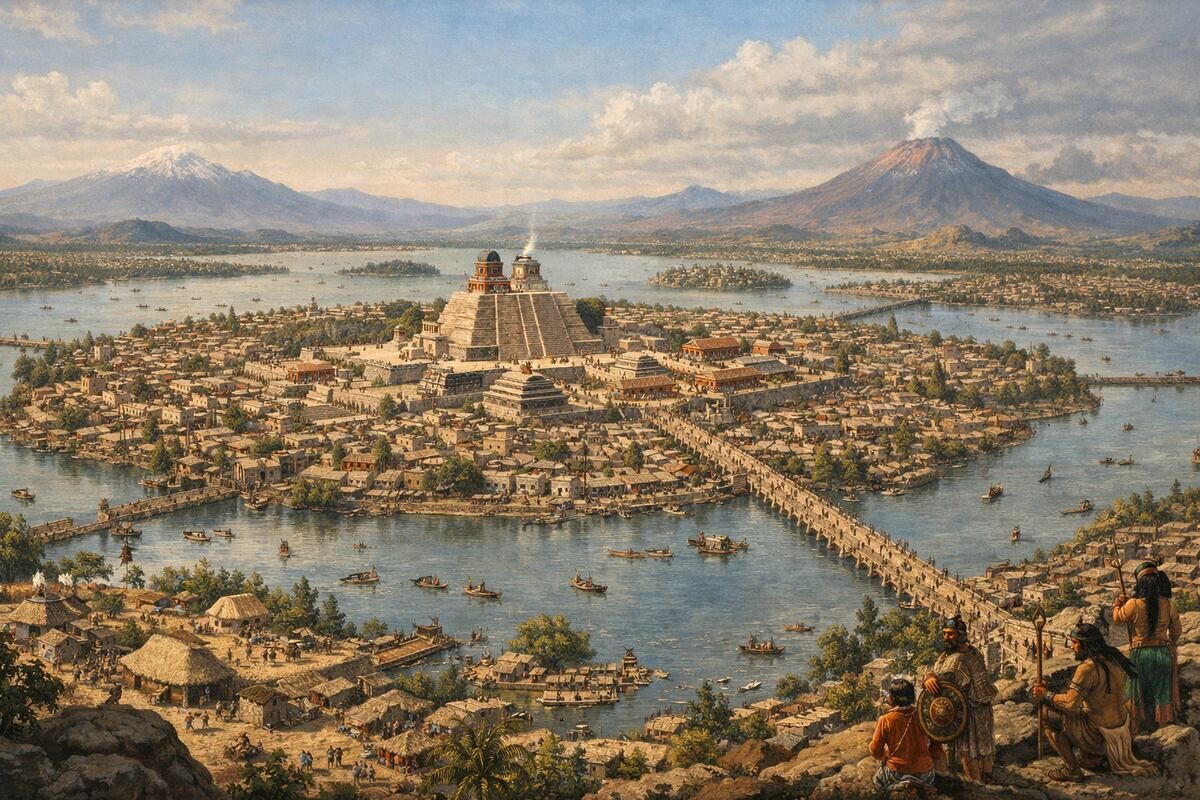
Tenochtitlan ca. 1520
June 30, 1520 - Tenochtitlan
A Turning Point in the Conquest of Mexico
On the night of June 30, 1520, the Spanish conquest of the Aztec Empire reached its most desperate and defining moment. Known to history as La Noche Triste-"The Sad Night"-this was the night Hernán Cortés and his forces were violently expelled from Tenochtitlan, the capital of the Aztec world. What unfolded was not just a military disaster for the Spaniards, but a cultural and political turning point that reshaped the trajectory of the entire conquest.
The Road to Disaster
By mid‑1520, Cortés' position in Tenochtitlan had become increasingly unstable. Months earlier, he had taken the Aztec emperor Moctezuma II hostage, hoping to control the empire through its ruler. But resentment simmered among the Aztec nobility and commoners alike.
The breaking point came when Spanish forces massacred Aztec nobles during a religious festival-an act that ignited a full-scale revolt. The city, once cautiously tolerant of the Spaniards, erupted in fury.
Moctezuma attempted to calm his people, but he was struck by stones and later died-whether from his injuries or Spanish actions remains debated. With the emperor gone and the city in open rebellion, Cortés faced a siege he could not win.
The Escape Attempt
On the night of June 30, Cortés ordered a stealthy retreat. His men-Spanish soldiers, Cuban settlers, and Indigenous allies from Tlaxcala-attempted to slip out of the city under cover of darkness.
They carried:
Gold and treasure taken from the palace
Wounded soldiers
Supplies needed for survival
But the causeways leading out of Tenochtitlan were narrow, and the Aztecs knew the terrain far better than the invaders.
As the Spaniards crossed the Tlacopan causeway, Aztec warriors attacked from canoes and the surrounding lake. The retreat collapsed into chaos.
A Night of Bloodshed
Hundreds of Spaniards and thousands of Indigenous allies were killed. Many drowned when the weight of stolen gold dragged them into the lake. Others were captured alive and later sacrificed in Aztec temples.
Cortés himself survived, though wounded. According to later accounts, he sat beneath a tree and wept for the loss of his men, his treasure, and his near‑ruined campaign-giving the night its enduring name.
Aftermath: From Defeat to Conquest
Despite the catastrophe, La Noche Triste did not end the Spanish campaign. Cortés regrouped, forged new alliances, and returned with reinforcements. One year later, in August 1521, Tenochtitlan fell after a brutal siege, marking the collapse of the Aztec Empire.
But La Noche Triste remains the moment when the outcome was most uncertain-a night when the Aztecs nearly halted the conquest and when Cortés' ambitions nearly died on a dark causeway.
Why This Night Still Matters
La Noche Triste is remembered because it reveals:
The resilience and military strength of the Aztec people
The fragility of the Spanish position early in the conquest
The human cost of imperial ambition
The pivotal role of Indigenous alliances in shaping the conflict
It is a reminder that history's empires are not forged in straight lines-they are shaped by moments of failure, desperation, and unexpected recovery.






Reader Comments(0)