
The people's voice of reason


The people's voice of reason

Deciding whether you need a college degree to build a rewarding future might feel overwhelming. Everywhere you turn — online, the news, your family — there’s a different story. Some people talk about billionaires who dropped out of college, while others point to studies showing that people with degrees tend to earn more over their lifetimes. The truth? There’s no single path to success or one-size-fits-all answer.
This guide from The University of Olivet is here to help you make the choice that works for you. It breaks down the facts and shows you how a college degree impacts long-term career prospects and earning potential.
Recent studies have shown that people who finish college are on track to earn a median of $2.8 million over their lifetime. In contrast, someone with only a high school diploma is likely looking at $1.6 million. That $1.2 million difference represents decades of more choices and the confidence that comes with a stronger financial footing.
Exceptions like Bill Gates and Mark Zuckerberg reached incredible heights without a finished degree, but even they attended elite colleges before launching their ventures. For most people, though, the consistent pattern in the data is clear — degree holders have a clear advantage. They earn more, are more likely to find jobs, even in a shifting economy. They also benefit from having more career options.
Understanding the financial benefits of having a college degree is about more than just your starting salary. You need to look at the bigger picture and assess how your education pays off over time through different life stages and career turns.
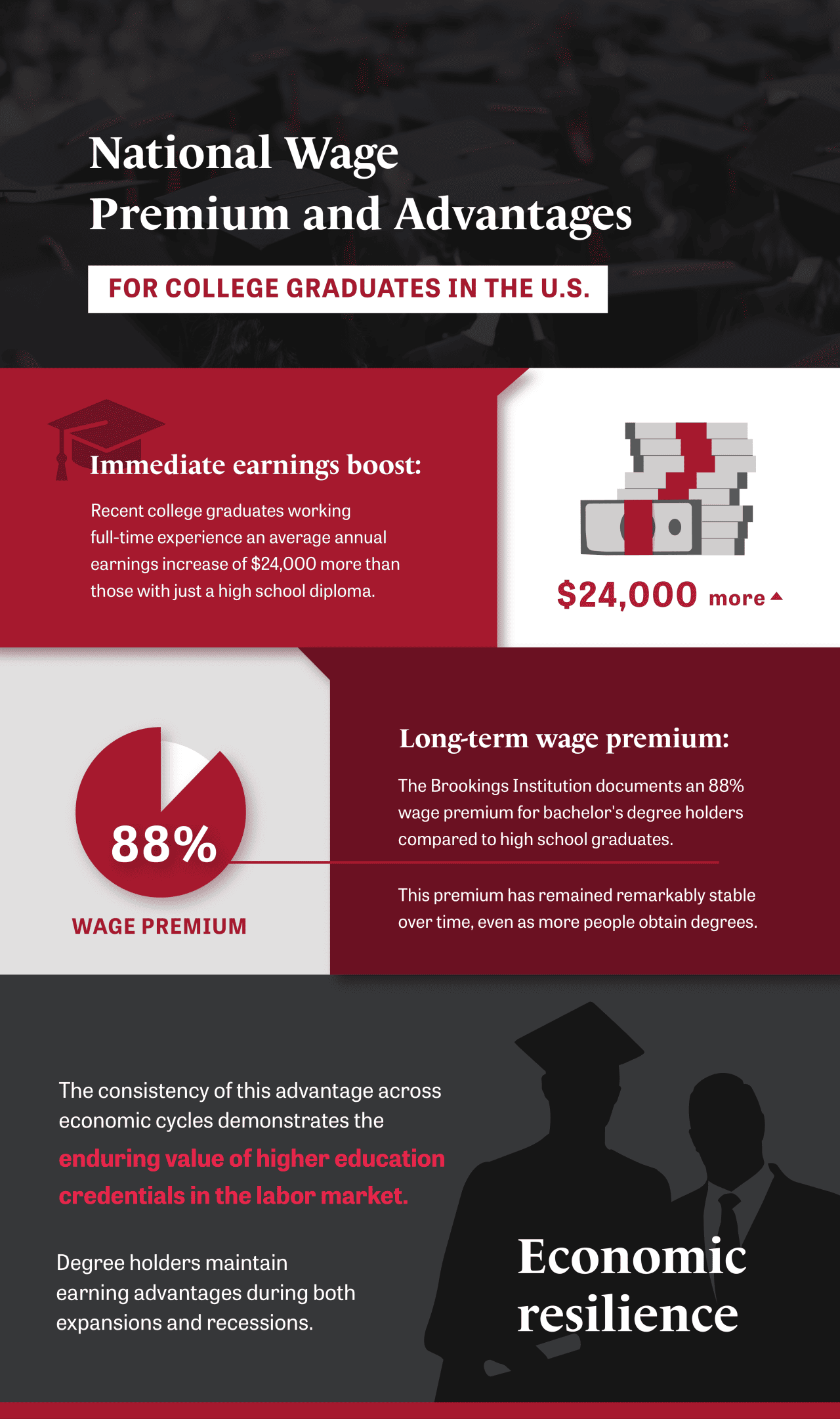
National Wage Premium
The national wage premium for college graduates in the U.S. is significant. Bachelor’s degree holders typically earn 70% more than those with only a high school diploma. This “college wage premium” represents the amount you can expect to earn above someone without a four-year degree:
Cost is often top of mind for future students and families. Here’s some relief — financial aid can significantly reduce the net cost of attendance for most students. Consider the following:
Understanding available aid programs is essential when determining if a college degree is the right investment for your future.
Beyond just earning more money right away, a college degree opens up career paths where you can really grow and keep learning new things. Many colleges have career and leadership centers and resources to help you succeed in your career for the long haul.
College helps you build important soft skills that nearly every job needs. These skills give you more choices in your career later on, unlike training for just one specific role.
A good education develops several critical capabilities:
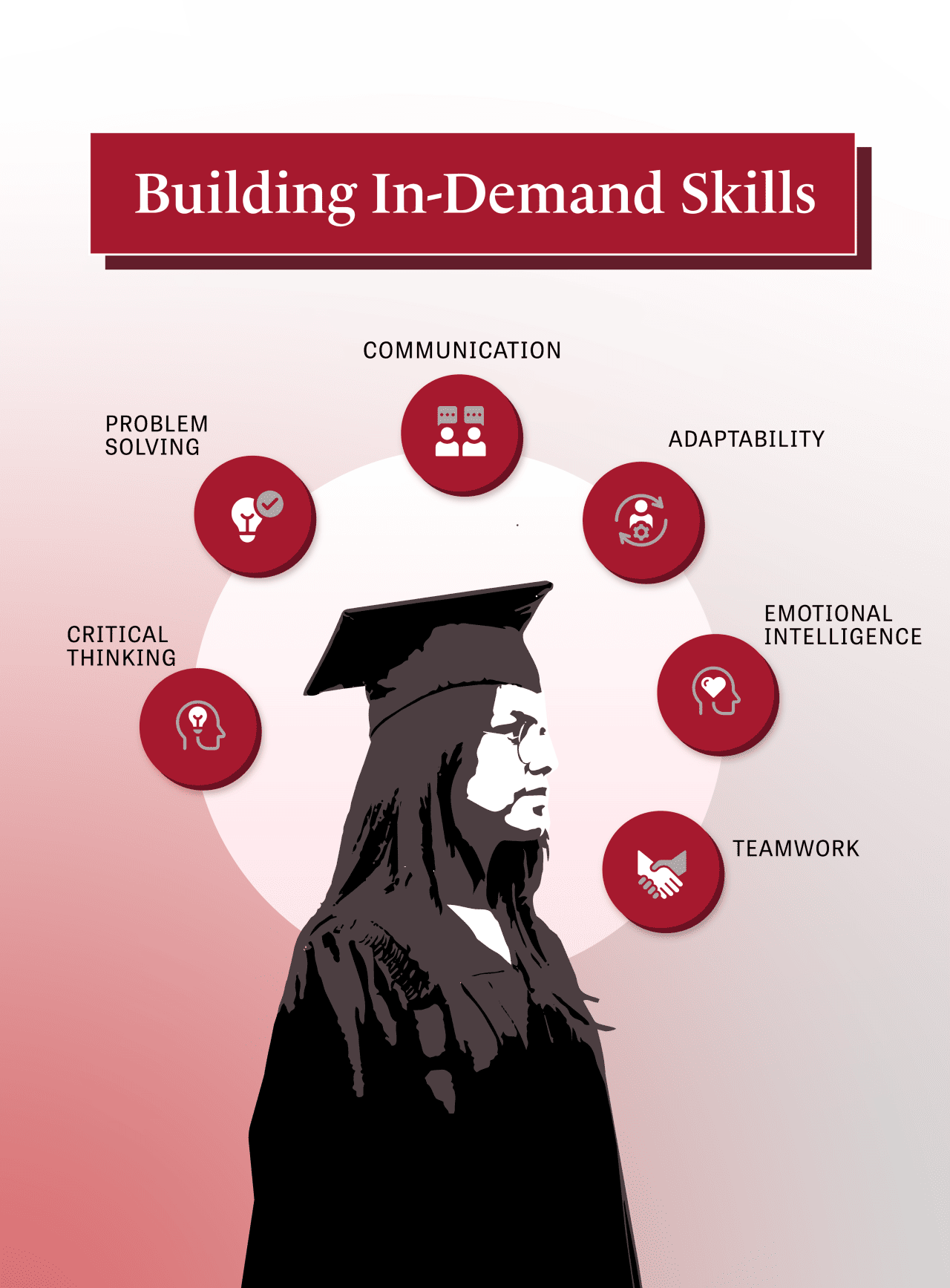
This foundation teaches you how to learn and adapt, which is crucial in a changing job market where specific technologies and methods evolve.
College is more than classes and a degree. It helps you build a network of professional contacts that will help you throughout your career. Making connections in college has distinct advantages:
The college has offices and groups, like career services, alumni groups, and professional clubs, to help you make these connections. Job experts say that college networking is important for landing your first job and moving up in your career. These relationships just get more valuable as you get older and your network grows.
Explore key questions and factors to consider when deciding whether to pursue a college degree.
Do I Have to Know My Major Before I Apply?
Not necessarily. It’s totally normal and common to start college without knowing your major. Lots of students figure out what they love in their first year or two by taking different classes and learning new things. Colleges also have academic advisors whose job it is to help you figure this out.
General education classes are set up to show you lots of different subjects, which can help you find what truly interests you. Advisors also help you pick classes so you stay on track to graduate while you decide.
When Do Trade Schools and Certifications Make Sense?
Skilled trades and professional certifications offer excellent paths for specific careers. Electricians, plumbers, HVAC technicians, and other skilled trades professionals earn high incomes with consistent demand for their services. These careers typically require shorter training periods and cost less up front than four-year degrees.
Trade certifications train you for one specific job with certain skills. A bachelor’s degree, though, gives you more career options and usually leads to earning more money over time in many different industries. People with degrees often find it easier to switch between different types of jobs or move up into leadership positions as they get more experience.
The best path depends on your career goals, learning preferences, and financial circumstances.
What If I Struggle Academically When Pursuing My Degree?
Everyone learns in their own way, and if you struggle in college, it often means you’re just adjusting to how things work at a higher level, not that you’re not smart enough.
Most colleges have tons of ways to help students do well. This includes small classes where professors can get to know you personally and see when you might need extra help. Many professors also have regular office hours where you can meet with them one-on-one for advice.
You can find help at places like peer tutoring centers. There are also workshops with experts who can assist you with writing and study tips, which are key to doing well in school.
There are many ways to succeed, but a college degree remains a proven path to long-term financial stability and career choices. The numbers keep showing that people with degrees earn a lot more over their lives and get better job opportunities.
The “right” choice is different for everyone and depends on your own goals and situation. It’s always best to make an informed choice. Use these ideas to see if college fits with what you want for your future. If you decide to go to college, look for a school with programs that match your interests.
This story was produced by The University of Olivet and reviewed and distributed by Stacker.







Reader Comments(0)