
The people's voice of reason


The people's voice of reason

An individual retirement account, or IRA, is a popular retirement savings tool because of its tax advantages and investment flexibility. But to reap the rewards, it’s important to familiarize yourself with common IRA mistakes and understand how to avoid them.
It’s never too soon — or too late — to get familiar with the retirement savings tools available. Knowing the basics of your IRA can help avoid some missteps. There are many intricacies to IRAs, so consider the following from Ally Financial as a starting point. As always, consult with a tax professional if you have questions about your specific financial situation.
While retirement planning isn’t a one-size-fits-all process, a general rule is to have enough to cover 70% to 90% of your preretirement income to maintain your current lifestyle.
Tip: Use a retirement calculator to help with the math.
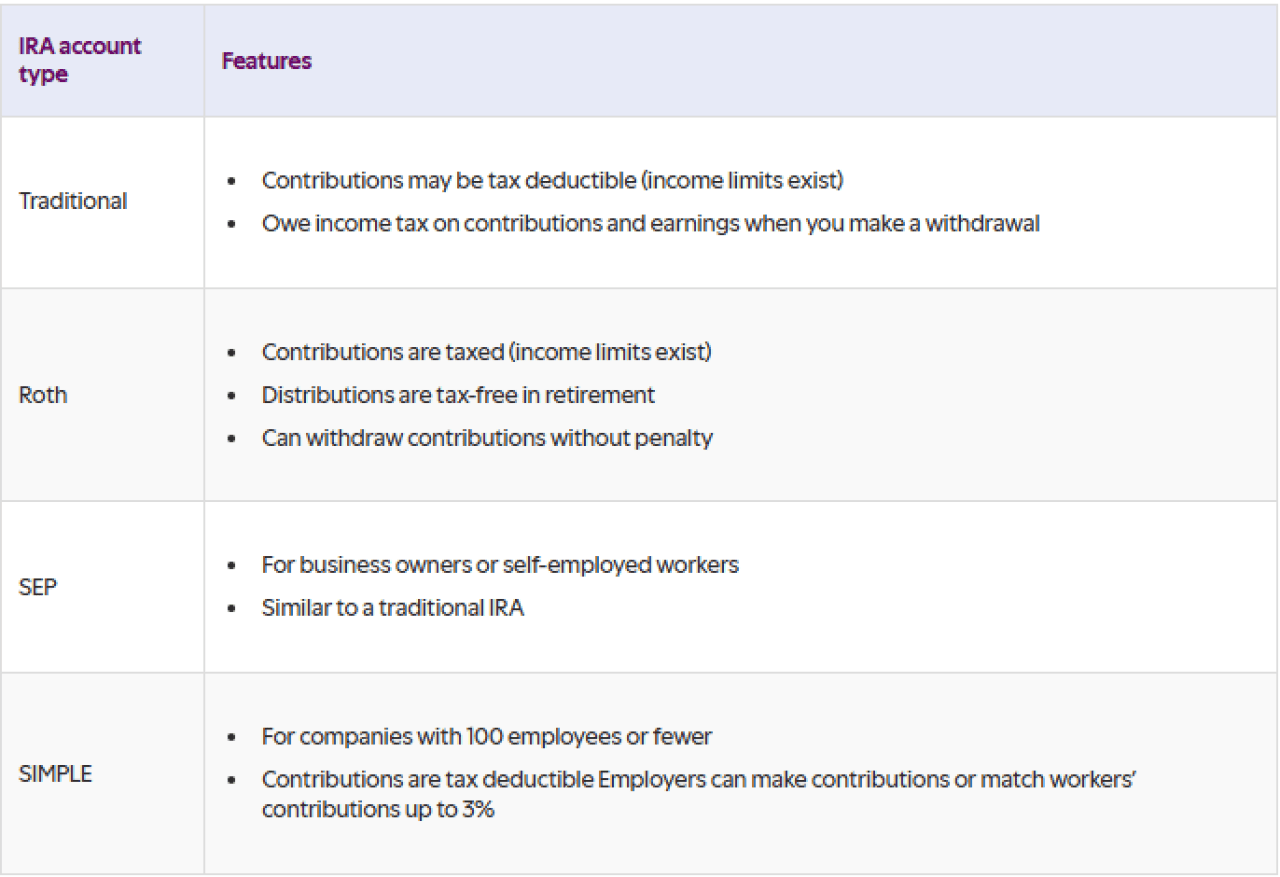
Understanding traditional, Roth, SEP, and simple IRAs’ respective tax benefits, contribution limits, and withdrawal guidelines can help you understand which IRA may be best for you:
It’s easy to assume that contribution limits apply to each separate IRA account you have. But they actually apply to the total amount. Exceed the limit, and you’ll incur a 6% excess contribution tax.
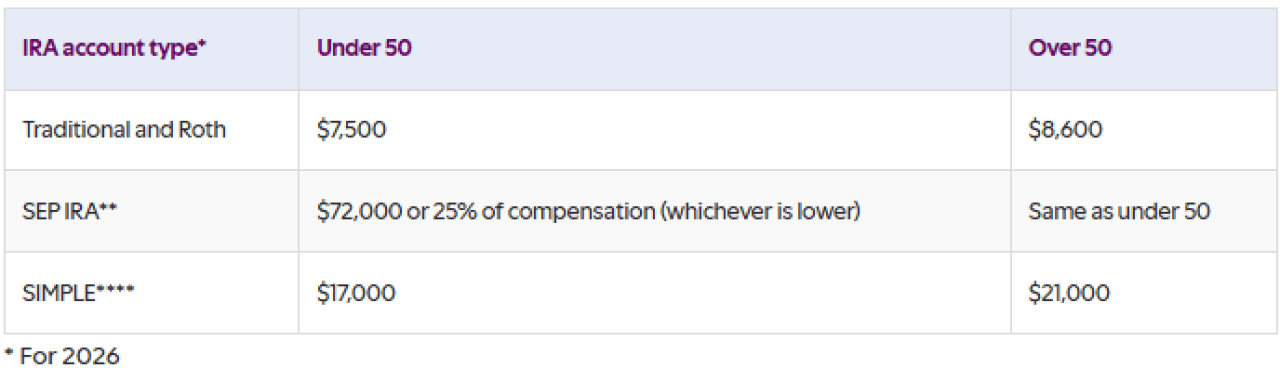
** Contributions made by the employer, not an individual
*** May be greater if the business has 25 or fewer employees or if the account holder is aged 60 to 63
If you fall between these 2026 adjusted gross income (AGI) limits, you can put a reduced amount in a Roth IRA:
If you exceed the upper limit, you can’t contribute to a Roth IRA.
The deadline for contributing to your IRA is Tax Day each year. Maxing out your contributions as early as possible allows more time for compounding interest to work to grow your savings.
If you withdraw money from your traditional IRA before age 59 1/2, you’ll generally pay income taxes and a hefty 10% early withdrawal penalty. With Roth IRAs, you’ll only pay these early withdrawal costs on your earnings on the amounts contributed to the Roth IRA.
Roth IRAs also require five years to pass from the beginning of the tax year of your first contribution for earnings to be withdrawn tax-free, even if you’re 59 1/2.
Traditional IRAs have a required minimum distribution, or RMD, later in retirement. Failure to withdraw your RMD annually may result in paying the original taxes owed plus a 25% excise tax penalty.
The deadline for contributing to your IRA is Tax Day each year.
When it comes to your IRAs, you can:
Consulting with a tax professional or financial planner can help you avoid money-moving mistakes.
Just like with your other assets, it’s important to designate who will receive your IRA when you pass away. An IRA typically allows you to name anyone (unless state laws say otherwise), and you can often name more than one person.
If you are the beneficiary of an IRA, know that rules and regulations are different for inherited IRAs. Your situation will vary based on your relationship to the person who passed, their age, and other factors.
A backdoor Roth IRA is a strategy typically used by high-income earners who exceed Roth IRA income limits. You can create a backdoor Roth IRA in one of three ways:
You’ll still need to pay taxes on any money in your traditional IRA that hasn’t been taxed.
As you move toward retirement, an IRA can make significant returns through compound interest, investment appreciation, and dividends. Strengthening your knowledge will help you become a savvy saver from the moment you open your IRA.
This story was produced by Ally Financial and reviewed and distributed by Stacker.







Reader Comments(0)