
The people's voice of reason


The people's voice of reason
MONTGOMERY, AL - A proposed change to federal coal ash regulations could affect how utilities monitor and clean up waste stored at Alabama power plant sites, including facilities near rivers and groundwater.
The U.S. Environmental Protection Agency announced April 9 that it is proposing amendments to federal rules governing coal combustion residuals, commonly known as coal ash. EPA says the proposal would allow more site-specific decisions by permit authorities, encourage beneficial reuse of coal ash and rescind all requirements for coal combustion residual management units, a category added under a 2024 rule to cover some previously unregulated ash disposal areas. EPA extended the public comment period through June 29, 2026.
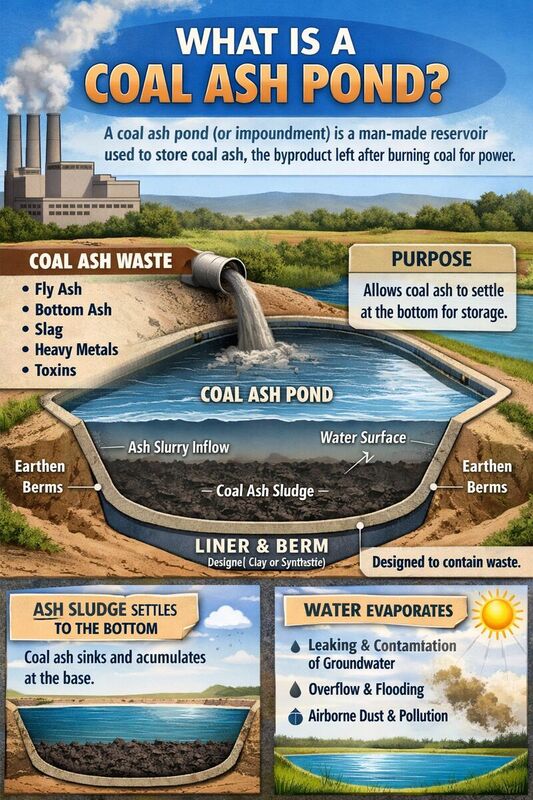
Coal ash is the material left after coal is burned to generate electricity. EPA says it can contain contaminants such as mercury, cadmium, chromium and arsenic and, if not properly managed, can pollute waterways, groundwater, drinking water and air.
The proposal has drawn concern from environmental groups because of the amount of coal ash stored in Alabama and the state's history of disputes with EPA over coal ash oversight.
Earthjustice, an environmental law organization that has litigated over coal ash rules, says utilities in Alabama are monitoring 13 coal ash ponds, 11 of them unlined, and three landfills containing more than 118 million cubic yards of coal ash. The group says monitoring at all nine Alabama power plant sites listed in its analysis has found groundwater contamination above federal health-based drinking water standards.
Environmental groups argue the EPA proposal could weaken the 2024 rule by giving utilities and regulators more flexibility over monitoring, closure and cleanup requirements. In a release provided to reporters, Earthjustice said the proposed rule would reduce protections for operating and former coal plant sites and could allow companies to delay or avoid some cleanup requirements.
EPA describes the proposal differently. In its announcement, the agency said the changes would provide regulatory relief while continuing to protect human health and the environment. EPA also said the proposal would allow permit authorities to tailor groundwater monitoring, corrective action and closure requirements to site-specific conditions.
Utilities have also defended their coal ash closure plans. Alabama Power says on its website that its coal combustion residuals plans for closure and groundwater protection comply with current state and federal law, are approved by the Alabama Department of Environmental Management and are certified by professional engineers. At Plant Barry near Mobile, the company says it is removing water from the pond, moving material farther from waterways, adding engineered barriers, and planning groundwater monitoring for at least 30 years.
Plant Barry has already been the subject of federal enforcement. In 2024, EPA finalized a settlement with Alabama Power over alleged violations of federal coal ash rules at the James M. Barry Electric Generating Plant in Bucks, in Mobile County. The settlement required the company to evaluate and expand groundwater monitoring, upgrade its emergency action plan, and pay a $278,000 civil penalty.
Alabama's broader coal ash program has also been rejected by EPA. In May 2024, EPA denied Alabama's application to run its own federally approved coal ash permit program, finding the state program was "significantly less protective" than federal requirements. EPA cited deficiencies involving closure of unlined surface impoundments, groundwater monitoring networks and corrective action requirements.
The Alabama Department of Environmental Management disputed EPA's decision at the time. According to the Associated Press, ADEM said it was disappointed, planned to appeal and maintained that its program and permits were protective of the public and the environment.
The current debate does not mean every Alabamian's tap water is unsafe. The issue is whether federal rules will require enough monitoring and cleanup to detect and address contamination from coal ash disposal sites before it spreads.
For Alabama communities near coal ash ponds and landfills, the outcome could shape how much waste remains capped in place, how closely groundwater is monitored and how quickly utilities must respond when contamination is found.
The EPA proposal has not been finalized. If adopted, it could change how regulators decide whether older coal ash sites require monitoring, closure or cleanup, and how much flexibility utilities receive when developing those plans.






Reader Comments(0)