
The people's voice of reason


The people's voice of reason

Whether your roof is dripping steadily during a heavy storm or you notice a water stain on your ceiling, a leak can cause immense stress. If not tackled properly and on time, water intrusion can have severe consequences, some of which can affect your home’s structural integrity and your insurance claim.
While your first instinct may be to panic, your best bet is to act immediately to limit the damage, protect your home and minimize repair costs. Rhode Island Restoration has compiled this guide outlining the immediate first steps you should take after discovering a roof leak.
You’ll want to address signs of a roof leak as soon as you can, as these problems can lead to costly and even dangerous consequences.
Prompt action can help prevent further deterioration and damage, such as:
When you discover a roof leak, whether through an active drip, a water stain, or another sign, it’s advisable to take the following steps immediately.
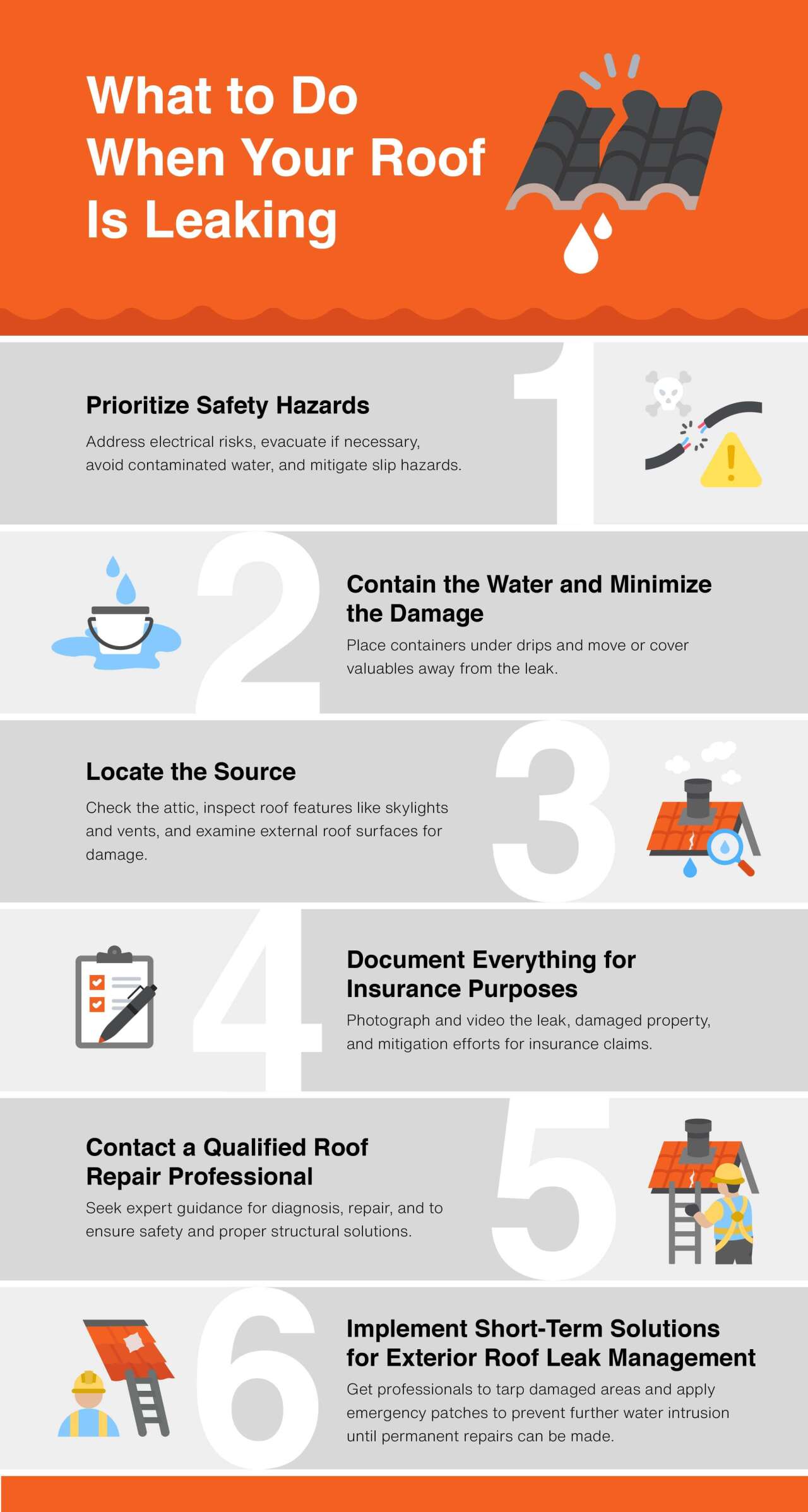
Roof leaks can create dangerous conditions that pose a threat to safety. To keep yourself and other occupants out of harm’s way, take these steps:
One of your first steps should be to stop the leaking water from spreading and damaging your surrounding possessions.
Place buckets or other suitable containers directly under the dripping water spot. It can also be useful to place towels or rags around the base of the container to soak up excess moisture.
Clearing the area around the leak helps to minimize water damage to your possessions. Move electronics, books, furniture and other items away from the affected zone. You can also temporarily cover them with waterproof materials to protect them from splatter.
After containing the water and prioritizing safety, your next step should be to locate the leak’s source. This step can be challenging because the water might have traveled along various pathways before becoming visible inside your home.
Do the following to locate the source:
It’s easy to overlook this step, especially when you’re busy looking for solutions. However, failing to document everything can complicate the insurance claim process.
Here’s how to approach insurance documentation:
Be sure to reach out to a roofing professional. They can provide expert guidance and determine the best course of action to repair your home.
After initial contact, a repair professional will typically schedule an on-site visit to inspect the roof and assess the damage. This will be followed by a detailed explanation of their findings and a written quote, after which they will prepare for repairs.
Working with an experienced roofer offers several advantages:
While waiting for comprehensive roof repairs, securing your property from further water intrusion is critical. Engaging a roofing professional for immediate tarping and temporary fixes is highly recommended.
These interim solutions require expertise to be effective and safe:
Remember, these expert-applied short-term solutions are designed to manage the immediate risk of water intrusion and are not a substitute for permanent roof repairs. They buy you time and peace of mind until full, lasting repairs can be completed.
A roof leak may be very obvious, or the issue may reveal itself over time through subtle indications that are easy to overlook.
Knowing the signs will help you spot them early and take immediate action.
Active Dripping
One of the most common signs of a roof leak is water dripping or pooling, especially during or immediately after rain. Water may drip directly from ceilings, run down walls or collect in hidden spaces. Even a very small leak indicates a compromised roof structure.
Water Stains
Next to dripping water, water stains are often the most obvious signs of a roof leak. Stains can be either brown, greenish or yellow. You may notice them as patches, streaks, or rings on your interior ceilings or walls.
Some areas more prone to water stains include those just below the roof structure and at the corners where walls and ceilings meet.
Sagging Ceilings
Ceilings sag when water accumulates in the roof structure over an extended period. The weight of the trapped water is what causes the sagging.
Sagging ceilings are a serious visual sign that should be treated as urgent, as they can indicate compromised structural integrity. Left unaddressed, they pose a risk of collapsing, releasing large volumes of water, ceiling materials and other debris. Such an accident can be extremely dangerous, posing a threat to occupants and property.
Bubbling or Peeling Paint
One effect of water leaking into paint is that it causes it to blister, bubble or peel. If you notice these signs on your ceiling or wall, there is a high chance they’re the result of an unresolved roof leak.
Roof leaks can affect both interior and exterior paint. Regularly inspecting your wall paint can help you catch a leak before it causes significant damage.
Mold or Mildew Growth
Roof leaks, especially ongoing ones, create the conditions for mold and mildew to grow. These infestations may appear as discolored patches on ceilings, walls, insulation or wood.
They may also cause a persistent, musty or damp smell, especially in enclosed rooms and areas with limited airflow, such as attics or crawl spaces.
Acting promptly after discovering a roof leak is essential, but knowing what causes them empowers you to respond more effectively. A basic understanding of the causes of roof leaks can help you make sense of what you’re seeing as you track down the source.
Outlined below are some common culprits behind leaks.
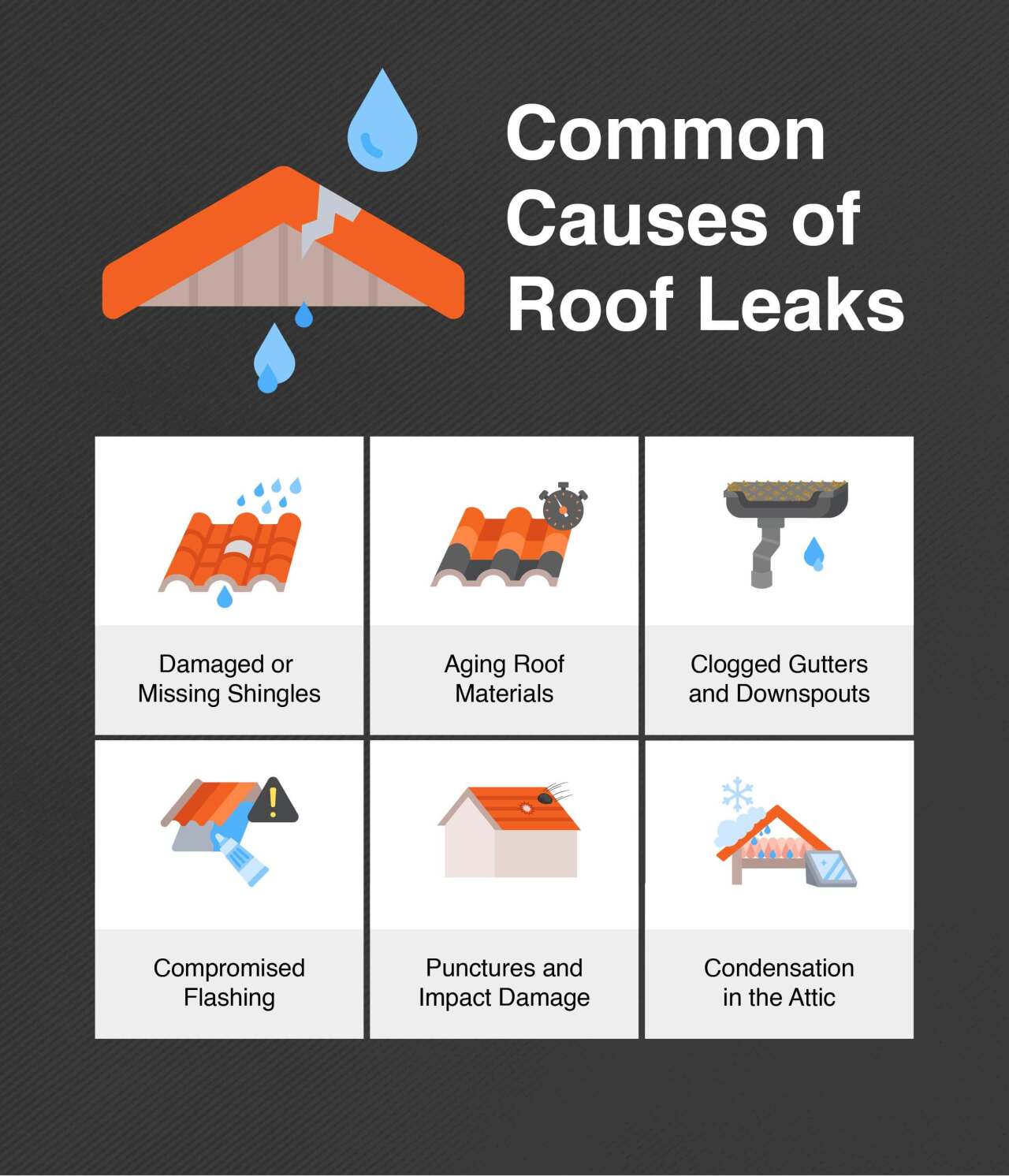
Damaged or Missing Shingles
Shingles play an essential role in protecting your roof decking and other vital components from the elements. When a shingle is missing or damaged, the underlying materials are left exposed to rainwater, ice and snow, which can ultimately lead to leaks.
Aging Roof Materials
As roof materials age, they are more susceptible to wear and tear. This can manifest as cracked or dried-out underlying membranes, worn granular coatings and brittle shingles. A roof system with aged materials is more prone to water intrusion.
Clogged Gutters and Downspouts
When gutters and downspouts are blocked, water can back up and overflow. Standing water can seep beneath the eaves of shingles, increasing the likelihood of leaks, particularly in freezing temperatures when ice dams form.
Compromised Flashing
Flashings are thin metal strips installed at the connections between the roof and other surfaces, such as skylights, vent pipes and chimneys. Cracks, rusts and bends in these flashings can create openings for water to seep into the roof.
Punctures and Impact Damage
During severe weather, falling branches and debris can be blown onto the roof, puncturing or damaging it. The direct holes and weak spots created by these accidents can allow water to enter the roof.
Condensation in the Attic
Attics are often vulnerable to high humidity when roof systems are poorly ventilated. This causes condensation when moist air from living spaces below rises into a cold, unventilated space.
Condensation doesn’t necessarily compromise your roof to the extent of letting water in. However, it can create water in your attic that mimics a real roof leak.
Failure to address it promptly can lead to structural damage that eventually exposes the roof to external leaks.
Your home is your sanctuary, and protecting it is essential. Swift action, whether through expert-assisted temporary fixes or comprehensive repairs, ensures the safety and well-being of your household and preserves the integrity of your most valuable asset. Don’t delay. Addressing a roof leak without hesitation protects your investment and provides invaluable peace of mind.
This story was produced by Rhode Island Restoration and reviewed and distributed by Stacker.







Reader Comments(0)