
The people's voice of reason


The people's voice of reason
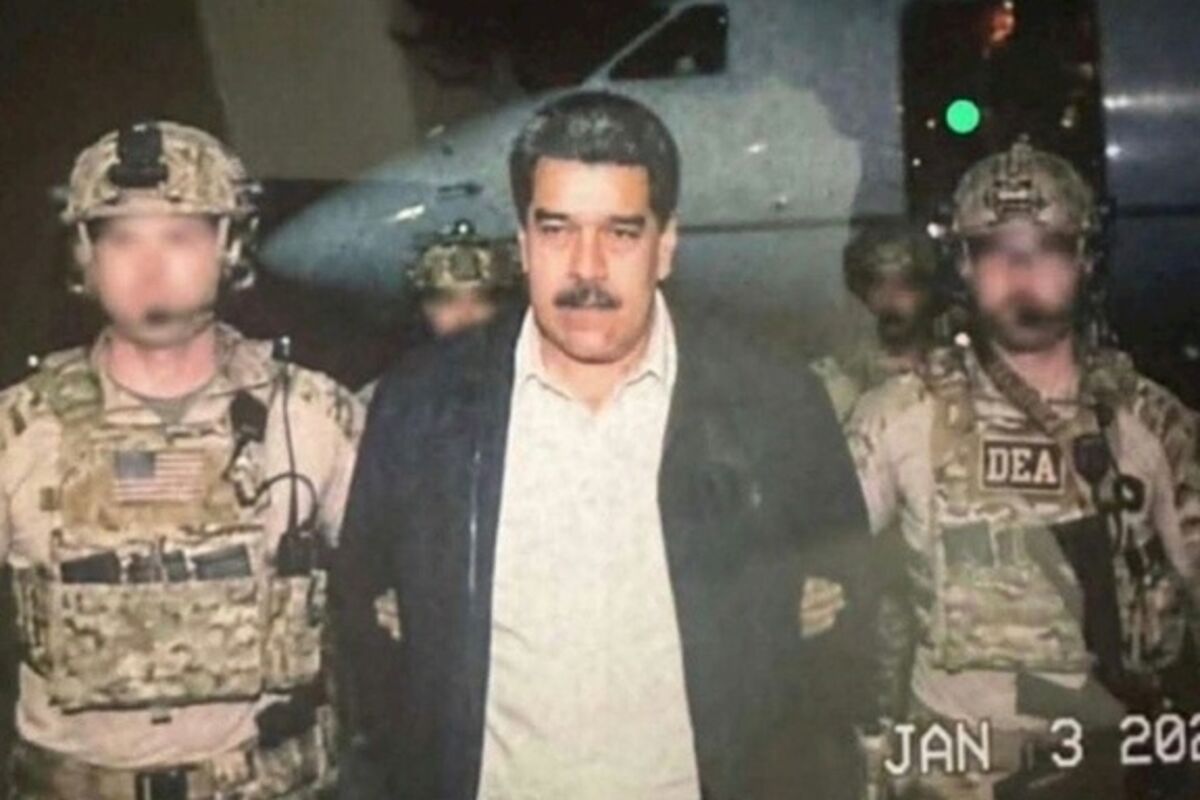
Former Venezuelan dictator Nicolas Maduro in U.S. custody
Let's get something straight right up front. What just happened in Venezuela was not recklessness. It was long delayed accountability. This operation was carried out by brave men and women of the United States military, many of whom will never be named and will never be publicly recognized. They executed their mission with discipline, precision, and professionalism, placing duty above recognition and country above self and deserve our eternal gratitude.
For years, the so-called international community hid behind press releases, summits, and empty condemnations while Venezuela collapsed into a narco state. A country with the largest proven oil reserves on Earth was turned into a cartel run prison camp by Nicolás Maduro and his inner circle. Millions fled the country, children went hungry, and criminal networks flourished, while Washington and its allies largely confined themselves to talk.
President Donald Trump chose a different course. He acted.
What Trump instigated in Venezuela's Capital Caracas was not chaos. He instigated consequences for a regime that had ceased to function as a government and instead operated as a criminal enterprise. Drug trafficking, money laundering, terrorist facilitation, and state sponsored extortion were not side effects of mismanagement. They were the business model. Maduro did not merely govern badly. He ran Venezuela like a cartel boss with a flag, sustained by the belief that no one would ever meaningfully challenge him.
That assumption no longer holds.
The predictable response from the American left arrived almost immediately. Democratic leaders and their media allies rushed to condemn the action as destabilizing, reckless, and dangerous, recycling the same language they deploy whenever American strength is exercised with clarity. This reaction has little to do with Venezuela and everything to do with reflexive opposition to Trump winning again.
These are the same voices that tolerated Maduro's dismantling of democratic institutions, excused mass migration as unavoidable, and treated regional destabilization as an acceptable cost of restraint. They offer no serious alternative beyond sanctions that never bite, diplomacy without leverage, and moral lectures delivered to regimes that openly mock them. That approach failed Venezuela, failed the region, and failed American interests.
Trump rejected that failed model, and in doing so reaffirmed a principle that has guided American policy for more than two centuries, The Monroe Doctrine.
The Monroe Doctrine has never been about conquest or empire. It has always been about clarity. The Western Hemisphere is not a staging ground for hostile foreign powers or criminal regimes aligned against the United States. Under Maduro, Venezuela became exactly that.
Russia established military and intelligence ties in Caracas to project power into the Americas. China bound Venezuela into economic dependency through debt, oil, and infrastructure leverage. Iran built sanctions evasion networks and operational footholds throughout the region. Hezbollah exploited Venezuelan territory for money laundering, narcotics trafficking, and document fraud that extended across Latin America and into the United States.
This was not abstract geopolitics. It was operational presence by hostile actors embedded in the hemisphere under the protection of a rogue regime. Under the Monroe Doctrine, the United States is not required to tolerate that reality. Action in this context is not escalation, its enforcement.
What President Trump authorized in Venezuela reflected that understanding. It was a precise, deliberate operation aimed at the regime and its criminal infrastructure, not at the Venezuelan people. In that respect, it stands as the most disciplined use of American force since Trump ordered the elimination of Iranian terrorist commander Qasem Soleimani. In both cases, the objective was limited and clear. Remove a central node of instability without dragging the United States into a prolonged conflict. This was accomplished without the loss of single American and was completed in a manner of hours not days much less the endless conflicts that prior administrations started.
This is not the language of endless wars or nation building. It is the language of deterrence. You do not prevent chaos by tolerating lawlessness. You prevent it by making clear that criminal regimes and their foreign patrons will face consequences.
The message sent could not be more direct. Governments that turn themselves into criminal enterprises, align with hostile powers, and export drugs, violence, and instability cannot hide behind diplomatic formalities indefinitely.
It is also worth noting what critics continue to ignore. Trump did not target the Venezuelan people. He targeted the regime that had been crushing them. Precision matters in matters of force, and so does moral clarity.
Perry O. Hooper Jr. is a former state representative, a current member of the Alabama Republican Party state executive committee, the 2016 Trump Victory Chair, and a widely published political columnist.
Opinions expressed are those of the author and do not necessarily reflect the views of the Alabama Gazette staff or publishers.







Reader Comments(0)