
The people's voice of reason


The people's voice of reason

The special people in our lives deserve dignity, respect and a good quality of life. This remains the case no matter how old they are. We all want what’s in our senior loved ones’ best interests. But when the time comes to consider a care service, making the right decision isn’t always straightforward — especially with so many types to consider.
Several care options are available to support people who need care. Making a choice that pleases everyone can feel overwhelming, causing emotional stress for you and your loved ones. How can these choices be narrowed down, leaving you with options that are best-suited for your senior family members or friends?
Knowing how to choose the best senior care services isn’t a matter of right and wrong. There’s no one-size-fits-all approach. It requires attention, care and a focus on the needs of your loved one. To help you make the right choice for your specific situation, Village Caregiving put together this useful guide.
The needs of our senior loved ones are a top priority, but assessing these needs can be complex. One in 5 people in the United States will be aged 65 or older by the year 2050. Given the uncertainty about how our loved ones’ needs may change over time, combining immediate needs with long-term care considerations is important.
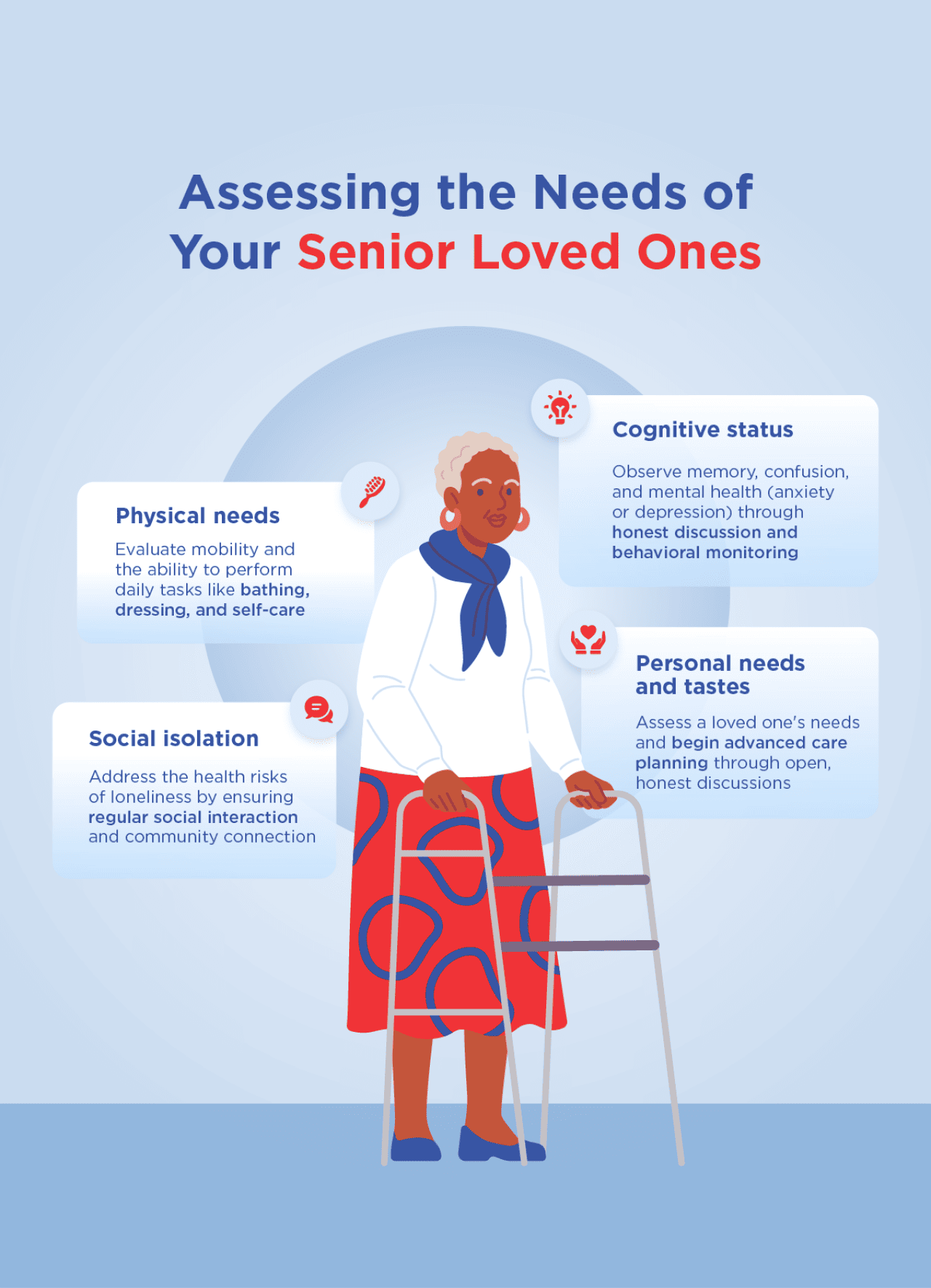
Some of the key things to assess regarding your senior family members include:
It’s important to shake off any outdated stigmas about openly discussing senior care. There’s no shame in telling someone their health matters to you. As long as the subject is approached with compassion, the needs of your loved ones will become clear.
Weighing the different senior care options can leave you with more questions than answers. Fortunately, you can quickly narrow down your search with a few insights into how each choice fits your loved one’s care needs. Exploring the available options can eliminate any family concerns and provide a clear path to take.
Each person’s needs will depend on their own individual situation. However, most senior citizens will require one of the following methods of care and support below.
In-Home Care
Most of our loved ones will likely need or prefer to have in-home care services. A 2024 survey found that 75% of adults over the age of 50 in the U.S. want to remain in their current home for as long as possible. It’s not difficult to understand why. These services offer an ideal balance between independence and support from qualified care assistants.
Having in-home care in place helps to develop a routine. It also provides a wide range of support services, including recovery from illness, surgery or adjusting to living at home with a chronic condition. Even seniors who’ve aged in good health may still choose to have in-house support to maintain their independence.
Assisted Living Facilities
An assisted living facility provides support and housing for seniors and people with disabilities. Assisted living will typically include meal preparation, bathing, housekeeping and managing medications. Many facilities will have social events and communal areas for residents to meet new people and have fun.
Many home care services will also offer support with cooking and other daily tasks. Assisted living acts more as a bridge between staying at home and being in a nursing facility. Overall quality of life in assisted living will depend on how seniors adapt to their new surroundings.
Skilled Nursing Facilities
A skilled nursing facility offers short-term treatment and medical support. This is conducted under a doctor’s supervision, with support from registered nurses and physical therapists. This type of care is similar to in-home care in some ways, such as support with daily living activities. However, it differs from nursing homes, which will mainly focus on long-term care.
It’s important to understand a nursing facility’s goals when exploring senior care options. If short-term medical rehabilitation is your goal, then this option may work for you. However, if your loved one needs long-term support, a nursing facility may not be the right choice.
Knowing what senior care facilities can offer is crucial, but so is taking that information and applying it to your own set of standards. This can range from general preferences to must-have needs that aren’t negotiable.
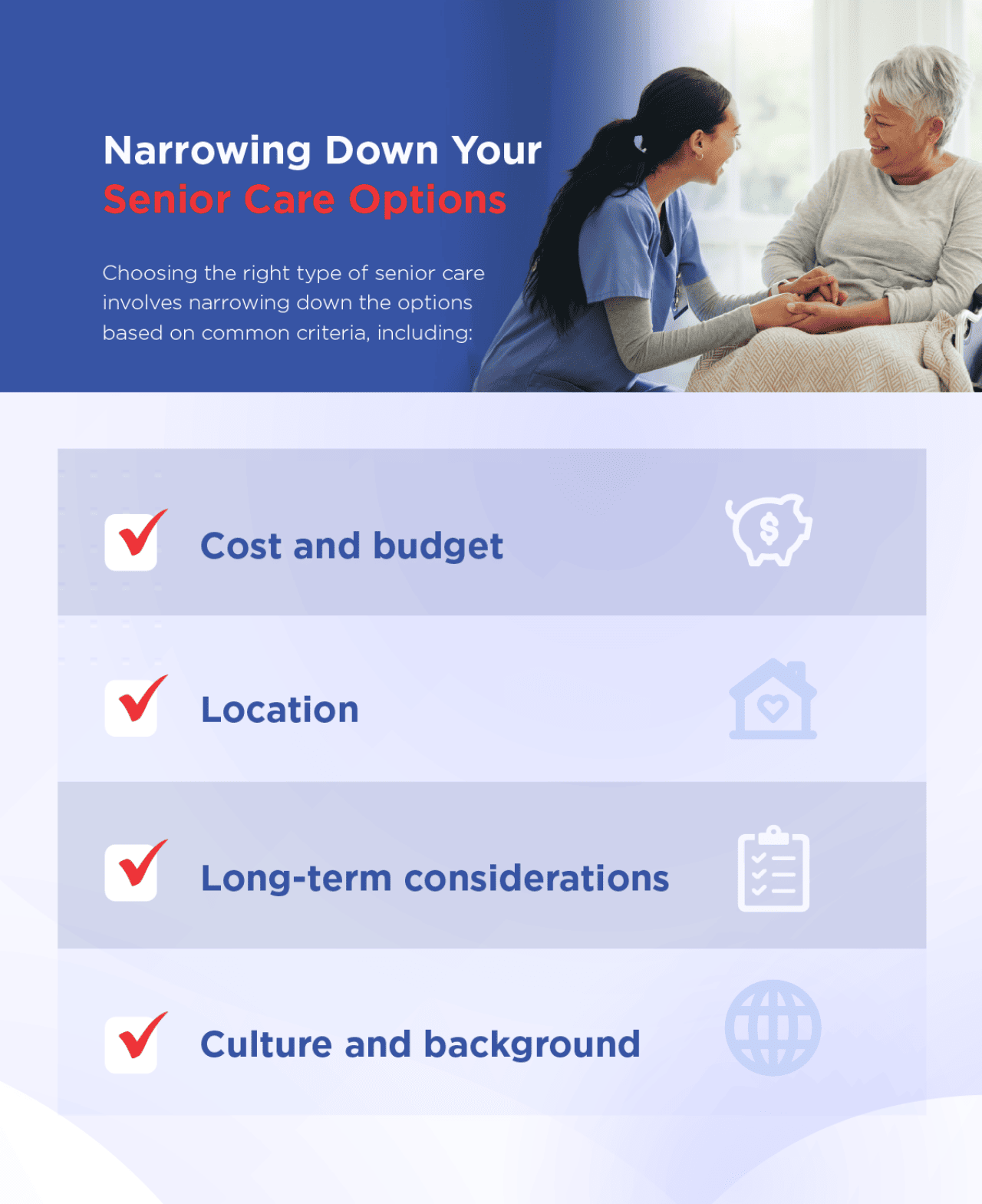
Choosing the right type of senior care involves narrowing down the options based on common criteria, including:
All of these factors will impact the final choice in a senior care service. A loved one may never fully come to you and admit they need additional support. Keeping your senior care options within the above criteria can help create a clearer, more open path for senior relatives to follow.
Trust should be the foundation of any final decision on senior care services. A care provider should be looking to earn this trust through complete clarity. They can earn this trust by explicitly divulging how they meet safety standards and accreditation. The flexibility of their service and team members, ideally 24/7, will also be a strong indicator of a trusted care organization.
Studies have shown a direct relationship between loneliness and physical health. A good senior care service should understand the importance of your loved ones seeing familiar faces. Consistency makes for a more personalized, streamlined method of care.
Hiring a care provider can have a positive effect on your elderly family members. It can also influence the dynamics of your family. Putting together a list of questions to ask a family caregiver is important. They may become an unofficial member of your extended family, and making sure they’re the right fit is pivotal.
Think of it as a get-to-know-you session where personality and professionalism are the priorities. Some key subjects and areas of care to ask a potential care professional about include:
These subjects and scenarios paint a picture of what life with this care assistant will be like. A passionate, dedicated senior care team from a reputable care service can turn a stressful health care situation into a fun, engaging new experience for seniors.
Our senior family members, especially parents, can be tight-lipped about their care requirements. Almost one-fourth of adults aged 65 and over are socially isolated. This contributes to a culture among senior citizens that leads them to avoid admitting they need support.
This is where the observations of neighbors and family members can be crucial. Some signs that a senior relative may need care support are:
If any of these signs persist, it’s a good idea to keep a log of incidents. Include the dates, times and any other important information. This can help identify clear patterns and validate the need for care support.
Having a discussion with a senior relative about care can be difficult — especially if you’re the one who has to bring up the subject. However, choosing the right type of care for your loved one is ultimately the best thing for their well-being. It’s an opportunity for them to reclaim their independence and make the most of the time they have available.
Embracing these changes as a family can be a positive step forward. A reputable caregiving company that respects your loved ones’ needs can improve their quality of life. In time, this may provide decades of support and companionship for your treasured family member.
Being open to change and honest with seniors sets the foundation for how everyone perceives potential family caregivers. By setting a positive example and taking all of the above factors into consideration, this can be easier than you may think.
This story was produced by Village Caregiving and reviewed and distributed by Stacker.










Reader Comments(0)