
The people's voice of reason


The people's voice of reason
Fort Charlotte
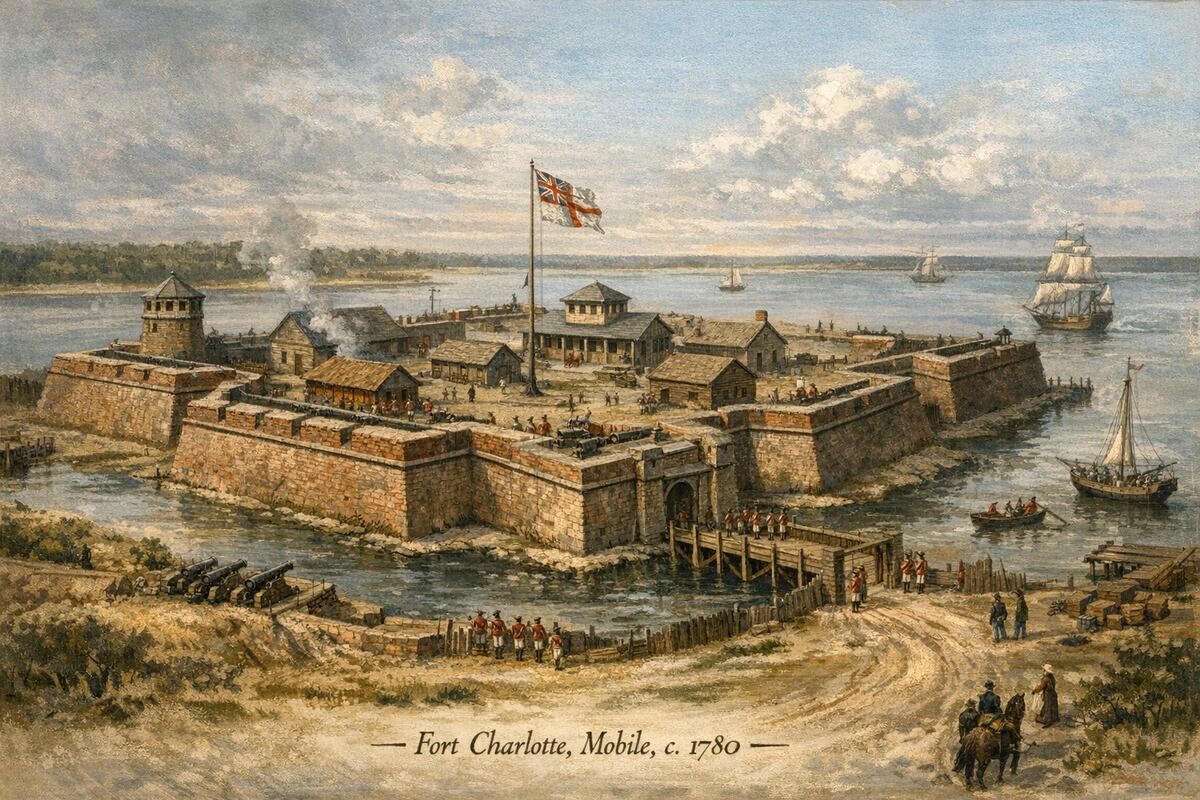
On March 14, 1780, the Gulf Coast became a decisive front in the American Revolutionary era as Spanish forces under Governor Bernardo de Gálvez captured Fort Charlotte in Mobile, Alabama. This victory-achieved after a two‑week siege-eliminated the last British frontier post capable of threatening New Orleans, securing Spain's hold on the western Gulf and reshaping the balance of power in the Southeast.
The Strategic Setting on the Gulf Coast
By 1780, the American Revolution had expanded far beyond the Thirteen Colonies. Spain, having entered the war in 1779 as an ally of France, sought to weaken Britain's North American foothold and protect its own territories. The British province of West Florida, stretching from the Mississippi River to the Apalachicola, became a key battleground.
Fort Charlotte-originally the French-built Fort Condé-sat at the heart of Mobile, guarding the entrance to Mobile Bay. After Britain gained control in 1763, the fort became a vital outpost linking British forces to Native allies and serving as a potential staging point against Spanish Louisiana. But by the late 1770s, British attention and resources were stretched thin, leaving the fort undermanned and in disrepair.
For Gálvez, Mobile was the next logical target after his successful 1779 campaign along the Mississippi. Capturing it would:
- Remove Britain's ability to threaten New Orleans
- Provide a base for a future assault on Pensacola
- Cut British ties to Choctaw and Chickasaw allies
- Secure cattle and supplies critical for sustaining Spanish forces
- Rally local French residents who favored Catholic Spanish rule over British control
Gálvez's Campaign to Mobile
Gálvez departed New Orleans in January 1780 with a mixed force of Spanish regulars, militia, free and enslaved Black soldiers, and American volunteers. His fleet faced storms, scattered ships, and treacherous sandbars at the mouth of Mobile Bay. Several vessels were lost, but Gálvez salvaged their guns to build siege batteries-an early sign of his resourcefulness. Reinforcements from Havana eventually brought his force to more than 1,200 men.
By late February, Spanish ships had positioned themselves within range of Fort Charlotte. The vessel Valenzuela fired the opening shots on February 26, signaling the start of the siege.
Inside the fort, British commander Captain Elias Durnford led a garrison of regulars from the 60th Regiment and Loyalists from Maryland and Pennsylvania. Though outnumbered, they resisted fiercely, hoping for reinforcements from Pensacola that never arrived.
The Siege and Surrender
The siege lasted from March 2 to March 14. Spanish artillery gradually weakened the fort's defenses, exploiting the structural neglect that had plagued Fort Charlotte for years. When a breach finally opened in the walls, Durnford recognized that further resistance would lead only to unnecessary casualties.
On March 14, 1780, he surrendered the fort to Gálvez. The British loss was significant: more than 1,300 casualties and prisoners compared to roughly 272 Spanish losses.
The fall of Fort Charlotte:
- Secured the western shore of Mobile Bay
- Eliminated Britain's last forward position capable of threatening New Orleans
- Opened the path for Gálvez's 1781 campaign against Pensacola, the capital of British West Florida
- Cemented Spain's growing influence along the Gulf Coast
Why the Capture of Fort Charlotte Still Matters
For Alabama's Gulf Coast, the siege marked a turning point in the region's colonial history. Mobile shifted from British to Spanish control, shaping its cultural and political landscape for decades. For the broader Revolutionary War, the victory helped secure the southern flank of the American cause-even though Spain was not formally allied with the United States.
Gálvez's Gulf Coast campaign ultimately contributed to the weakening of British power in North America, complementing American and French efforts in the Atlantic and northern theaters. His leadership later earned him recognition from the U.S. Congress, and his motto-"Yo solo" ("I alone")-became a symbol of his daring.







Reader Comments(0)