
The people's voice of reason


The people's voice of reason
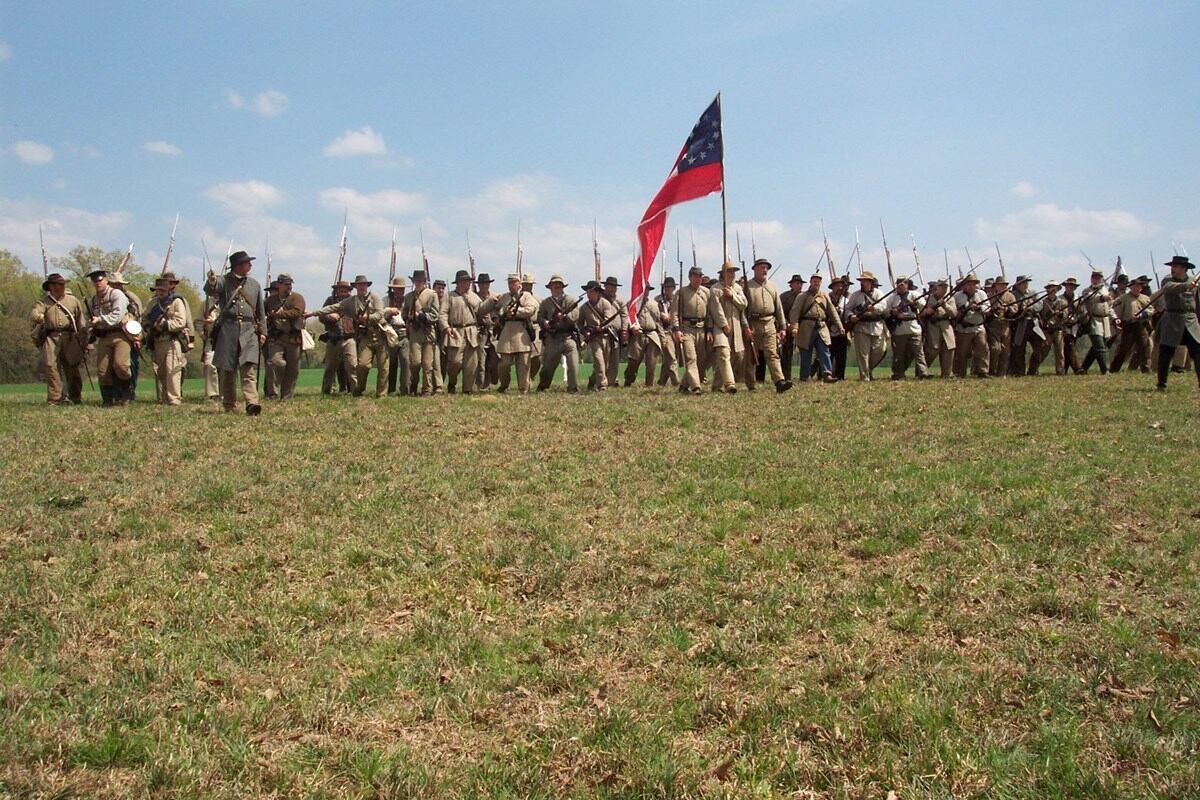
Civil War reenactors at Shiloh National Battlefield Park
The morning of April 7, 1862, broke over the Tennessee woods with a gray, uneasy stillness-an eerie contrast to the thunderous violence that had consumed the previous day. The Battle of Shiloh, one of the first truly large‑scale and shockingly bloody engagements of the American Civil War, was entering its second and decisive day. By sundown, Union forces would drive the Confederates from the field, securing a hard‑won victory that reshaped the Western Theater and shattered any lingering illusions that the war would be short or romantic.
A Battlefield Drenched in Chaos
The battle had begun at dawn on April 6, when Confederate General Albert Sidney Johnston launched a surprise attack on Union camps near Pittsburg Landing, along the Tennessee River. The Union Army of the Tennessee, commanded by Major General Ulysses S. Grant, had been caught off guard. Many soldiers were still cooking breakfast when the first volleys tore through the trees.
Throughout that first day, the Confederates pushed the Union line back in brutal, seesaw fighting. The infamous "Hornet's Nest"-a sunken road defended by Union troops under generals Benjamin Prentiss and W.H.L. Wallace-became the focal point of the Confederate assault. Wave after wave of Southern infantry charged the position, only to be repelled by withering musketry and artillery fire. The fighting was so intense that survivors later said the bullets sounded like angry hornets swarming overhead.
By late afternoon, the Hornet's Nest finally collapsed under concentrated Confederate artillery fire, and thousands of Union soldiers were captured. But the defense had bought Grant precious time. Reinforcements from General Don Carlos Buell's Army of the Ohio were arriving, and Grant's battered forces had formed a final defensive line near Pittsburg Landing, supported by gunboats firing from the river.
The Confederates had come close to victory on April 6-but not close enough.
April 7: The Counterattack Begins
When dawn rose on April 7, the momentum of the battle shifted dramatically. Grant, reinforced and resolute, ordered a full counterattack along the entire line. The Union forces now outnumbered the Confederates, who were exhausted, disorganized, and without their commander-General Johnston had been mortally wounded the previous afternoon, leaving General P.G.T. Beauregard in charge.
Union troops advanced steadily, pushing the Confederates back over the same blood-soaked ground that had been lost the day before. The fighting was fierce but more coordinated than the chaotic clashes of April 6. Buell's fresh divisions pressed the Confederate right, while Grant's reorganized units struck the center and left.
The Confederates resisted stubbornly, launching several counterattacks of their own, but the weight of Union numbers and the fatigue of the Southern army began to tell. By midday, Beauregard realized that his forces could not regain the initiative. By afternoon, he ordered a retreat toward Corinth, Mississippi, ending the battle.
A Victory That Shocked the Nation
The Union had won the field, but the cost was staggering. Shiloh produced casualties on a scale Americans had never imagined. More than 23,000 men were killed, wounded, or missing-more than the Revolutionary War, War of 1812, and Mexican War combined. Newspapers across the North and South reeled at the numbers.
For the Union, the victory secured a foothold deep in Confederate territory and opened the path to the eventual capture of Corinth and control of the Mississippi Valley. For Grant, however, the aftermath was complicated. Critics accused him of carelessness for allowing his army to be surprised. Some politicians demanded his removal. But President Abraham Lincoln refused, famously saying, "I can't spare this man-he fights."
Grant learned from Shiloh. The battle hardened him, deepened his resolve, and shaped his understanding of the war's brutal nature. He would carry those lessons forward through Vicksburg, Chattanooga, and ultimately to Appomattox.
The End of Illusions
Perhaps the most profound legacy of Shiloh was psychological. Before April 1862, many Americans still believed the war might end quickly, with a few decisive battles determining the outcome. Shiloh shattered that belief. The scale of the carnage made clear that the Civil War would be long, grinding, and unimaginably costly.
Soldiers who fought there described scenes of horror: wounded men lying in the rain-soaked woods overnight, the cries of the dying echoing through the darkness, and the ground so thick with bodies that one could scarcely walk without stepping on the fallen. The name "Shiloh," taken from a small log church on the battlefield meaning "place of peace," became bitterly ironic.
A Turning Point in the West
When the smoke cleared on April 7, the Union held the field, and the Confederates were in retreat. The victory strengthened Northern control of Tennessee and paved the way for further advances along the Mississippi River. It also cemented Grant's rise as one of the Union's most important commanders.
Shiloh was not the final word in the Western Theater, but it was a defining moment-a brutal awakening to the true nature of the conflict and a strategic victory that helped shape the course of the war.






Reader Comments(0)