
The people's voice of reason


The people's voice of reason

A medical alert system offers a fast, easy way to call for help in an emergency. Aging in place is safer with a medical alert system, but choosing the right features is key. Standard systems can call 911, but can't identify who or where you are. Advanced systems enhance safety with features such as GPS tracking, automatic fall detection and dedicated response centers.
In Medical Care Alert's guide to choosing a medical alert system, you'll learn straightforward tips to help you select the best features for yourself or a loved one.
Medical alert systems improve senior safety with wearable devices and help buttons. These features can help you age in place safely or increase peace of mind if you care for a senior in your life. Here are the ways this type of system improves safety.
There are two main types of medical alert systems to choose from.
Monitored
A monitored system is a comprehensive option that involves a dedicated emergency response center. This center keeps your information on file and responds to your system's alerts. Trained agents know who and where you are when you need help.
When you call for help via a monitored medical alert system, the response center staff asks you questions to determine what type of help you need. They quickly dispatch emergency medical services if necessary or reach out to your designated contacts if you just need a helping hand. Investing in a monitored system ensures you receive the right help exactly when you need it. The monitoring center will notify your personal contact list of any emergencies.
Unmonitored
An unmonitored system calls 911 or a family member in the event of an emergency. Dialing 911 is not always local, and it may be outsourced to an EMS service or the state or county police. With an unmonitored system, 911 dispatchers and responders do not know you, your address or your contacts.
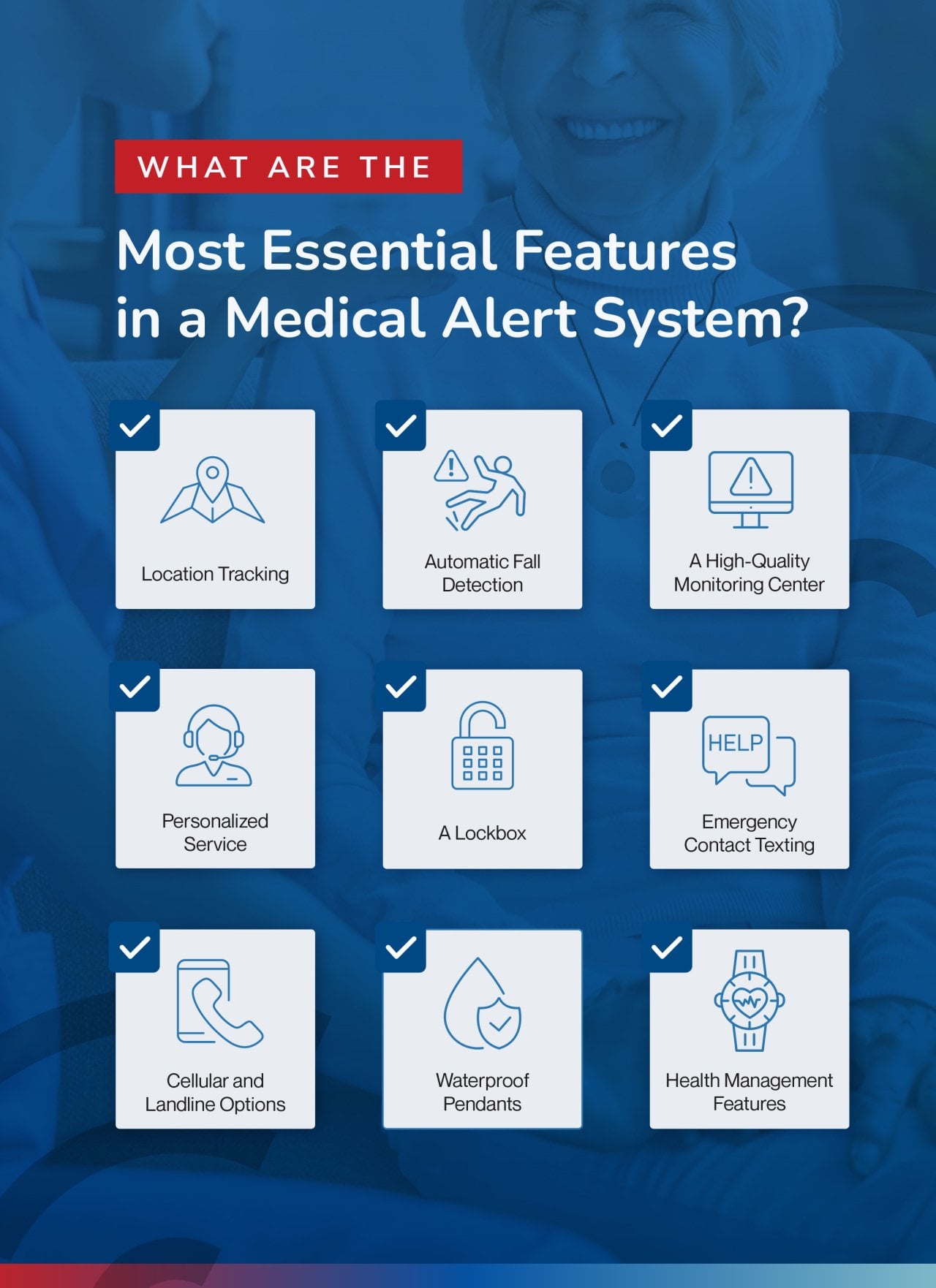
These are the most essential medical alert system features you should look for.
Location tracking
In an emergency, a senior may not know or be able to communicate their location. GPS technology overcomes this challenge with fast, accurate location tracking. A medical alert system with GPS tracking enables emergency response agents to immediately locate you or your loved one and rapidly send help to your precise location.
Look for a medical alert system with GPS tracking if you or your loved one spends a lot of time away from home. You can often find GPS technology in wearable alert devices, such as pendants and watches.
Automatic fall detection
If you fall at home, you may be unable to press a medical alert button and be too far away from a phone to call for help. Investing in a medical alert system with automatic fall detection gives you 24/7 peace of mind.
Automatic fall detection technology can sense falls and immediately alert response center agents. These sensors monitor speed, distance and angle to sense rapid changes in movement and accurately detect occurrences. This is a beneficial feature if the wearer has any medical conditions that increase fall risk.
This technology is an optional add-on feature for many medical alert systems. Opt for this feature if you or your loved one is prone to seizures or fainting. Having this feature is also helpful if you experience mobility challenges or want extra peace of mind.
When choosing a system with automatic fall detection, look for one that also features two-way speakers so emergency response center agents can talk directly with you or your loved one. An agent evaluates the wearer's needs and offers support until help arrives. This makes it easy to confirm whether you have fallen, ensuring the response center only sends help when needed.
A high-quality monitoring center
It's important to look for a high-quality monitoring or emergency response center. Make sure that a company offers the following advantages before investing in a medical alert system.
Personalized service
Look for a medical alert system company that prioritizes your care and keeps your personal information file. A provider's monitoring center should know the following details about the wearer:
With this information on file, agents can send rapid help to your home and notify the family, friends and neighbors on your emergency contact list. Select a company that keeps your details in a secure database. This detail ensures only monitoring agents can view it in the event of an emergency.
A lockbox
Another important medical alert system feature is a lockbox that stores a spare home key so emergency response professionals can enter your home without breaking down the door. Some companies charge a monthly fee for this feature, but you can find providers that offer a free secure lockbox.
Emergency contact texting
Friends, family and neighbors may be unable to answer calls or may avoid answering unrecognized numbers. Look for a medical alert system provider that calls and texts you or your loved one's emergency contacts. Sending text messages in addition to calling helps keep family informed in the event you need help or are transported to the hospital.
Cellular and landline options
A medical alert system connects to an emergency response center via a cellular network or your home's landline. A mobile medical alert device connects through your cellular network. An in-home system can connect through your cellular network or a landline, depending on your preference.
If you have a landline phone connection, connecting your medical alert system through the phone jack is a reliable and easy way to use it. If you want to connect a system via a cellular network, it's important to check coverage before signing up. You can connect through a current provider or subscribe to a new provider as long as it offers good coverage in your area.
Waterproof pendants
Waterproof pendants are essential for all-day wear. You or your loved one can use a waterproof pendant anywhere within its coverage area, even while showering or washing dishes. This detail lets you call for help at any time, including in areas of the home most common for slips and falls.
Health management features
Some medical alert systems, such as medical alert smartwatches, offer additional features that can help you or your loved one manage their health. These devices monitor heart rate and steps, helping you make healthy choices throughout the day. You can also set up medication reminders to ensure you take medication doses on time.
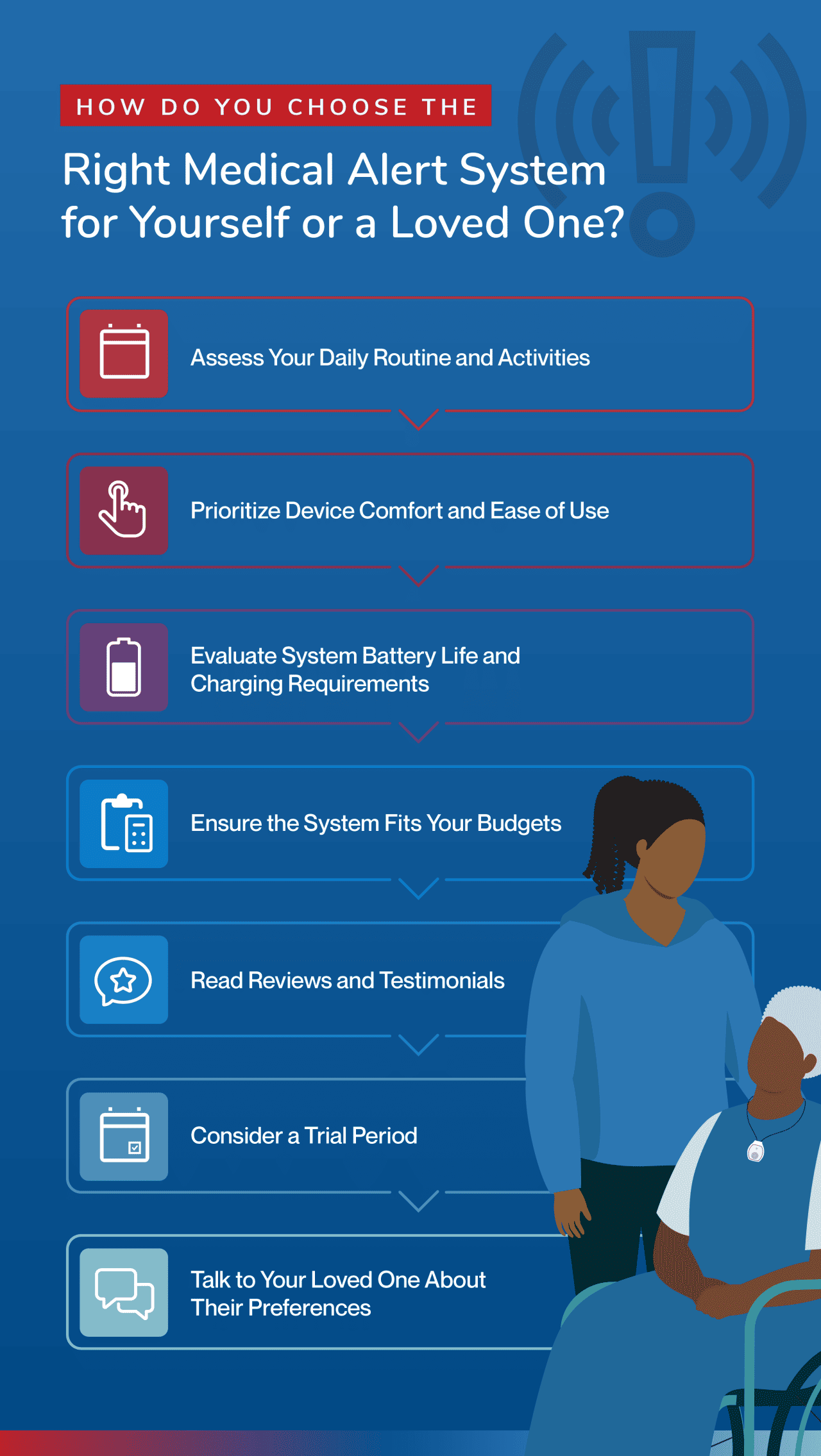
Use the following tips to choose the right medical alert system for yourself or a family member.
Assess your daily routine and activities
Lifestyle is an important factor in how portable your system is and how much area it should cover. Consider how much time you or your loved one spends at home versus out and about. Think about details such as social gatherings, time with family, hobbies and errands. This information will help you choose between an in-home system and a mobile device.
Prioritize device comfort and ease of use
A medical alert device should be comfortable and easy to use. This factor is especially important during an emergency. Choose a system with a simple setup and easy-to-press buttons.
You should also evaluate the weight and size of wearable devices. A medical alert smartwatch or pendant should feel lightweight and discreet for you or your loved one. The more comfortable a device is to wear, the more likely an individual is to use it regularly.
Evaluate system battery life and charging requirements
Assess how long a device's battery lasts on a single charge and how easy it is to recharge. Some units may require daily charging, while others last several days. Consider the routine that you or your loved one can manage with ease. A system with a long battery life and an easy charging mechanism helps ensure continuous safety.
Ensure the system fits your budget
Ask about a medical alert system's total cost, including these details:
It's also important to consider a system's contract length and the provider's cancellation policy. Understanding all financial aspects helps you choose a system that fits you or your loved one's budget.
Read reviews and testimonials
Look for customer reviews and testimonials before choosing a system. Reading honest reviews helps you learn more about a company's overall reliability and the quality of its customer service. Reputable providers offer technical support and answer any questions you may have, giving you peace of mind.
Consider a trial period
Select a medical alert system provider that offers a trial period or a money-back guarantee. This offering lets you try the system and ensure it meets your needs.
Talk to your loved one about their preferences
If you are looking for a medical alert system for a loved one, include them in the decision-making process as much as possible. An individual is more likely to embrace a medical alert system when they feel like they have a voice in the decision. Explain available features and discuss what they want their daily life to look like. For example, they might opt for location tracking if they want to spend more time engaging in hobbies outside their home.
You can help a family member accept the idea of a medical alert system by highlighting the benefits. Let them know that this extra support can help them maintain independence and live at home longer.
Different medical alert systems offer varying capabilities, and choosing the right features can significantly enhance the wearer's safety. The right system for yourself or your family member depends on lifestyle, needs and preferences.
You might prefer a mobile pendant or smartwatch if you spend a lot of time away from home. Alternatively, you may opt for an in-home system if you only need monitoring while at home. Features such as automatic fall detection and location tracking can benefit you if you are prone to falls or live an active lifestyle. The most important thing is that you or your loved one feels safer and more at ease with a medical alert system.
This story was produced by Medical Care Alert and reviewed and distributed by Stacker.











Reader Comments(0)