
The people's voice of reason


The people's voice of reason

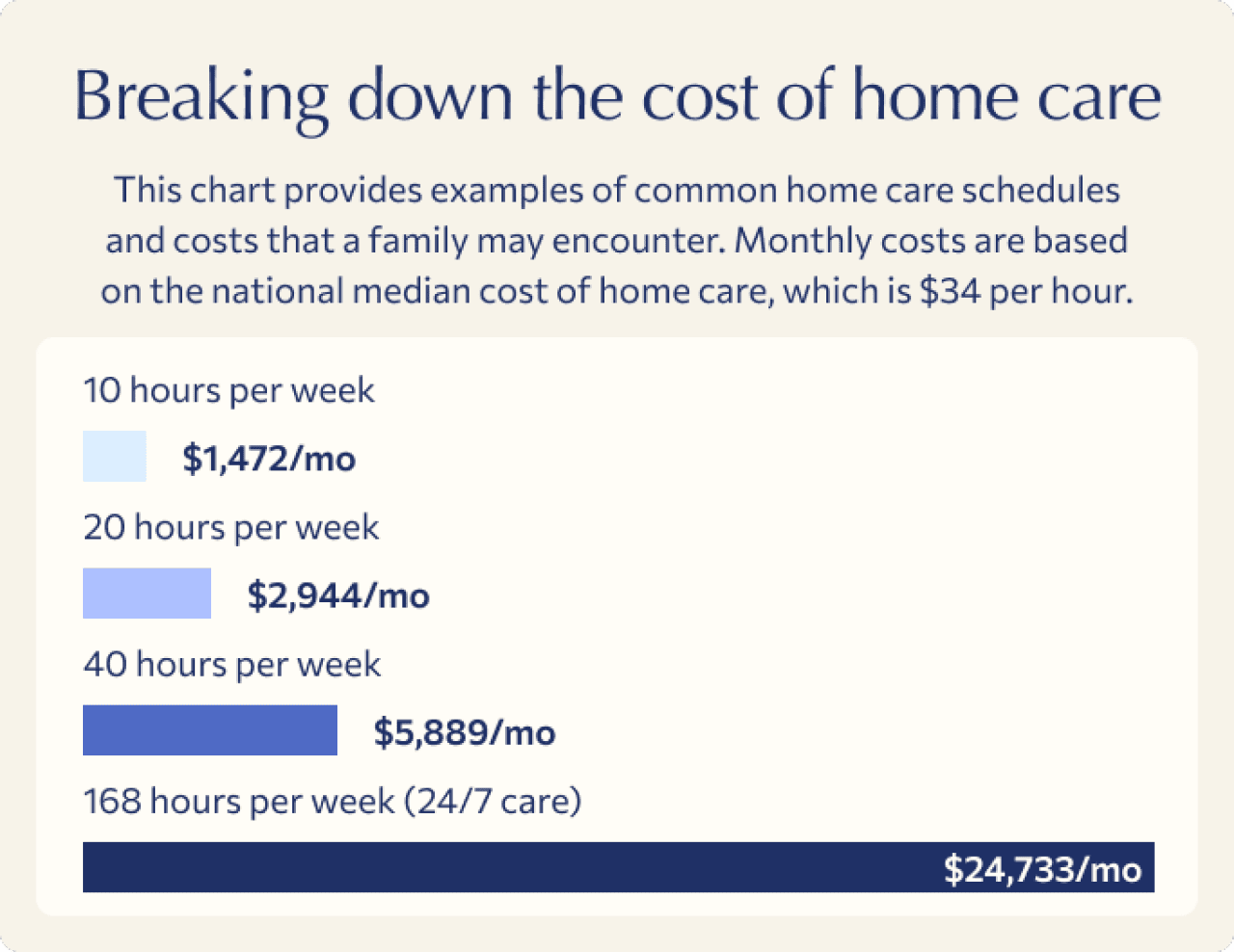
The national median cost of nonmedical home care in 2026 is $34 per hour. For 24/7 care, this equals about $816 per day, $5,712 per week, and $24,733 per month. Round-the-clock home care aides help seniors with daily tasks and provide continuous supervision. Where your loved one lives and what kind of help they need determines the overall cost of 24/7 home care.
At $34 per hour, the national median cost of 24/7 in-home care in 2026 is $24,733 per month, according to A Place for Mom’s 2026 Costs of Long-Term Care and Senior Living Report. Costs vary based on where a senior lives and the level of support they need. Other factors that can affect the cost of care include the types of services provided and whether your family hires private caregivers directly or hires through a home care agency.
You should also factor in how long you plan to use the service, says Todd Austin, president and COO of Activated Insights (formerly Home Care Pulse).
“The timeline varies a lot by chronic conditions. This isn’t something that is [a] standard amount of time. On average, in-home care has a standard service time of 15-20 months,” Austin explains.
In some cases, such as home care following a hip replacement, your loved one may only need comprehensive care for a short period of time to safely recover after surgery. A permanent disability, on the other hand, may call for home care for an indefinite period.
There’s a common misperception about 24/7 care at home, says Vicki Demirozu, founder of Giving Care with Grace, a soft skills training program for caregivers.
“When someone’s getting out of the hospital and the doctor says ‘you can’t go home without 24/7 care,’ they’re usually just referring to the two or three days after they leave the hospital that they need someone with them. It’s not 24/7 care forever. Many people can thrive with 16 hours of care. Someone to make sure there’s food and make sure they’re clean can go a long way to helping people recover after a hospital stay,” Demirozu explains.
Providers of 24-hour home care typically offer the following services:
“If someone’s helping your loved one take a shower, that’s a different level of care than what we call companion care, or homemaker care,” says Demirozu. “In companion care, the caregiver doesn’t do anything that requires hands-on care.”
“Helping with ADLs must be done by a certified nursing assistant (CNA), home health aide, or personal care aide, depending on your state’s requirements for hands-on care,” says Demirozu.
The opportunity for seniors to continue aging in place and the peace of mind for family members are some of the biggest benefits of home care.
While 24/7 home care offers the convenience of receiving care in the comfort of one’s home, the cost may become prohibitive for some families. A senior living community — such as assisted living — may be a more cost-effective option. The national median cost of assisted living in 2026 is $5,419 per month.
Live-in care is a less expensive option that still allows seniors to receive care in their own home. A live-in caregiver lives with the senior in their home and provides care during a specified shift, usually eight hours, with breaks for meals and sleeping.
Most home care agencies work with clients who pay directly and out of pocket, but some may accept veterans’ benefits or long-term care insurance. In some cases, Medicaid may cover qualified home health care costs.
Home health care is more expensive than nonmedical home care because the services are provided by skilled professionals, such as nurses and therapists. Most people won’t pay out of pocket for home health care because Medicare, Medicaid, VA health benefits, and private health insurance may cover at least some of these expenses in certain situations. However, neither public nor private insurance typically covers round-the-clock care of any kind for an extended period.
When someone requires round-the-clock medical care, a nursing home is often a more affordable option than 24/7 home health care.
Whether you’ve previously worked with a home care agency or are considering at-home help for the first time, choosing a provider can feel overwhelming. Many agencies offer an in-home care assessment to help ensure that they can meet your loved one’s needs. Because there are so many home care agencies to choose from, finding the best fit for your loved one can be difficult, but comparing a few providers can help you make a more confident, informed decision.
Does insurance cover home health care?
Yes, public insurance like Medicare and Medicaid will cover home health care for eligible seniors. Some private insurance plans may pay for home health care services, depending on a senior’s policy.
How do you hire a nurse for home care?
Most families work through a home health agency to hire a home care nurse. Families also use agencies to hire nonmedical caregivers. However, some families may choose to hire an independent caregiver.
What are other, cheaper options compared to home care?
Care options that may be less costly than home care include assisted living and memory care. However, the cost of senior care, including home care, depends on a senior’s location and care needs.
This story was produced by A Place for Mom and reviewed and distributed by Stacker.










Reader Comments(0)