
The people's voice of reason


The people's voice of reason

You pick your phone plan, your car insurance, and where you bank. So why would you expect to have to let the government decide who sells you electricity?
In millions of American homes, people don’t have to let the government decide what company they buy electricity from. That freedom, one that many people don’t even know they have, has been quietly saving money for households and businesses for nearly 30 years.
As America celebrates 250 years of independence this July, here’s one freedom worth raising a glass to: the right to choose your own electricity supplier. Shipley Energy explains how it works.
Yes. And if you live in Pennsylvania, Ohio, Illinois, New Jersey, Maryland, or a handful of other states, you’ve had that right for decades.
Here’s how it works: Your local utility still owns the wires and poles and will flip the lights back on when a storm knocks out your power. That part doesn’t change. But for the electricity actually flowing through those lines, you can choose who sells it to you and at the price, terms, and options that make the most sense for you.
It’s the difference between being handed one menu item versus getting to order off the whole menu.
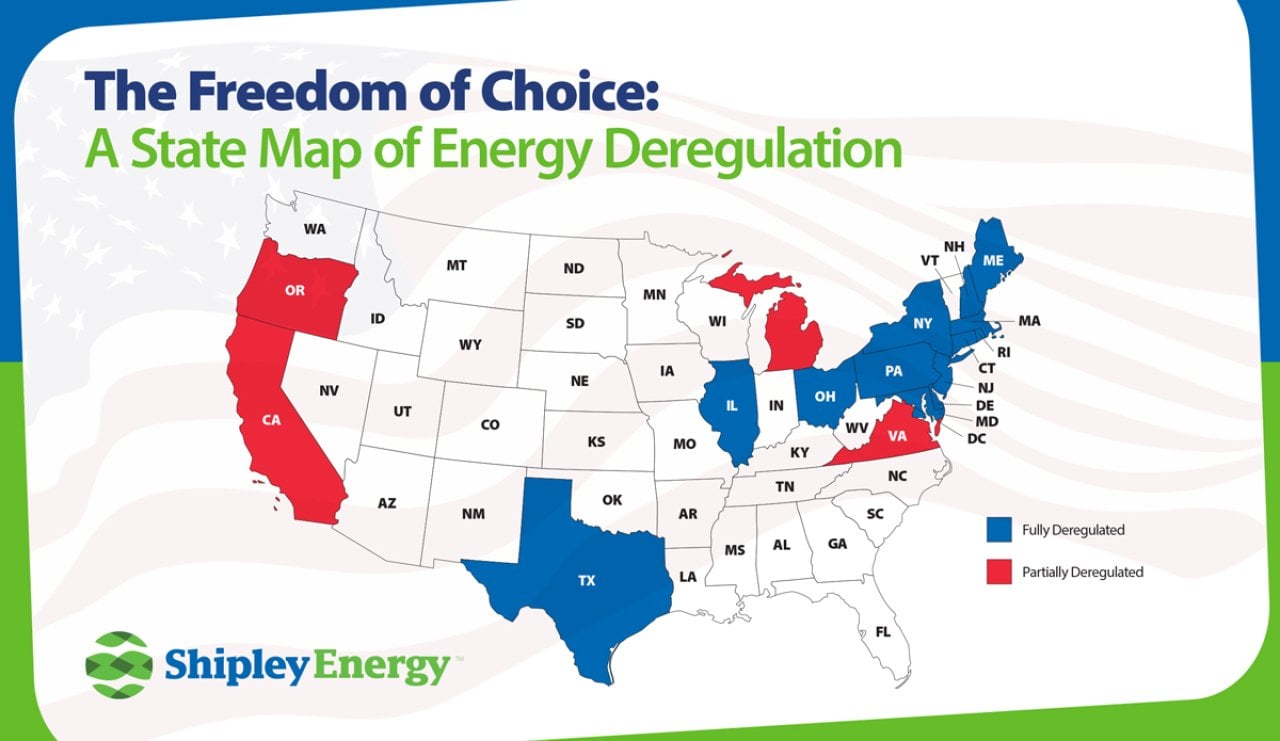
Before Pennsylvania opened its electricity market to competition back in the late 1990s, the state ranked 12th most expensive in the country for electricity and was well above the national average.
Fast forward 25 years of competition, and Pennsylvania’s average electricity rate dropped below the national average. Pennsylvanians were paying 12.57 cents per kilowatt-hour versus the national average of 12.68 cents, according to 2023 U.S. Energy Information Administration data. That happened because suppliers had to compete for customers. And when companies compete, prices come down, and the service gets better.
In 2025, Pennsylvania exported an estimated 89 million megawatt-hours of electricity, making it the single largest electricity exporter in the entire United States, according to the Pennsylvania Independent Fiscal Office. Illinois, the next closest state, wasn’t even close, at 46.5 million megawatt-hours.
More supply plus more competition equals lower prices. Pennsylvania’s deregulated generation market built that capacity because suppliers had a reason to invest and grow. It’s the American economic model in action.
The competitive part of your electricity bill (the generation and transmission) has gone up about 10% from 2022 to 2025.
The part that’s gone up nearly three times faster is the distribution component, meaning the poles, wires, and local delivery infrastructure controlled by your regulated utility monopoly. That piece jumped 27% over the same four years.
There’s no competition in the distribution part of the market. Nobody else can run wires to your house, so there’s no pressure to keep costs down, and rates go up. That’s exactly the problem that electricity deregulation was designed to solve on the generation side, and it worked. The monopoly side of the bill is where consumers are getting squeezed.
A competitive supplier is competing for your business, which means you have options to help lower your bill.
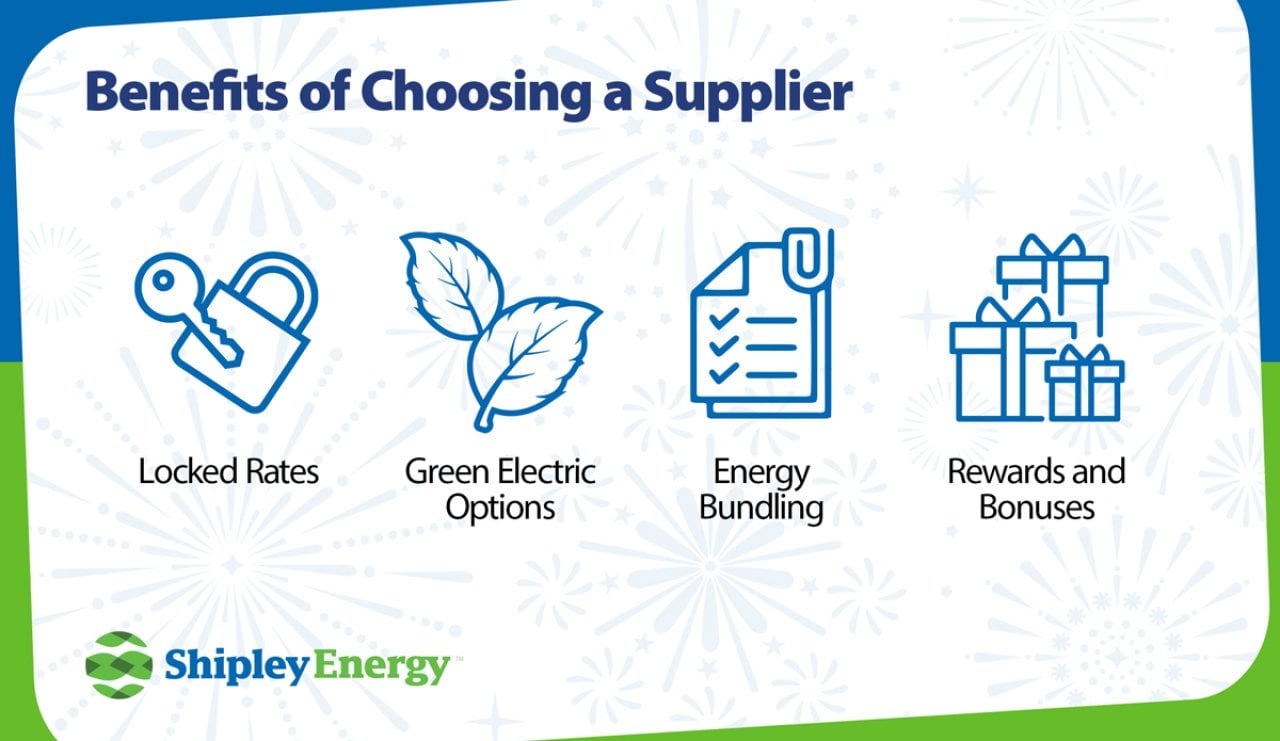
Lock in your rate. Competitive suppliers offer fixed-rate contracts so your supply price doesn’t change for 12, 24, or even 36 months. Your utility’s default rate, which can be adjusted every one, three, or six months depending on regulation, is harder to budget.
Go green. Competitive suppliers can offer renewable energy products backed by wind or solar when the utility can’t.
Bundle your home energy. Utilities typically handle one type of energy, but when you work with a supplier, you may be able to bundle multiple home energy needs to get better options and savings.
Perks and rewards. Some suppliers offer loyalty programs, referral bonuses, or home energy services that utilities don’t have access to.
You can’t get any of these when there’s only one option.
Think about what makes American consumer markets work. Airlines compete for your flights, grocery stores compete for your food budget, and cell carriers compete for your data plan. That competition drives prices down, pushes companies to innovate, and gives you the power to walk away if you’re not being treated right.
Electricity deregulation brought that same logic to your utility bill. And in the states where it happened, the data shows it worked.
If you’re in a deregulated state, switching suppliers is easier than most people think:
The U.S. is a country built on the idea that free people make better choices for themselves than any monopoly can make for them. That applies to electricity, too.
In Pennsylvania and across the deregulated states, more than 25 years of competition in electricity generation has pushed rates below the national average, grown supply, and given consumers options that a monopoly utility would never have a reason to create.
This story was produced by Shipley Energy and reviewed and distributed by Stacker.







Reader Comments(0)