
The people's voice of reason


The people's voice of reason
Sorted by date Results 24 - 48 of 380
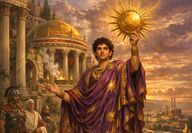
The assassination of Emperor Elagabalus on March 11, AD 222 marked one of the most dramatic and consequential turning points of the Severan era, ending a turbulent four‑year reign defined by religious upheaval, political instability, and deep conflict with Rome's traditional power structures. Elagabalus-born Varius Avitus Bassianus-had risen to the throne as a teenager with the backing of the powerful Julia Maesa, his grandmother, but quickly alienated the Senate, the Praetorian Guard, and m...

February 23, 1883 - MONTGOMERY - When Alabama lawmakers gathered in Montgomery on February 23, 1883, they likely did not imagine they were about to make national history. Yet on that day, Alabama became the first state in the nation to enact an antitrust law-an extraordinary milestone that placed the state at the forefront of America's early struggle to rein in monopolies, protect consumers, and preserve fair competition. This pioneering statute, passed nearly a decade before Congress adopted...

On February 22–23, 1847, in the rugged mountain passes of northern Mexico, a vastly outnumbered American force won a desperate and unlikely victory at the Battle of Buena Vista. It was one of the most dramatic engagements of the Mexican–American War, a clash defined by terrain, tenacity, and the political stakes surrounding the conflict. The battle elevated the national profile of General Zachary Taylor, reshaped the war's momentum, and left a legacy that echoed through American politics for...
On February 24, 303, the Roman Empire crossed a threshold that would shape the future of Christianity and the empire itself. Emperor Diocletian, long celebrated for restoring stability after decades of crisis, issued the first of four sweeping edicts targeting Christians across the empire. This initial decree ordered churches destroyed, Christian scriptures burned, and believers stripped of legal protections. What began that day in Nicomedia would become the Great Persecution, the most systematic attempt the Roman state ever made to eradicate...
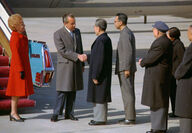
February 21, 1972 - BEIJING, China - President Richard M. Nixon (R) arrived in the People's Republic of China, becoming the first U.S. president to visit the country and marking a dramatic turning point in Cold War diplomacy. The week‑long trip, broadcast around the world, began the process of normalizing Sino‑American relations after more than two decades of isolation and hostility. Nixon's arrival in Beijing - greeted by Premier Zhou Enlai on the tarmac - symbolized a strategic shift in glo...
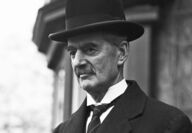
February 20, 1938 -LONDON, Great Britain - Britain's political landscape was shaken by the dramatic resignation of Foreign Secretary Anthony Eden, who stepped down in open protest of Prime Minister Neville Chamberlain's increasingly conciliatory policy toward Adolf Hitler and Benito Mussolini. Eden's departure marked one of the most consequential cabinet resignations of the pre‑war era, exposing deep fractures within the British government over how to confront the rising threat of fascist a...
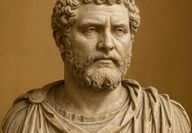
On February 19, AD 197, the Roman Empire witnessed one of the most brutal and consequential civil battles in its long history. At Lugdunum-modern‑day Lyon in France-Emperor Septimius Severus defeated his rival Clodius Albinus, ending a bitter struggle for imperial legitimacy and reshaping the political landscape of the empire for decades to come. Ancient sources describe the clash as the bloodiest battle ever fought between Roman armies, a grim testament to the stakes of the conflict and the f...
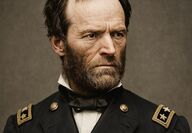
On February 18, 1865, as the Civil War neared its violent end, Union Major General William T. Sherman's army entered Columbia, South Carolina, and unleashed one of the most controversial episodes of his Carolinas Campaign. By the next morning, much of the city lay in ruins. Among the structures damaged in the inferno was the South Carolina State House-symbolically the birthplace of secessionist resolve and a prime target in the Union's effort to break the Confederacy's will. The burning of...

On February 17, 1944, the United States launched one of the most devastating and strategically decisive naval‑air assaults of the Pacific War. Known as Operation Hailstone, the two‑day strike targeted the Japanese stronghold at Truk Lagoon-today called Chuuk-long regarded as the "Gibraltar of the Pacific." The attack coincided with the opening moves of the Battle of Eniwetok Atoll, a complementary operation aimed at securing the Marshall Islands and tightening the noose around Japan's Cen...
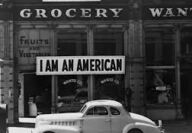
Lynyrd Skynyrd expressed the mood of much of the country when it questioned the relevance of Watergate and the feigned outrage surrounding a third‑rate burglary that captured the nation's attention. More than half a century later- 54 years after the break‑in and 52 years after the release of Sweet Home Alabama - Watergate has become civic shorthand for presidential corruption. The burglary at the Democratic National Committee headquarters and the subsequent cover‑up are treated as the original s...

On February 25, 1836, a young American inventor named Samuel Colt secured a U.S. patent for a firearm design that would reshape warfare, policing, frontier life, and the global arms industry. His invention-the Colt revolver-introduced a reliable, mechanically rotating cylinder that allowed a shooter to fire multiple rounds without reloading. It was a breakthrough so significant that it permanently altered the trajectory of firearms technology. A Simple Idea That Changed Everything Before Colt's...
A Nation in Financial Crisis By early 1863, the Civil War had pushed the federal government into unprecedented fiscal strain. Federal spending had exploded from a pre‑war surplus to a deficit of more than $400 million by 1862, and Washington needed a reliable way to finance the Union war effort. At the same time, the country's currency system was in disarray. - State‑chartered banks issued their own notes. - Notes from one state often traded at steep discounts in another. - Fraud, bank fai...

How mortgage rates compare through the decades Mortgage rates are one of the most influential drivers of the U.S. housing market dynamic, but they are often misunderstood. And, for generations of homebuyers, the interest rate attached to a mortgage loan has dramatically shaped affordability, savings, and the trajectory of wealth building through homeownership. Today, however, buyers face mortgage rates that are far above the record lows seen during recent decades. To understand what the highs...
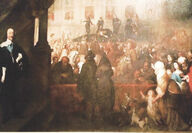
Four hundred years ago, Charles I was crowned King of England. He became king automatically upon the death of his father, James I, but his coronation was delayed for almost a year. Officially, the delay was attributed to an outbreak of plague which made public gatherings deadly when, in truth, the excuse masked another reality. Charles was broke. His father had spent lavishly and left the crown deeply in debt. Along with the throne, Charles inherited the existing financial obligations and a stra...

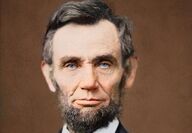
After Abraham Lincoln’s death, his long-time friend Ward Hill Lamon noted how Lincoln’s deification “took place with showy magnificence.” Union Officer Donn Piatt stated, “I hear of him, I read of him in eulogies and biographies, but I fail to recognize the man I knew in life.” The American education system and a long line of “Court Historians” have kept the Lincoln Myth alive. Inconvenient truths about Lincoln are generally ignored and anyone who points them out is typically attacked and vi...
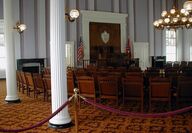
On February 9, 1861, Montgomery, Alabama briefly became the political center of a nation in rebellion. Delegates from six seceded Southern states gathered in the Alabama State Capitol and elected Jefferson Davis as provisional President and Alexander H. Stephens as provisional Vice President of the newly formed Confederate States of America. The decision marked one of the most consequential moments in American history, setting the leadership that would guide the South into a four‑year civil war....
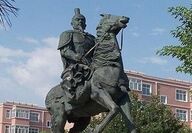
On February 11, 951, the military commander Guo Wei launched a decisive coup in the Chinese capital of Kaifeng, overthrowing the Later Han regime and establishing the Later Zhou Dynasty. The event reshaped the political landscape of the fracturing Five Dynasties period and set the stage for the eventual reunification of China under the Song. A China in Turmoil The mid‑10th century was one of the most chaotic eras in Chinese history. The once‑mighty Tang Dynasty had collapsed in 907, and nor...
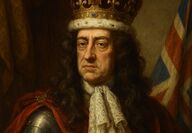
On February 12, 1689 England's Convention Parliament declared that King James II's flight in the face of revolting lords was an abdication. This paved the way for Parliament to replace James with William of Orange and James' daughter Mary. It was not merely a change in rulers but a profound shift in the nature of English governance. England had been racked with religious wars since Henry the VIII's reign in the 16th Century. At the death of Queen Elizabeth I, the Scottish Stuarts replaced the...
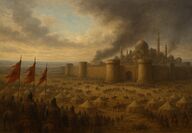
In February 1258, the world witnessed one of the most consequential turning points in Middle Eastern and global history: the Mongol conquest and destruction of Baghdad. Led by Hulegu Khan, grandson of Genghis Khan, Mongol forces captured and sacked the city that had served for centuries as the intellectual, cultural, and political heart of the Islamic world. The fall of Baghdad effectively ended the Abbasid Caliphate and is widely regarded as the symbolic end of the Islamic Golden Age - a...
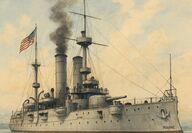
February 15, 1898 - The Night That Changed U.S. Foreign Policy On a warm February night in 1898, as Havana Harbor lay quiet under the Cuban sky, the American battleship USS Maine suddenly erupted in a massive explosion that shattered the stillness and sent shockwaves far beyond the island. More than 260 American sailors were killed instantly or died soon after-one of the deadliest peacetime naval disasters in U.S. history. Within weeks, the tragedy would ignite a political firestorm, fuel a...
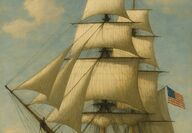
February 16, 1804 - A defining moment of the First Barbary War - On the night of February 16, 1804, a young American naval lieutenant named Stephen Decatur carried out one of the most audacious operations in early U.S. military history. In the dark waters of Tripoli Harbor, Decatur led a hand‑picked crew of volunteers into enemy territory to destroy the captured American frigate USS Philadelphia-a mission so bold that British Admiral Horatio Nelson reportedly called it "the most daring act of t...
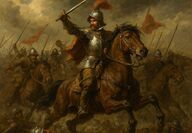
On January 31, 1578, the fields outside the small Brabant town of Gembloux became the stage for one of the most decisive Spanish victories of the Eighty Years' War. In a conflict defined by shifting alliances, religious tension, and the struggle for independence in the Low Countries, the Battle of Gembloux stands out not only for its military significance but also for the political shockwaves it sent through a region already in turmoil. The clash revealed the strengths and weaknesses of both...
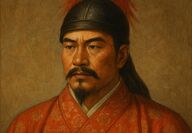
On February 1, 1662, the Chinese military leader Zheng Chenggong - better known as Koxinga - forced the Dutch to surrender Fort Zeelandia, ending a nine‑month siege and bringing Taiwan under his control. The victory marked the end of 38 years of Dutch colonial rule and reshaped the political landscape of East Asia. A Clash Between Empire and Exile Koxinga was a Ming loyalist at a time when the Qing dynasty had already taken control of mainland China. Refusing to submit, he gathered a powerful n...

Four hundred years ago, Charles I was crowned King of England. He became king automatically upon the death of his father, James I, but his coronation was delayed for almost a year. Officially, the delay was attributed to an outbreak of plague which made public gatherings deadly when, in truth, the excuse masked another reality. Charles was broke. His father had spent lavishly and left the crown deeply in debt. Along with the throne, Charles inherited the existing financial obligations and a...
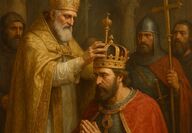
On February 2, 962, a momentous event unfolded in Rome that would define the political and religious landscape of medieval Europe for centuries. Pope John XII placed the imperial crown upon the head of Otto I, King of East Francia, formally reviving the Holy Roman Empire. This coronation marked the beginning of a new era-one in which the alliance between the papacy and the German monarchy would shape the balance of power across the continent. A Kingdom in Need of Stability Before Otto I's rise,...